


Contents
Scroll to:
https://doi.org/10.18599/grs.2025.4.3
Scroll to:
Reliable data on the relative permeability of low-permeability organic-rich shale reservoirs are essential for optimizing the development and operation of these fields by enhancing hydrodynamic models. Key challenges and limitations in studying complex reservoir systems include limited experimental data due to a shortage of core samples and the inapplicability of conventional laboratory methods for characterizing gas flow due to properties of these reservoirs (low porosity and permeability, high amount of organic matter including kerogen).
Investigating the effects of ultra-low interfacial tension, sorption, and diffusion on fluid flow under simulated reservoir conditions is crucial. Despite the importance of these factors, mechanisms of sorption and diffusion of hydrocarbon gases in shale rocks are often overlooked in experimental and numerical research on recovery strategies.
This review aims to provide a comprehensive understanding of gas adsorption and diffusion related mechanisms in tight shale rocks. Main findings include assessment of how various rock properties affect fluid behavior in nanoscale pores and identify critical areas for experimental analysis. By generalizing the review results, this work also highlights emerging research trends and addresses limitations in integrating adsorption and diffusion data for recovery, improving the accuracy of recoverable reserve estimates and reducing economic risks in unconventional reservoir development.
Dorjhie D.B., Mukhametdinova A., Faist C., Yunusov T., Lenski H., Grishin P., Cheremisin A., Spasennykh M.Yu. Physicochemical Features of Hydrocarbon Fluid Flow in Shale Rocks: Review on Adsorption and Diffusion. Georesursy = Georesources. 2025;27(4):45-58. https://doi.org/10.18599/grs.2025.4.3
In recent years, the share of unconventional reserves in global oil production has increased, necessitating more effective methods for their development and exploration. A priority in this area is the study of unconventional oil source rocks, or shale deposits, characterized by high heterogeneity, ultra-low permeability due to nanoscale pores, and the presence of kerogen. Key specifics of these organic-rich shale rocks include (Muther et al., 2022; Sondergeld et al., 2010):
1. The porosity, permeability and the pore structure: micro- and nanosized pores, heterogeneity of reservoir properties, permeability less than 1 mD, presence of closed pores.
2. Organic matter content and its maturity variation: high amount of heavy components (average total organic carbon (TOC) content around 15 wt. %) and solid kerogen.
3. The mineral composition: the presence of clays (values up to 60 wt. %) and ferromagnetic inclusions.
To improve modeling approaches, detailed study on gas flow and mass transfer in low- and ultralow permeability reservoirs is essential. A major challenge in obtaining reliable permeability data is that conventional experimental methods do not account for the unique characteristics of nanosized pore systems where pore dimensions are comparable to those of gas or liquid molecules (Bustin et al., 2008). Despite extensive research in other fields on nanoscale fluid filtration, topics such as adsorption, diffusion, and the impact of rock properties and organic matter on transport properties in tight shale rocks remain unexplored.
The sorption of hydrocarbon gases on rock surfaces is crucial for understanding petroleum systems in sedimentary basins. Accurate data on gas sorption is essential for field development, as significant amounts of hydrocarbons (HC) can be retained by rocks, potentially challenging application of enhanced oil recovery (EOR) techniques in tight and organic-rich reservoirs. Micropores store substantial gas volumes, while nanopores increase the overall surface area for adsorption, with pore connectivity affecting both storage and flow efficiency (Chalmers, Bustin, 2007).
The general term of sorption combines adsorption on a surface, absorption (absorption into the volume of a solid or liquid) and capillary condensation in pores. The sorption can be classified into two main types based on the nature of the forces involved: physical (physisorption) and chemical (chemisorption) (Sims et al., 2019).
Spontaneous transport of matter from a region of high concentration to a region of low concentration is referred to as “diffusion”. Three different regimes are typically observed: free molecular diffusion, Knudsen diffusion, and surface diffusion, with the latter two being particularly relevant in shales (Yuan et al., 2014). In gas-producing shales, the low permeability of the rock means that normal fluid flow due to pressure differences can be very slow. As a result, diffusion becomes the dominant process that limits overall productivity. Gas diffusion is also important in gas EOR projects (Alfarge, 2018; Wan et al., 2014), as the volume of oil that contacts gas is directly related to diffusion coefficients. Therefore, it is essential to measure and consider diffusion characteristics in reservoir simulations for shales.
Sorption and diffusion are interconnected processes in the transport of hydrocarbon fluids within rock porous media. For instance, the rate of surface diffusion depends on gas adsorption (Yuan et al., 2016), and diffusion in pores is limited by their effective diameter, which is determined by the amount of adsorbed matter (Yuan et al., 2016). The challenge lies in differentiating between these phenomena and accurately quantifying all of them.
To achieve this goal, we highlight the following features of hydrocarbon gas flow in shale rocks, categorized into adsorption and diffusion-related mechanisms (Fig. 1).
In this article, we present a comprehensive literature review of the key mechanisms of hydrocarbon gas sorption and diffusion in organic-rich shale rocks. We critically analyze how physical reservoir characteristics – such as organic matter content, mineralogy, temperature and moisture – affect the adsorption and diffusion processes. The review covers a range of experimental methods and combined approaches, highlighting recent studies, current limitations, and challenges in accurately characterizing adsorption (Section 1) and diffusion (Section 2) in shale formations. Additionally, the last section briefly introduces the latest research trends involving machine learning (ML)-assisted algorithms and molecular dynamics (MD)-based analyses.
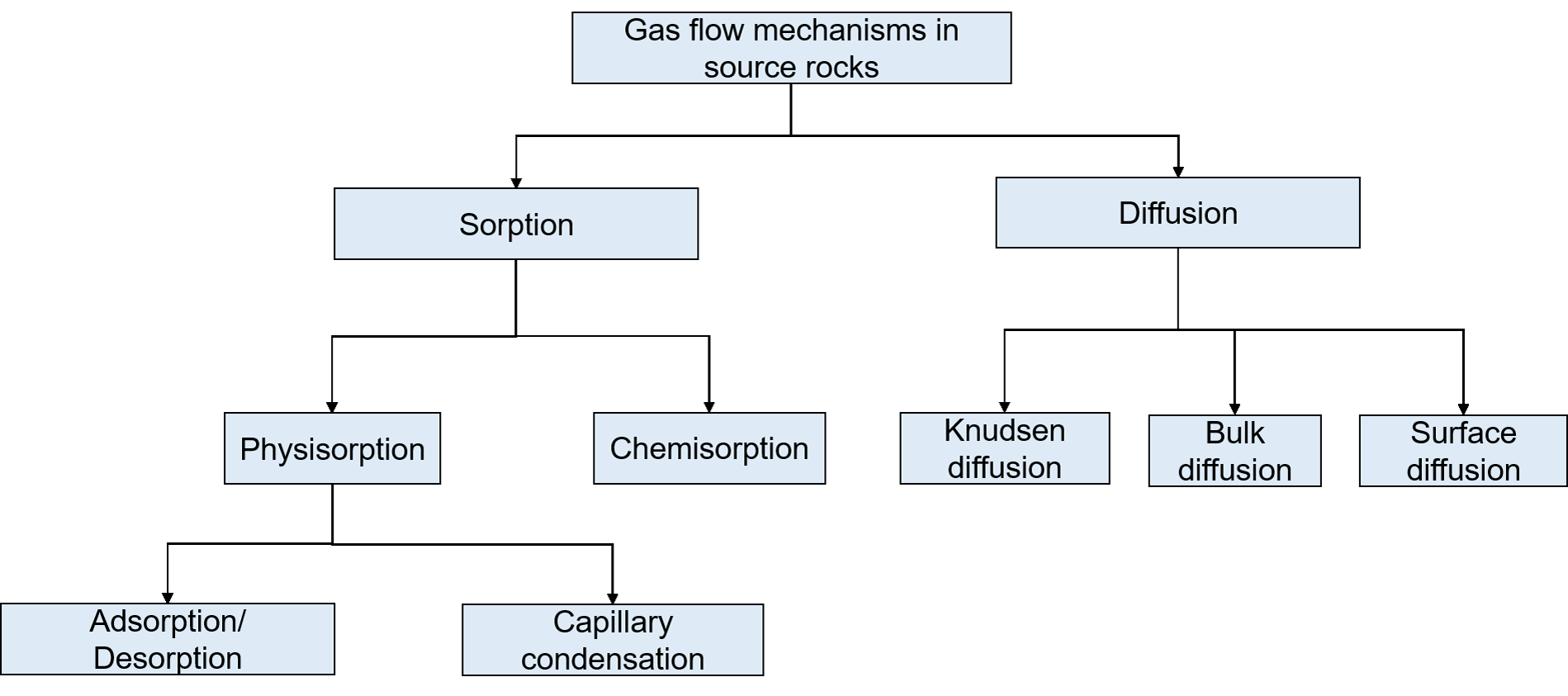
Fig. 1. Gas flow related mechanisms in tight shale rocks
Various researchers assume that 20–80% of total gas present in the shale reservoir is retained in the adsorbed state (Chakraborty et al., 2020; Klewiah et al., 2020; Rani et al., 2019). In laboratory studies, the process of characterizing the sorption – referring to the way HC gases like CH4 interact with shale rocks – often involves analysis of sorption isotherms. Sorption isotherm analysis can be used to assess how much gas the rock can adsorb or desorb (release) under specific temperature and pressure conditions.
This process, commonly referred to as sorption, is actually a mix of several underlying mechanisms: adsorption (where gas molecules adhere to the surface), absorption (where gas penetrates into the bulk of the material), and capillary condensation (where gas condenses in small pores) (Pathak, 2018; Pathak et al., 2017). While these processes differ in nature, they collectively lead to the storage of gas molecules in a more compressed state compared to free gas in open pore spaces.
Adsorption is the process where gas molecules gather on a solid surface, either filling pores or forming a monolayer, creating a dense adsorbed phase that is different from the free gas around it (Langmuir, 1917, 1916). Thommes et al. (2015) refers to the material occupying the adsorption space of such structure in adsorbed state as Adsorbate, while Adsorptive is the same component in fluid phase. Physisorption is a general phenomenon occurring when an adsorptive is brought into contact with the surface of an Adsorbent with intermolecular forces such as attractive dispersion, short range repulsion and polarization that depend on geometric and electric properties or the engaged adsorptive and adsorbent.
If the external conditions are unfavorable, the proportion of the sorbed phase is reduced by reversing the adsorption process (Thommes et al., 2015). This process can significantly boost the total gas storage capacity, potentially doubling it compared to when adsorption is not present (Bustin et al., 2008; Loucks et al., 2009; Sondergeld et al., 2010). Physisorption involves Van der Waals forces and electrostatic forces, allowing for the formation of multiple monomolecular layers (Langmuir, 1916).
However, the experimental isotherms are not always described by the Langmuir equation due to multiple reasons. Therefore, experimental adsorption isotherms are not limited to a monolayer and the curve type may have a different form. According to the IUPAC classification, there are six different types of adsorption isotherms (Everett, 1972). There are various proposed models for computing the sorption of gas and describe adsorption isotherms obtained from experimental data. The most commonly reported models are the Langmuir, BET, DR, Dubinin-Radushkevich (pore-filling) and the Henry methods (Appendix A).
The experimental study of the sorption characteristics in low-permeable shale rock including the adsorbed fluid values and adsorption rates is complicated due to the low porosity and permeability, high OM content. The most widespread methods for quantitative sorption analysis in rocks are (1) gravimetric (Changtao et al., 2018) (Fig. 2-1), measuring the weight of the gas inflow and outflow; (2) the manometric method (Weniger et al., 2010) (Fig. 2-2) using manometers to monitor the pressure in a defined volume; and (3) the volumetric method (Fig. 2-3) based on the knowledge of internal volumes (Li et al., 2020; Zhou et al., 2019).
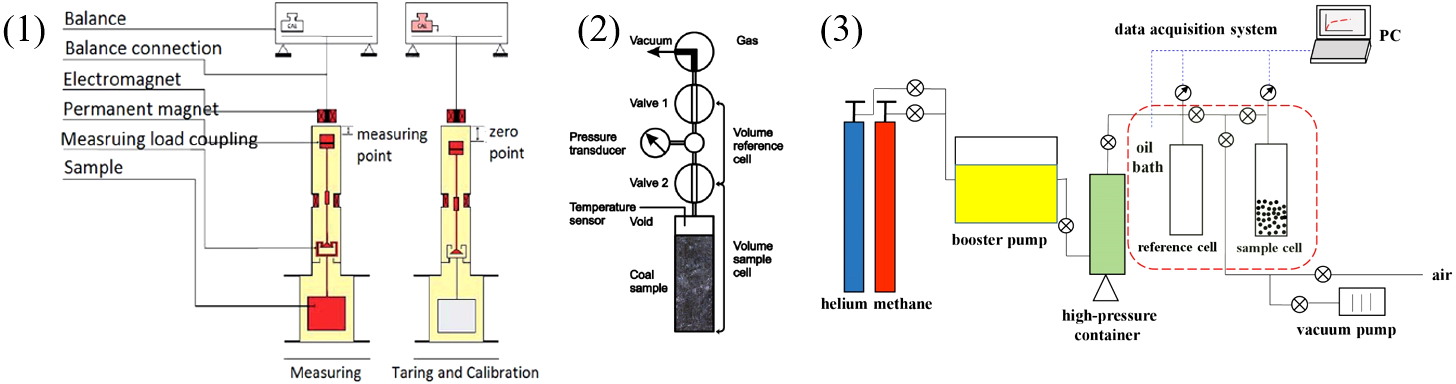
Fig. 2. Experimental methods for characterizing the methane adsorption in rocks: (1) – gravimetric (Changtao et al., 2018); (2) – manometric (Weniger et al., 2010); (3) –volumetric (Li et al., 2020)
The adsorption behavior in rock depends on the hydrocarbon fluid (gas), reservoir pressure and temperature, rock mineralogy, as well as amount, type and maturity of the organic matter, humidity (moisture content) and porosity and pore size (Chen et al., 2024a; Gasparik et al., 2014; Guo et al., 2017; Ji et al., 2012; Klewiah et al., 2020; Mudoi et al., 2022; Zou et al., 2017).
The sorption in mesopores (2–50 nm) and micropores (<2 nm) is subject to different mechanisms. At lower pressure, the gas fills the micropores and forms layers in mesopores (Do, Do, 2003; Dubinin, 1967; Zhou et al., 2018) that increase in number with increasing pressure (Klewiah et al., 2020; Rouquerol et al., 2013; Zhou et al., 2018). Shale formations have a wide range of pore sizes, from micropores to macropores (>50 nm), which significantly influence gas adsorption behavior. Micropores dominate gas adsorption capacity due to their high surface area and confinement effects, which enhance gas density and adsorption energy (Chalmers, Bustin, 2008; Clarkson et al., 2013). Confinement in nanopores alters thermodynamic properties, leading to deviations from classical adsorption models such as the Langmuir isotherm (Wang et al., 2016). Experimental studies and molecular simulations confirm that smaller pores result in stronger adsorption interactions, especially for gases like methane and CO2 (Ross, Bustin, 2009). For pores larger than 0.42 nm, carbon dioxide (CO2) is preferentially adsorbed over CH4, but in smaller pores, CH4 has a competitive advantage due to stronger repulsion of CO2 by the pore walls. Understanding these adsorption dynamics is essential for optimizing gas storage and recovery in different layers of organic-rich shale formations.
The adsorption of hydrocarbon gases significantly influences production from reservoirs, depending on the rock’s composition and microstructure. This process stores gas in a dense, liquid-like phase, increasing the overall storage capacity compared to the free phase (Fig. 3). The desorption process is pressure-dependent. As the reservoir pressure decreases due to depletion, adsorbed gas could be released, which increases the gas in place within the reservoir (Vardcharragosad, Ayala, 2015). Factors such as tectonics, magmatism, and the migration of hydrocarbons can affect the process of desorption. During tectonic uplift of the sediment, trapped gas in the pores increase pore pressure, resulting in overpressure at shallow depths that can result in serious effect for production, such as blowouts (Guo et al., 2017). Furthermore, factors like desorption pressure, kinetics, and changes in effective stress make it difficult to predict whether the desorbed gas will meaningfully contribute to production.
Fig. 3 illustrates the mechanisms of gas storage and transport within organic-rich porous media, such as shale formations. The pore network is embedded within the kerogen/ mineral framework, which serves as the solid matrix of the system. Gas storage occurs through various mechanisms, including monolayer adsorption (blue circles), where gas molecules form a single layer on the pore walls, and multilayer adsorption (orange circles), where additional layers of gas accumulate beyond the monolayer. In the central pore space, free gas (green circles) exists as unbound molecules that can move within the interconnected pores. Additionally, under specific pressure and temperature conditions, condensed gas (yellow region) forms in a liquid-like state within the pore network. The diagram also highlights the presence of pore water (blue region), which occupies part of the pore volume, and clogged pore throats, which restrict gas transport by reducing pore connectivity. The main parameters widely reported to affect the process of adsorption are organic matter, temperature, mineralogy and moisture content. Hence in the following sub-sections, these parameters are discussed in more detail.
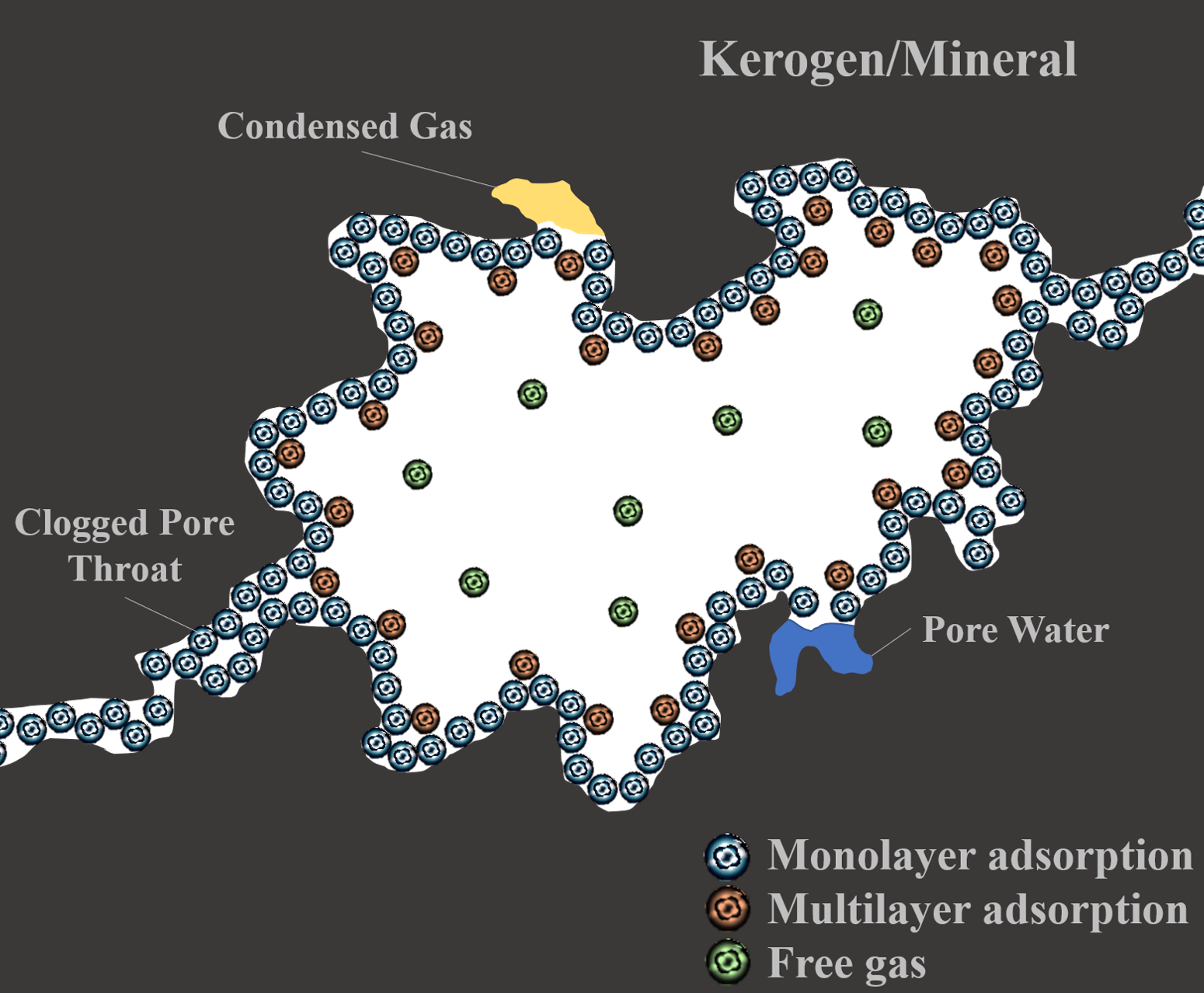
Fig. 3. Various types of adsorption and pore filling mechanisms (modified after (Sang et al., 2019))
1.3.1 Organic matter
The total organic carbon (TOC) content in shale reservoirs varies significantly, both across different plays and within individual formations. Numerous studies have explored the relationship between TOC and methane adsorption capacity, but the findings are inconsistent. Some empirical observations showed that methane adsorption increases with TOC content (Lu, 1995; Rexer et al., 2014; Ross, Bustin, 2009; Weniger et al., 2010; Yang et al., 2015), while another research reported no clear correlation at all (Gasparik et al., 2012). These conflicting results likely stem from the variability in TOC composition, particularly the type of kerogen and its thermal maturity, which are key controls on shale pore structure and gas storage behavior, namely the thermal maturity and its effect on the porosity and the sorption capacity (Zhang et al., 2024). A study by Zhang et al. (2012) on Barnett shale samples showed that, the gas sorption capacity increases with increasing thermal maturity (Zhang et al., 2012). The thermal maturity of the embedded kerogen is closely related to its porosity and strongly affects the total porosity of a rock. The maturation process of kerogen starts with the formation of spongy microstructures that subsequently convert into organic pores within the middle of the oil window and form effective pore-networks towards its end. The average adsorption values of methane vary from 0.03 mmol/g for immature to 0.18 mmol/g for mature Barnett Shale organic-rich rocks (Gasparik et al., 2014). Fig. 4 demonstrates the relation between the TOC content and methane adsorption value for dry (Changtao et al., 2018; Gasparik et al., 2014; Ross, Bustin, 2007; Shabani et al., 2018; Sun et al., 2022; Zhou et al., 2019; Zou et al., 2017) and moist core samples (Li et al., 2016; Ross, Bustin, 2009; Sun et al., 2022; Weniger et al., 2010).
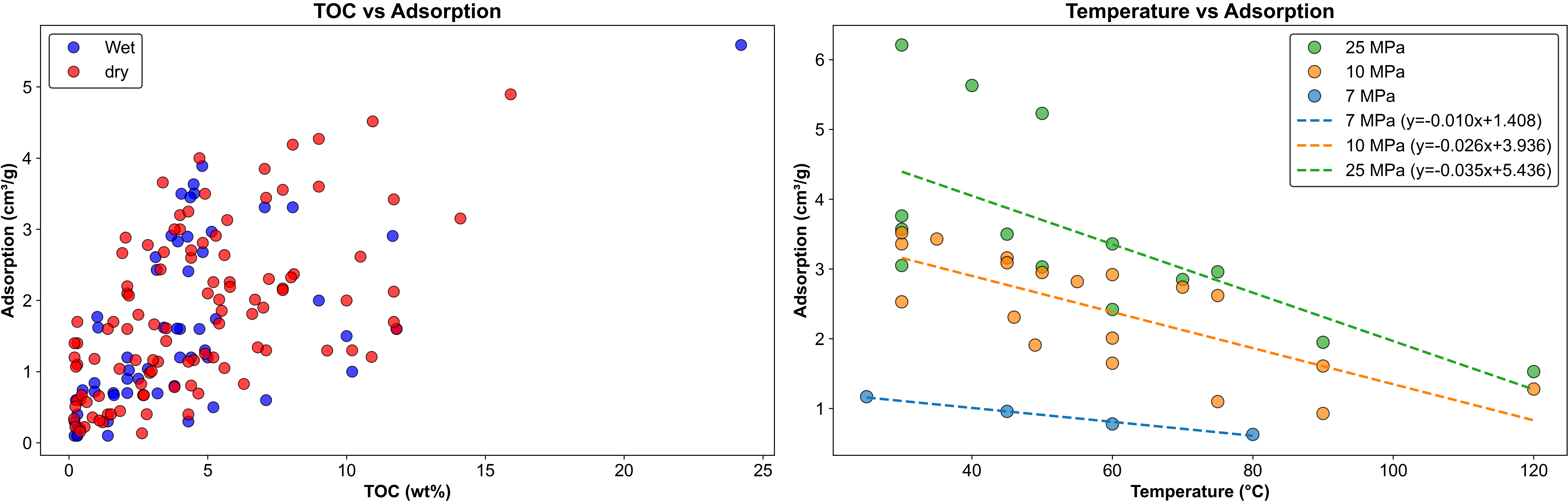
Fig. 4. Effect of organic matter and temperature on methane adsorption dynamics based on conducted review
The sorption capacity and swelling are also depended on the kerogen type. Studies have shown that, kerogen Types II and III commonly show a higher maximum sorption compared to Type I (Zhang et al., 2012). Shale gas production relies on gas flow through nanopores with low permeability of around 0.0001 mD, which is why sorption-induced swelling and kerogen deformation have a major impact.
The swelling of the shale matrix has a direct and often detrimental impact on permeability. As the rock expands, microfractures and pore throats narrow or close, restricting fluid flow pathways. Additionally, if swelling is mechanically constrained by overburden stress, the effective stress on the rock increases, further reducing permeability (Hashemi, Zoback, 2021; Zhou et al., 2020). Upon a pressure of 50 MPa, kerogen swells by up to 6.6% unevenly in all directions, creating different pore sizes and geometry and decreasing the shale rock permeability by blocking pore throats (Wu et al., 2022). A summary of the relevant conclusions of the different parameters that affect the adsorption of gases in shale formations is presented in Table 1.
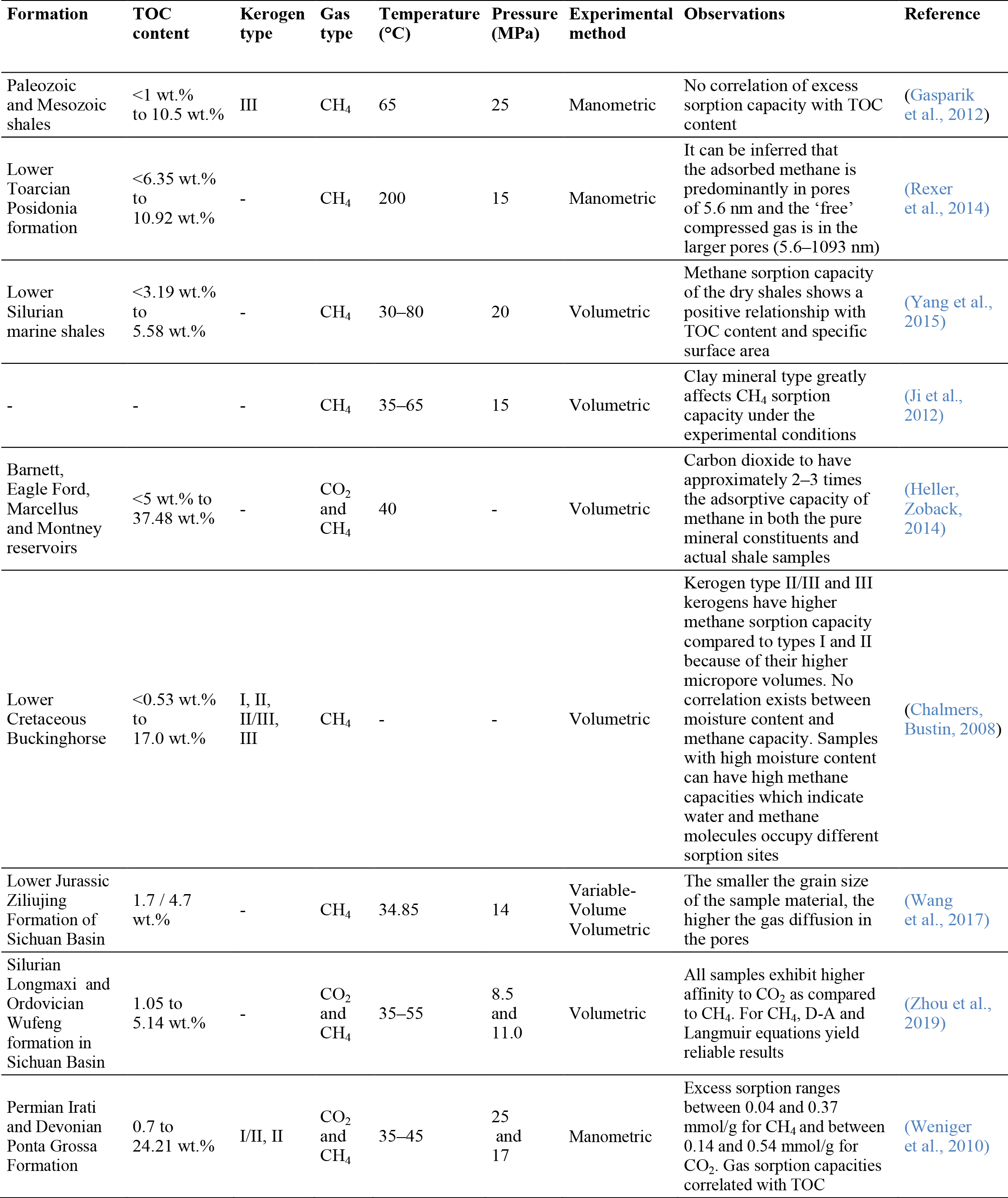
Table 1. Summary of selected studies of gas adsorption in shale reservoirs
1.3.2 Temperature and pressure
The temperature effect on gas adsorption is based on thermodynamic principles: exothermic nature of adsorption, kinetic effects, adsorption isotherms, and thermodynamic parameters. Gas adsorption is an exothermic process, and increasing temperature generally reduces adsorption capacity because the thermal energy of gas molecules overcomes the energy of adsorption binding, leading to desorption.
As temperature increases, gas molecules gain more kinetic energy, allowing them to escape adsorption sites more easily. This results in lower equilibrium adsorption at higher temperatures (Rouquerol et al., 1999). Langmuir model, commonly used to describe adsorption behavior, shows a decreasing trend of maximum adsorption capacity with increasing temperature (Lin et al., 2023). At lower temperatures, gas molecules can occupy more adsorption sites because they have less kinetic energy to escape the potential well of adsorption.
The relationship between temperature and adsorption is often analyzed using the Arrhenius equation or Van’t Hoff equation, which shows the impact of temperature on the equilibrium constant for adsorption. The Gibbs free energy for adsorption becomes less negative at higher temperatures, indicating weaker gas adsorption. Studies have shown that, at a given pressure, the excess adsorption decreases with increasing temperature to a threshold while the opposite phenomenon is exhibited beyond that pressure (Jiang et al., 2018; Zou et al., 2017). The term ‘excess adsorption’ describes the quantity of guest molecules that are adsorbed in direct contact with a solid surface, while ‘absolute adsorption’ denotes the quantity of guest molecules in the adsorption area, where both gas-solid and gas-gas interactions are present.
Both CH4 and CO2 are often in a critical thermodynamic state under typical reservoir conditions, but their adsorption behaviors differ with changes in pressure and temperature. The CH4 adsorption increases steadily with pressure and can usually be modeled using a Langmuir isotherm, while its sorption decreases with increasing temperature (Changtao et al., 2018). CO2, however, shows more complex behavior: at lower pressures, adsorption increases, but near the critical pressure, it peaks and then decreases as pressure rises further. This pressure-driven desorption is not captured by low-pressure experiments, and standard isotherms fail to account for it (Liu et al., 2022; Wang et al., 2022; Yuan et al., 2022). Additionally, CO2 adsorption is more sensitive to temperature changes than CH4, making advanced isotherms or PVT models necessary to accurately represent both gas and sorbed phases. Fig. 4 illustrates the trends of temperature effect on methane adsorption under different pressure conditions: 7 MPa (Zou et al., 2017), 10 MPa (Changtao et al., 2018; Guo, 2013; Huang et al., 2021; Liu, Wang, 2012; Sun et al., 2022; Zhou et al., 2019) and 25 MPa (Changtao et al., 2018; Liu, Wang, 2012; Sun et al., 2022; Zhang et al., 2022).
1.3.3 Mineralogy
In analysis of the gas adsorption in a shale rock, not only the porous structure of the kerogen plays an important role, but also the overall mineralogical composition. This can be applied to clay minerals such as montmorillonite, smectite, kaolinite, chlorite and illite as they have a large surface area and numerous potential adsorption sites due to their tetrahedral and octahedral layers (Ji et al., 2012; Wang et al., 2024a). They can hold almost 10% of the overall gas adsorbed (Heller, Zoback, 2014; Rani et al., 2019; Ross, Bustin, 2007). Furthermore, possible interactions of the gases with carbonate minerals of the rock should be considered, potentially forming dissolution pores (Fu et al., 2025). Investigating the energetic processes on the sample surfaces reveals that different solids have different adsorption potentials, which influence the molecular interactions between gas and solid, and thus the rate and extent of the adsorption process due to the polarity of their functional groups.
1.3.4 Rock moisture
Moisture content in shale formations significantly impacts gas sorption capacity. Moisture refers to the water molecules in the rock, which can be found both in pores and in the intermediate layers of the clay minerals. Studies have shown that as moisture content increases, gas adsorption capacity decreases (Chalmers, Bustin, 2007; Huang et al., 2022). This is attributed to the competition between water and gas molecules for adsorption sites, particularly on hydrophilic surfaces like organic functional groups and clay minerals (Gasparik et al., 2012). Additionally, water can condense in pores, blocking access to grain surface. The equilibrium moisture content, representing the maximum moisture saturation, varies depending on shale maturity, organic richness, and organic type. While moisture can significantly reduce gas sorption capacity, its impact can be less pronounced in shales with high TOC content or those that are overmature (Chalmers, Bustin, 2008). Understanding the relationship between moisture content and gas sorption is crucial for accurately predicting gas storage and recovery in shale formations. By considering the moisture content, we can better evaluate the potential of shale gas reservoirs and optimize production strategies.
Gas flow in shale rocks is governed by several transport mechanisms, among which molecular (Fickian) diffusion, Knudsen diffusion, and surface diffusion are dominant within the nanoscale pore network. First, gas flow in shale rocks is commonly characterized by the Knudsen number, which is defined as the ratio of the mean free path (λ) of gas molecules to the characteristic length of the pore or flow pathway in the medium (Wang et al., 2020a; Yu et al., 2018). This dimensionless parameter helps determine the dominant transport mechanism in porous systems by indicating the relative importance of molecule–molecule versus molecule–wall collisions. Second, gas diffusion in shales, driven by concentration gradients and governed at the continuum scale by Fick’s law (Yang et al., 2024), exhibits distinct behaviors depending on the flow regime, including molecular diffusion, Knudsen diffusion, and surface diffusion (Fig. 5). When the Knudsen number is of order unity or greater, the mean free path of gas molecules becomes comparable to or larger than the characteristic pore size, so collisions with the pore walls dominate over intermolecular collisions and transport approaches the Knudsen or even free-molecular regime. In contrast, at sufficiently small Knudsen numbers, intermolecular collisions are more frequent than molecule–wall collisions and molecular (Fickian) diffusion becomes the primary mechanism. Surface diffusion, which occurs when gas molecules interact with and migrate along the pore surface, may also contribute significantly under specific conditions, particularly in organic-rich shales with high internal surface area. These processes are influenced by factors such as pore structure and pore size distribution, gas composition, and reservoir pressure and temperature conditions, which vary widely in shale formations.
Knudsen diffusion occurs when the mean free path of gas molecules is comparable to the pore size (Miao et al., 2018; Mo et al., 2022). This is common in the nanosized pores of shale rocks where collisions with pore walls dominate over intermolecular collisions.
Molecular diffusion or Fick diffusion happens in larger pores where the mean free path is smaller than the pore size, and gas molecules interact more frequently with each other rather than with the walls (Miao et al., 2018).
Surface diffusion describes the process of moving of gas molecules between adjacent adsorption sites of the pore walls (Spanakos, Rigby, 2022; Yang et al., 2021).
A bulk diffusion is then the process that describes the combination of the Fick diffusion and Knudsen diffusion (Miao et al., 2018; Zhong et al., 2019).
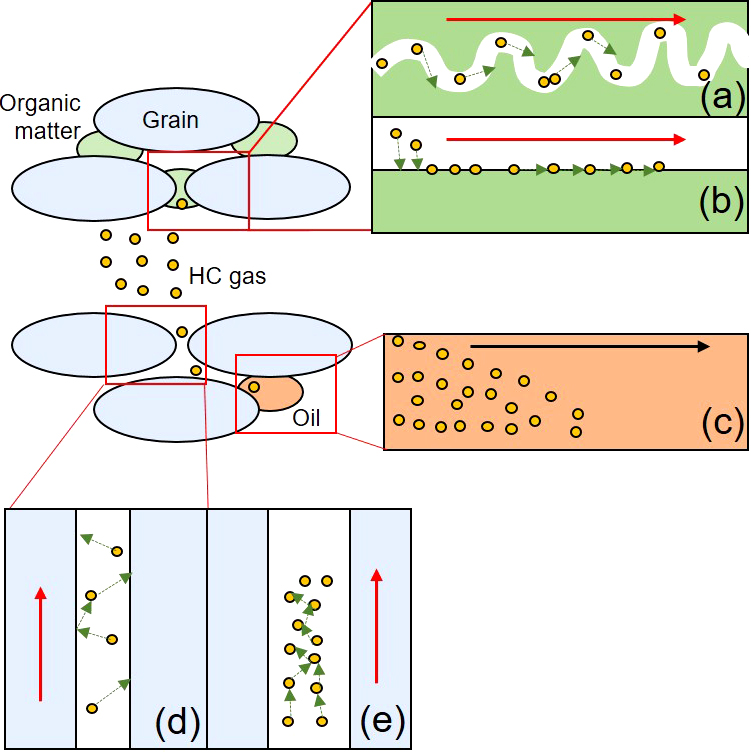
Fig. 5: Schematic of dominant diffusion mechanisms of HC gas across different pore types in the shale rocks: (a) Knudsen diffusion in OM nanopores; (b) surface diffusion in OM nanopores; (c) bulk diffusion in oil; (d) Knudsen diffusion in inorganic pores; (e) Fick diffusion in inorganic pores
Depending on the type of diffusion, different experimental methods are employed. In most cases, the task is to accurately determine the concentration of the diffusing gas in all layers of the diffusion zone in porous media to further solve the Fick’s 2nd law of diffusion. The most common experimental methods for gas diffusion measurement include the gas chromatography, pressure decay / transient diffusion techniques (Yang et al., 2017; Zhang et al., 2023), the gas adsorption and gravimetric methods, the use of high-resolution imaging and scanning techniques such as micro-CT and NMR (An et al., 2019; Khmelenko et al., 2021). Table 2 summarizes selected study on experimental study of hydrocarbon gas diffusion in low-permeable shale rocks and reports on determined diffusion coefficients. Authors report different approaches to methane gas diffusion and diffusivity assessment including desorption-based (unipore and bidisperse models) methods (Dang et al., 2017), isobaric method, and pressure decay methods (Chen et al., 2018). The calculation models vary depending on the system properties and boundary conditions, since the diffusion of hydrocarbon gas in shale rock is the result of three types of diffusion modes (Fig. 5) in combination. Thus, depending on the dominant diffusion process, theoretical calculation model can be adjusted.
As Table 2 shows, diffusion coefficients vary greatly. Among shale samples from the same field or well, these values can differ by more than three orders of magnitude (Sun et al., 2023). Therefore, a discussion of the geological factors affecting the diffusion coefficient is necessary.
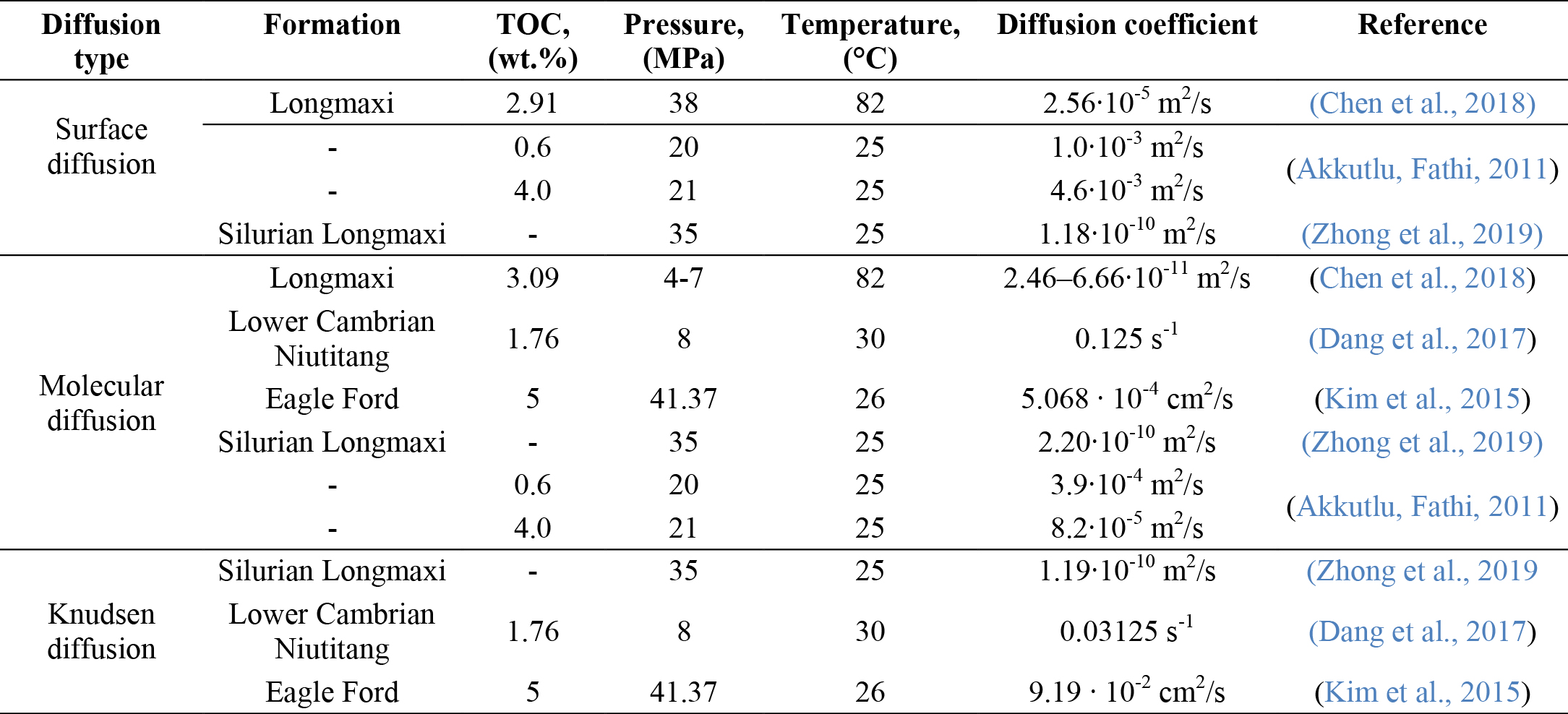
Table 2. Summary of selected studies of methane diffusion in shale reservoirs
2.3.1 Pressure and temperature
The bulk diffusion process, consisting of Fick and Knudsen properties, depends on two key parameters: the size of the pore channels and the gas density, which determines the frequency of collisions between gas molecules. The size of the pore channels is a characteristic feature of shales; however, it is also influenced by effective stress – the difference between pore pressure and lithostatic pressure, or confinement pressure in the context of pore analysis. As effective stress increases, the effective pore diameter decreases (Zhang et al., 2020), which reduces Fick diffusion since collisions with the walls occur more frequently. However, several researchers have observed that the Knudsen diffusion coefficient increases with the increase of effective stress. In summary, increased effective stress leads to an overall increase in the diffusion coefficient. For example, (Chen et al., 2018) noted that as effective stress increases from 21 MPa to 55 MPa, bulk diffusion coefficients rise from 3 to 241×10−7 cm2·s−1. However, an increased diffusion rate should not be confused with permeability, as apparent permeability values typically decrease with increasing effective stress.
The rate of different diffusion mechanisms changes with pore pressure. As gas density increases at higher pressures, the probability of molecules collision rises, leading to an increased role of Fick diffusion. However, the relative contributions of different mechanisms depend on pore size: the smaller the pore radius, the higher the pressure required for Fick and Knudsen diffusion to become comparable (Gao et al., 2021).
The role of surface diffusion becomes significant in narrow pores: for example, in 10 nm pores, surface diffusion dominates all other mechanisms up to pressure of 25 MPa. In the simplest case of monolayer adsorption, the surface diffusion rate increases with pressure because this process directly results from gas sorption in or on organic films, which is enhanced at higher pressures until surface saturation is achieved. However, in real scenarios, adsorbates often form multilayers, which have different behaviors (Choi et al., 2001). Surface diffusion in multilayers required more careful study, as significant gaps in understanding still exist.
As the rate of thermal motion increases with temperature, the diffusion coefficients for both Fick and Knudsen diffusion also increase according to the Arrhenius equation (Choi et al., 2001). The same is true for the surface diffusion coefficient: an increase in temperature leads to a rise in the surface diffusion coefficient. However, the amount of adsorbed molecules decreases. Therefore, the total diffusion flux may not change significantly with temperature or may change only slightly (Wong, Yang, 1989).
2.3.2 Organic matter
The diffusion rate of gas species in shale rock is significantly influenced by the organic matter in the rock matrix. Gas diffusion can occur in immobile OM embedded within the rock matrix, which is typical for production from gas shales. Kerogen also affects gas diffusion, as its confined nanopores slow diffusion rates and can trap gas molecules irreversibly, complicating recovery. Additionally, diffusion can take place in mobile OM, such as oil remaining in porous media, which is characteristic of oil shales during gas EOR.
Dang et al. (Dang et al., 2019) experimentally demonstrated that the diffusion coefficient of methane decreases with increasing OM content in core samples. However, there is a limited number of experimental studies investigating gas diffusion directly within the OM of shales; most research has focused on methane diffusion in coals. For example, diffusion increases with the rise in inertinite macerals content in coal (Keshavarz et al., 2017), and a U-shaped dependency of diffusivity vs coal rank has been observed (Xu et al., 2015). In studies related to shales, current research typically explores the atomic aspects of gas diffusion in kerogen using molecular dynamics (MD) or even quantum chemistry methods. For instance, one study indicated that oxygen-rich OM, i.e. containing high amount of carboxyl and hydroxyl groups, may impede gas diffusion (Sui, Yao, 2016). Other studies found that the diffusion coefficient of methane in kerogen is higher than that of CO2, as the latter interacts more strongly with the kerogen structure (Sui, Yao, 2016). A mini-review discussing the use of MD simulations for studying gas diffusion in shales can be found in (Sui, Yao, 2016); however, the accuracy and applicability of obtained diffusion coefficients are controversial. The physical Lattice-Boltzmann model described by (Dang et al., 2019) states that methane diffusivity increases with OM porosity and the diameter of pore throats until a limit is reached, beyond which further increase in diffusivity are not evident.
Gas diffusion in oil has been extensively investigated in numerous studies. For example, CO2 diffusion is reviewed in the paper by (Rezk et al., 2022). Regarding natural gas, (Wanyan et al., 2023) note that the apparent diffusion coefficient of methane-containing gas in oil-saturated shales is significantly lower than in “bulk” oil, with values increasing alongside the permeability of samples and injection pressure. The authors developed a mathematical model for gas transport in oil-saturated media with a permeability of 60 nD and found that the diffusion coefficient increases with the content of C2 hydrocarbons in the gas. They also determined that it takes seven days for a C1/C2 mixture to reach the outlet end of 6.3 cm oil-saturated core plug by means of diffusion.
2.3.3 Mineralogy, moisture, and other properties
The effect of rock properties, including mineralogy and moisture content, on supercritical methane Knudsen diffusion in nanopores was investigated using MD in the study by (Wang et al., 2018). Organic pores can transmit methane faster than organic ones; however, moisture has a detrimental impact on the diffusion coefficient. A water film also affects the surface diffusion of methane: an analytical study by (Bai et al., 2021) shows that in pores of certain sizes, the presence of water can enhance the surface diffusion of methane and increase overall diffusion capacity through porous media. (Dang et al., 2019) demonstrated that relationship with clay content is not straightforward: in macropores, the correlation is negative, while in micropores, it is positive. Real gas effects should also be considered, as they enhance gas Knudsen diffusion at higher pressures by increasing molecular free paths and decreasing surface diffusion due to a reduced amount of adsorbed molecules (Dang et al., 2019; Wang et al., 2024b). Studies by (Shi et al., 2024; Sun et al., 2015) evaluated gas transport mechanisms in ultra-tight shale formations using models that account for viscous flow, Knudsen diffusion, and surface diffusion. Their analysis across different pore sizes and pressures found that Knudsen diffusion significantly affects permeability in pores smaller than 100 nm, where Darcy’s law is less accurate. The results indicate that adsorption and surface diffusion impact apparent permeability, particularly under high-pressure conditions.
Recently many studies have applied intelligent models to predict and estimate gas adsorption in shales (Chen et al., 2024b; Nait Amar et al., 2022; Wang et al., 2020b). Developed and optimized machine learning models to estimate in-situ adsorption gas content based on methane adsorption data and geological parameters – such as TOC, thermal maturity (Ro), mineral and clay content, water content, and temperature showed that, four ML models, including Random Forest Regression (RFR) and eXtreme Gradient Boosting Regression (XGBR), outperformed traditional methods in predicting Langmuir volume and pressure PL, achieving R² values above 0.85 (Chen et al., 2024b).
The TOC and temperature emerged as primary factors affecting methane adsorption, while VQF and Ro were moderately influential. By examining different parameter combinations, the study identified three ML model schemes, with the most comprehensive model yielding the highest accuracy for adsorbed gas prediction. Applying the XGBR model to Wufeng-Longmaxi shale successfully predicted adsorbed gas values ranging from 1.0 to 4.0 m³/ton. These results demonstrate the ML models’ effectiveness for rapid, accurate adsorbed gas content estimation, supporting more reliable resource evaluation and development planning in shale reservoirs (Chen et al., 2024b).
Molecular simulations have become another essential tool in complementing experimental measurement of gas adsorption in shales. Molecular simulations, using methods like Grand Canonical Monte Carlo (GCMC), reveal that while subnanometer pores in kerogen allow for gas adsorption studies, their limited pore sizes restrict adsorption under high pressures (Pathak et al., 2017; Vasileiadis et al., 2018; Weck et al., 2017; Zhao et al., 2017). Some works also consider diffusion in organic part of the shale matrix – kerogen (Yu et al., 2021) and its nanopores (Deng et al., 2024; Sun et al., 2020). However, the main limitation of molecular dynamics method is its atomic nature – it can simulate the physical-chemical behavior only at small scales and short times. As shale rocks are characterized by high heterogeneity, application of MD methods can be complicated.
Extensive research has explored the complex nanoscale structure of kerogen and its role in gas adsorption. A kerogen model minimizing configurational energy based on the pair distribution function and a functional group data to construct molecular kerogen models categorized by maturity were developed (Kelemen et al., 2007; Ungerer et al., 2015). These models, validated against analytical data, enable the investigation of gas adsorption behaviors across different kerogen types. To address this, kerogen models are expanded to incorporate mesopores, constructed by techniques such as creating slit pores or inserting dummy particles to simulate hierarchical pore structures. Further studies using MD show that slit pores with varying surface roughness affect methane adsorption, with smoother surfaces promoting a weak second adsorption layer at higher pressures, while rougher surfaces prevent this, concentrating molecules in the pore center (Tesson, Firoozabadi, 2018; Yang et al., 2020).
In general, the understanding of filtration of gas in source rocks and shales have improved over the years. While a lot of progress has been made in both experimental and numerical study of adsorption and diffusion mechanisms in tight shale rocks, the number of challenges can be highlighted:
First, the current experimental designs for the quantification of adsorption and diffusion coefficients are limited to core samples and implication of the reservoir conditions (high-pressure and high temperature). Since the most models rely on direct measurement of adsorbed value and diffusion coefficient, the design of reliable workflow for tight shale formations and its constituents (oil, OM, inorganic matter, porous media) remain an important task.
With regard to the sorption behavior of hydrocarbons, there are numerous articles on methane, while far fewer deal with longer-chain gases such as ethane and propane, as these gases can condense more easily than methane and could cause impairments.
The limitations of current computing capabilities make it challenging to fully resolve gas adsorption in multiscale field. Integrating data from various scales – ranging from molecular dynamics simulations to field-scale observations is another direction for future research. These models should account for the heterogeneity of target formation and its reservoir properties including the OM characteristic to provide an accurate data on potential extraction strategies.
Hydrocarbon gas adsorption is closely related to the rock composition: adsorption capacity increases with higher TOC, maturity of the organic matter and clay content. In contrast, an elevated content of fluids like water or hydrocarbons in the porous media reduces the available adsorption sites for hydrocarbon gases. The dominant influencing factors are the maturity and applied pressure. An increase in these factors generally enhances sorption capacity, whereas rising temperatures have a negative effect. Current experimental methods for defining the sorption (manometric/volumetric) are constrained by measurement precision and rock composition and integrity, limiting their reliability in tight shales.
Gas diffusion in shales is controlled by organic matter content, pore structure, and clay content, with clay’s role varying by pore size. Real gas effects enhance Knudsen diffusion at high pressures while reducing surface diffusion due to decreased adsorption. The findings highlight the importance of considering these factors when modeling gas transport mechanisms in ultra-tight shale formations.
In conclusion, while significant advancements have been made in understanding gas flow processes in shales, a number of research topics remain unaddressed:
Investigation of the fundamental mechanisms of gas adsorption and diffusion in tight and organic-rich rock at various levels. This includes studying how organic matter heterogeneity, mineralogy, and nanopore geometry affect these processes.
Development of high-resolution imaging-based techniques and microfluidic experiments that can visualize gas transport in nano- and microsized pore networks.
Application of MD and ML-based studies in upscaling the mechanisms to the field scale modeling at reservoir conditions. ML techniques can be employed to create large datasets and identify patterns related to dependences of adsorption and diffusion values with varying reservoir properties.
The research was supported by Russian Science Foundation (project No. 23-77-01086).
BET – Brunauer-Emmett-Teller (model)
CT – Computed Tomography
DR – Dubinin-Radushkevich
EOR – Enhanced Oil Recovery
HC – Hydrocarbon(s)
GCMC – Grand Canonical Monte Carlo (method)
MD – Molecular Dynamics
ML – Machine Learning
NMR – Nuclear Magnetic Resonance
OM – Organic Matter
PVT – Pressure-Volume-Temperature (analysis)
RFR – Random Forest Regression
TOC – Total Organic Carbon (content)
VQF – Volume Quartz Factor
XGBR – eXtreme Gradient Boosting Regression
1. Akkutlu, I.Y., Fathi, E. (2011). Multi-scale gas transport in shales with local kerogen heterogeneities. Proc. SPE Annu. Tech. Conf. Exhib., 2, pp. 1505–1517. https://doi.org/10.2118/146422-ms
2. Alfarge, D. (2018). Numerical simulation study on miscible EOR techniques for improving oil recovery in shale oil reservoirs. J. Pet. Explor. Prod. Technol., 8, pp. 901–916. https://doi.org/10.1007/s13202-017-0382-7
3. An, Y., Althaus, S.M., Liu, H.-H., Chen, J.-H. (2019). Nuclear magnetic resonance measurement of methane diffusion in organic-rich shales. Fuel, 247, pp. 160–163. https://doi.org/https://doi.org/10.1016/j.fuel.2019.03.050
4. Bai, J., Kang, Y., Chen, M., Li, X., You, L., Chen, Z., Fang, D. (2021). Impact of water film on methane surface diffusion in gas shale organic nanopores. J. Pet. Sci. Eng., 196, 108045. https://doi.org/10.1016/j.petrol.2020.108045
5. Brunauer, S., Emmett, P.H., Teller, E. (1938). Adsorption of Gases in Multimolecular Layers. J. Am. Chem. Soc., 60, pp. 309–319. https://doi.org/10.1021/ja01269a023
6. Bustin, R.M., Bustin, A.M.M., Cui, X., Ross, D.J.K., Pathi, V.S.M. (2008). Impact of Shale Properties on Pore Structure and Storage Characteristics. SPE. https://doi.org/10.2118/119892-MS
7. Chakraborty, N., Karpyn, Z., Liu, S., Yoon, H., Dewers, T. (2020). Experimental evidence of gas densification and enhanced storage in nanoporous shales. J. Nat. Gas Sci. Eng., 76. https://doi.org/10.1016/j.jngse.2019.103120
8. Chalmers, G.R., Bustin, R.M. (2008). Lower cretaceous gas shales in northeastern british columbia, part i: geological controls on methane sorption capacity. Bull. Can. Pet. Geol., 56, pp. 1–21. https://doi.org/10.2113/gscpgbull.56.1.1
9. Chalmers, G.R., Bustin, R.M. (2007). The organic matter distribution and methane capacity of the lower cretaceous strata of northeastern british columbia, canada. Int. J. Coal Geol., 70, pp. 223–239. https://doi.org/05.001. doi:10.1016/j.coal.2006.05.001
10. Changtao, Y., Shuyuan, L., Hailong, W., Fei, Y., Xinyi, X. (2018). Pore structure characteristics and methane adsorption and desorption properties of marine shale in Sichuan Province, China. RSC Adv., 8, pp. 6436–6443. https://doi.org/10.1039/c7ra11846e
11. Chen, M., Kang, Y., Zhang, T., You, L., Li, X., Chen, Z., Wu, K., Yang, B. (2018). Methane diffusion in shales with multiple pore sizes at supercritical conditions. Chem. Eng. J., 334, pp. 1455–1465. https://doi.org/https://doi.org/10.1016/j.cej.2017.11.082
12. Chen, X., Tang, L., Jia, C., Yue, P., Zhang, Z., Liu, W., 2024a. Phase Behavior of Hydrocarbon Fluids in Shale Reservoirs, Considering Pore Geometries, Adsorption, and Water Film. ACS Omega, 9, pp. 2104–2112. https://doi.org/10.1021/acsomega.3c03601
13. Chen, Y., Tang, S., Xi, Z., Sun, S., Zhao, N., Tang, H., Zhao, S. (2024b). Estimation of shale adsorption gas content based on machine learning algorithms. Gas Sci. Eng., 127, 205349. https://doi.org/https://doi.org/10.1016/j.jgsce.2024.205349
14. Choi, J.G., Do, D.D., Do, H.D. (2001). Choi, J. G., Do, D. D., and Do, H. D. (2001). Surface diffusion of adsorbed molecules in porous media: Monolayer, multilayer, and capillary condensation regimes. Industrial & Engineering Chemistry Research, 40(19), pp. 4005–4031. https://doi.org/10.1021/ie010195z
15. Clarkson, C.R., Solano, N., Bustin, R.M., Bustin, A.M.M., Chalmers, G.R.L., He, L., Melnichenko, Y.B., Radliński, A.P., Blach, T.P. (2013). Pore structure characterization of North American shale gas reservoirs using USANS/SANS, gas adsorption, and mercury intrusion. Fuel, 103, pp. 606–616. https://doi.org/10.1016/j.fuel.2012.06.119
16. Dang, W., Jiang, S., Zhang, J., Wang, F., Tao, J., Wei, X., Tang, X., Wang, C., Chen, Q. (2019). Experimental and Modeling Study on the Effect of Shale Composition and Pressure on Methane Diffusivity. Energy and Fuels, 33, pp. 714–726. https://doi.org/10.1021/acs.energyfuels.8b03349
17. Dang, W., Zhang, J., Wei, X., Tang, X., Wang, C., Chen, Q., Lei, Y. (2017). Methane Adsorption Rate and Diffusion Characteristics in Marine Shale Samples from Yangtze Platform, South China. Energies, 10, 626. https://doi.org/10.3390/en10050626
18. Deng, J., Guo, S., Wan, J., Zhang, L., Song, H. (2024). Molecular dynamics of CH4 adsorption and diffusion characteristics through different geometric shale kerogen nanopores. Chem. Eng. J., 500, 156784. https://doi.org/10.1016/j.cej.2024.156784
19. Do, D.D., Do, H.D. (2003). Adsorption of supercritical fluids in non-porous and porous carbons: analysis of adsorbed phase volume and density. Carbon N. Y., 41, pp. 1777–1791. https://doi.org/10.1016/S0008-6223(03)00152-0
20. Dubinin, M.M. (1967). Adsorption in micropores. J. Colloid Interface Sci., 23, pp. 487–499. https://doi.org/10.1016/0021-9797(67)90195-6
21. Dubinin, M.M., Astakhov, V.A. (1971). Development of the concepts of volume filling of micropores in the adsorption of gases and vapors by microporous adsorbents. Bull. Acad. Sci. USSR Div. Chem. Sci., 20, pp. 3–7. https://doi.org/10.1007/BF00849307
22. Everett, D.H. (1972). Manual of Symbols and Terminology for Physicochemical Quantities and Units, Appendix II: Definitions, Terminology and Symbols in Colloid and Surface Chemistry. Pure and Applied Chemistry, 31, pp. 577–638. https://doi.org/doi:10.1351/pac197231040577
23. Fianu, J., Gholinezhad, J., Hassan, M. (2018). Comparison of temperature-dependent gas adsorption models and their application to shale gas reservoirs. Energy Fuels, 32, pp. 4763–4771. https://doi.org/10.1021/acs.energyfuels.8b00017
24. Rouquerol F., Rouquerol J. and Sing K. (1999). Adsorption by Powders and Porous Solids. Elsevier. https://doi.org/10.1016/B978-0-12-598920-6.X5000-3
25. Fu, P., Zhang, D., Hu, M., Yang, G., Wei, S., Zeng, F. (2025). The Methane Adsorption Ability of Lacustrine Shale and Its Controlling Factors: A Case Study of Shale from the Jurassic Lianggaoshan Formation in the Sichuan Basin. Processes. https://doi.org/10.3390/pr13041061
26. Gao, Q., Han, S., Cheng, Y., Li, Y., Yan, C., Han, Z. (2021). Apparent permeability model for gas transport through micropores and microfractures in shale reservoirs. Fuel, 285, 119086. https://doi.org/10.1016/j.fuel.2020.119086
27. Gasparik, M., Bertier, P., Gensterblum, Y., Ghanizadeh, A., Krooss, B.M., Littke, R. (2014). Geological controls on the methane storage capacity in organic-rich shales. Int. J. Coal Geol., 123, pp. 34–51. https://doi.org/10.1016/j.coal.2013.06.010
28. Gasparik, M., Ghanizadeh, A., Bertier, P., Gensterblum, Y., Bouw, S., Krooss, B.M. (2012). High-pressure methane sorption isotherms of black shales from the netherlands. Energy and Fuels, 26, pp. 4995–5004. https://doi.org/10.1021/ef300405g
29. Guo, S.(2013). Experimental study on isothermal adsorption of methane gas on three shale samples from Upper Paleozoic strata of the Ordos Basin. J. Pet. Sci. Eng., 110, pp. 132–138. https://doi.org/https://doi.org/10.1016/j.petrol.2013.08.048
30. Guo, W., Hu, Z., Zhang, X., Yu, R., Wang, L.(2017). Shale gas adsorption and desorption characteristics and its effects on shale permeability. Energy Explor. Exploit., 35, pp. 463–481. https://doi.org/10.1177/0144598716684306
31. Hashemi, S.S., Zoback, M.D. (2021). Permeability Evolution of Fractures in Shale in the Presence of Supercritical CO 2. J. Geophys. Res. Solid Earth, 126. https://doi.org/10.1029/2021JB022266
32. Heller, R., Zoback, M. (2014). Adsorption of methane and carbon dioxide on gas shale and pure mineral samples. J. Unconv. Oil Gas Resour., 8, pp. 14–24. https://doi.org/10.1016/j.juogr.2014.06.001
33. Huang, H., Li, R., Lyu, Z., Cheng, Y., Zhao, B., Jiang, Z., Zhang, Y., Xiong, F. (2022). Comparative study of methane adsorption of Middle-Upper Ordovician marine shales in the western Ordos Basin, NW China: Insights into impacts of moisture on thermodynamics and kinetics of adsorption. Chem. Eng. J. https://doi.org/10.2139/ssrn.4071601 ISSN 1608-5043 (Print) / 1608-5078 (Online) 55 GEORESURSY = Georesources 2025
34. Huang, L., Ning, Z., Lin, H., Zhou, W., Wang, L., Zou, J., Xu, H. (2021). High-Pressure Sorption of Methane, Ethane, and Their Mixtures on Shales from Sichuan Basin, China. Energy & Fuels, 35, pp. 3989–3999. https://doi.org/10.1021/acs.energyfuels.0c04205
35. Ji, L., Zhang, T., Milliken, K.L., Qu, J., Zhang, X. (2012). Experimental investigation of main controls to methane adsorption in clay-rich rocks. Appl. Geochemistry, 27, pp. 2533–2545. https://doi.org/10.1016/j.apgeochem.2012.08.027
36. Jiang, Z., Zhao, L., Zhang, D. (2018). Study of adsorption behavior in shale reservoirs under high pressure. J. Nat. Gas Sci. Eng., 49, pp. 275–285. https://doi.org/10.1016/j.jngse.2017.11.009
37. Kapoor, A., Ritter, J.A., Yang, R.T. (1990). An extended langmuir model for adsorption of gas mixtures on heterogeneous surfaces. Langmuir, 6, pp. 660–664. https://doi.org/10.1021/la00093a022
38. Kelemen, S.R., Afeworki, M., Gorbaty, M.L., Sansone, M., Kwiatek, P.J., Walters, C.C., Freund, H., Siskin, M., Bence, A.E., Curry, D.J., Solum, M., Pugmire, R.J., Vandenbroucke, M., Leblond, M., Behar, F. (2007). Direct Characterization of Kerogen by X-ray and Solid-State 13C Nuclear Magnetic Resonance Methods. Energy & Fuels, 21, pp. 1548–1561. https://doi.org/10.1021/ef060321h
39. Keshavarz, A., Sakurovs, R., Grigore, M., Sayyafzadeh, M. (2017). Effect of maceral composition and coal rank on gas diffusion in Australian coals. Int. J. Coal Geol., 173, pp. 65–75. https://doi.org/10.1016/j.coal.2017.02.005
40. Khmelenko, P., Mukhina, E., Mukhametdinova, A., Lompik, V., Ushakova, A., Zvada, M., Cheremisin, A. (2021). Approaches to studying of associated gas diffusion in oil saturated shale core samples. EAGE/SPE Work. Shale Sci. 2021 New Challenges. https://doi.org/10.3997/2214-4609.202151015
41. Kim, C., Jang, H., Lee, J. (2015). Experimental investigation on the characteristics of gas diffusion in shale gas reservoir using porosity and permeability of nanopore scale. J. Pet. Sci. Eng., 133, pp. 226–237. https://doi.org/https://doi.org/10.1016/j.petrol.2015.06.008
42. Klewiah, I., Berawala, D.S., Walker, H.C.A., Andersen, P.O., Nadeau, P.H. (2020). Review of experimental sorption studies of CO2 and CH4 in shales. J. Nat. Gas Sci. Eng., 73, pp. 2020–2022. https://doi.org/10.1016/j.jngse.2019.103045
43. Langmuir, I. (1917). The constitution and fundamental properties of solids and liquids. part ii. liquids. J. Am. Chem. Soc., 39, pp. 1848–1906. https://doi.org/10.1021/ja02254a006
44. Langmuir, I. (1916). The constitution and fundamental properties of solids and liquids. part i. solids. J. Am. Chem. Soc., 38, pp. 2221–2295. https://doi.org/10.1021/ja02268a002
45. Li, A., Han, W., Fang, Q., Memon, A., Ma, M. (2020). Experimental investigation of methane adsorption and desorption in water-bearing shale. Capillarity, 3, pp. 45–55. https://doi.org/10.46690/capi.2020.03.02
46. Li, P., Jiang, Z., Zheng, M., Bi, H., Chen, L. (2016). Estimation of shale gas adsorption capacity of the Longmaxi Formation in the Upper Yangtze Platform, China. J. Nat. Gas Sci. Eng., 34, pp. 1034–1043. https://doi.org/ https://doi.org/10.1016/j.jngse.2016.07.052
47. Lin, X., Liu, C., Wang, Z. (2023). The influencing factors of gas adsorption behaviors in shale gas reservoirs. Front. Earth Sci., 10. https://doi.org/10.3389/feart.2022.1021983
48. Liu, H., Liu, J., Xue, S., Zhang, K., Xu, H., Fang, H., Jia, J. (2022). Insight into difference in high-pressure adsorption-desorption of CO2 and CH4 from low permeability coal seam of Huainan-Huaibei coalfield, China. J. Environ. Chem. Eng., 10, 108846. https://doi.org/10.1016/j.jece.2022.108846
49. Liu, H., Wang, H.(2012). Adsorptivity and influential factors of marine shales in South China. Nat. Gas Ind., 32. https://doi.org/https://doi.org/10.3787/j.issn.1000-0976.2012.09.002
50. Loucks, R.G., Reed, R.M., Ruppel, S.C., Jarvie, D.M. (2009). Morphology, genesis, and distribution of nanometer-scale pores in siliceous mudstones of the mississippian barnett shale. J. Sediment. Res., 79, pp. 848–861. https://doi.org/10.2110/jsr.2009.092
51. Lu, X.-C., Li, F.-C., Watson, A.T. (1995). Adsorption studies of natural gas storage in Devonian shales. SPE Form. Eval., 10, pp. 109–113. https://doi.org/10.2118/26632-pa
52. Lu, X. (1995). Adsorption measurements in devonian shales. Fuel, 74, pp. 599–603. https://doi.org/10.1016/0016-2361(95)98364-k
53. Miao, Y., Lee, J., Zhao, C., Lin, W., Li, H., Chang, Y., Zhou, Y., Li, X. (2018). A Practical Method for Estimating Stimulated Reservoir Volume in Shale Gas Reservoirs: Coupling Knudsen Diffusion and Surface Diffusion. https://doi.org/10.2118/191237-MS
54. Mo, F., Qi, Z., Huang, X., Yan, W., Wang, S., Yuan, Y., Li, Z. (2022). Knudsen diffusion in pore-scale water-bearing shales: modelling and case study. J. Pet. Sci. Eng., 214, pp. 110457. https://doi.org/10.1016/j.petrol.2022.110457
55. Mudoi, M.P., Sharma, P., Khichi, A.S.(2022). A review of gas adsorption on shale and the influencing factors of CH4 and CO2 adsorption. J. Pet. Sci. Eng., 217. https://doi.org/https://doi.org/10.1016/j.petrol.2022.110897
56. Muther, T., Qureshi, H.A., Syed, F.I., Aziz, H., Siyal, A., Dahaghi, A.K., Negahban, S. (2022). Unconventional hydrocarbon resources: geological statistics, petrophysical characterization, and field development strategies. J. Pet. Explor. Prod. Technol., 12, pp. 1463–1488. https://doi.org/10.1007/s13202-021-01404-x
57. Nait Amar, M., Larestani, A., Lv, Q., Zhou, T., Hemmati-Sarapardeh, A. (2022). Modeling of methane adsorption capacity in shale gas formations using white-box supervised machine learning techniques. J. Pet. Sci. Eng., 208, 109226. https://doi.org/https://doi.org/10.1016/j.petrol.2021.109226
58. Pathak, M. (2018). Storage Mechanisms of Oil and Gas in Shales. https://doi.org/10.1007/978-3-319-02330-4_298-1
59. Pathak, M., Huang, H., Meakin, P., Deo, M. (2017). Molecular investigation of the interactions of carbon dioxide and methane with kerogen: Application in enhanced shale gas recovery. J. Nat. Gas Sci. Eng., 51. https://doi.org/10.1016/j.jngse.2017.12.021
60. Rani, S., Padmanabhan, E., Prusty, B.K.(2019). Review of gas adsorption in shales for enhanced methane recovery and CO2 storage. J. Pet. Sci. Eng., 175, pp. 634–643. https://doi.org/10.1016/j.petrol.2018.12.081
61. Rexer, T.F., Mathia, E.J., Aplin, A.C., Thomas, K.M. (2014). Highpressure methane adsorption and characterization of pores in posidonia shales and isolated kerogens. Energy & Fuels, 28, pp. 2886–2901. https://doi.org/10.1021/ef402466m
62. Rezk, M.G., Foroozesh, J., Abdulrahman, A., Gholinezhad, J. (2022). CO2Diffusion and Dispersion in Porous Media: Review of Advances in Experimental Measurements and Mathematical Models. Energy and Fuels, 36, pp. 133–155. https://doi.org/10.1021/acs.energyfuels.1c03552
63. Ross, D.J., Bustin, R.M. (2009). The importance of shale composition and pore structure upon gas storage potential of shale gas reservoirs. Mar. Pet. Geol., 26, pp. 916–927. https://doi.org/doi:10.1016/j.marpetgeo.2008.06.004
64. Ross, D.J.K., Bustin, R.M. (2007). Shale gas potential of the lower jurassic Gordondale member, northeastern British Columbia, Canada. Bull. Can. Pet. Geol., 55, pp. 51–75. https://doi.org/10.2113/gscpgbull.55.1.51
65. Rouquerol, J., Rouquerol, F., Llewellyn, P., Maurin, G., Sing, K.S.W. (2013). Adsorption by Powders and Porous Solids: Principles, Methodology and Applications, Second Edition.
66. Sang, G., Liu, S., Elsworth, D. (2019). Water vapor sorption properties of Illinois shales under dynamic water vapor conditions: Experimentation and modeling. Water Resour. Res., 55, pp. 7212–7228. https://doi.org/https://doi.org/10.1029/2019WR024992
67. Shabani, M., Moallemi, S.A., Krooss, B.M., Amann-Hildenbrand, A., Zamani-Pozveh, Z., Ghalavand, H., Littke, R. (2018). Methane sorption and storage characteristics of organic-rich carbonaceous rocks, Lurestan province, southwest Iran. Int. J. Coal Geol., 186, pp. 51–64. https://doi.org/https://doi.org/10.1016/j.coal.2017.12.005
68. Shi, J., Zhang, T., Xie, X., Wei, W., Gong, L., Sun, S. (2024). Characterizing competitive adsorption and diffusion of methane and carbon dioxide in kerogen type-III slit model. Comput. Geosci., 28, pp. 955–965. https://doi.org/10.1007/s10596-024-10295-w
69. Sims, R.A., Harmer, S.L., Quinton, J.S. (2019). The Role of Physisorption and Chemisorption in the Oscillatory Adsorption of Organosilanes on Aluminium Oxide. Polymers (Basel), 11, 410. https://doi.org/10.3390/polym11030410
70. Sondergeld, Carl H, Ambrose, R.J., Rai, C.S., Moncrieff, J. (2010). Micro-Structural Studies of Gas Shales. SPE Unconv. Gas Conf. https://doi.org/10.2118/131771-MS
71. Spanakos, D., Rigby, S.P. (2022). Evaluation of impact of surface diffusion on methane recovery via carbon dioxide injection in shale reservoirs. Fuel, 307, 121928. https://doi.org/https://doi.org/10.1016/j.fuel.2021.121928
72. Sui, H., Yao, J. (2016). Effect of surface chemistry for CH4/CO2 adsorption in kerogen: A molecular simulation study. J. Nat. Gas Sci. Eng., 31, pp. 738–746. https://doi.org/https://doi.org/10.1016/j.jngse.2016.03.097
73. Sun, H., Yao, J., Fan, D., Wang, C., Sun, Z. (2015). Gas transport mode criteria in ultra-tight porous media. Int. J. Heat Mass Transf., 83, pp. 192–199. https://doi.org/https://doi.org/10.1016/j.ijheatmasstransfer.2014.11.075
74. Sun, J., Xiao, X., Cheng, P. (2022). Methane absorption of coal-measure shales with and without pore water from the Qinshui Basin, North China: Based on high-pressure methane absorption experiments. Int. J. Coal Geol., 263, 104116. https://doi.org/10.1016/j.coal.2022.104116
75. Sun, Z., Li, X., Liu, W., Zhang, T., He, M., Nasrabadi, H. (2020). Molecular dynamics of methane flow behavior through realistic organic nanopores under geologic shale condition: Pore size and kerogen types. Chem. Eng. J., 398, 124341. https://doi.org/10.1016/j.cej.2020.124341
76. Sun, Z., Zhou, S., Li, P. (2023). Measurement of Gas Diffusion Coefficients in Cores of Fine-Grained Lithologies Considering Stress and Adsorption Effects. ACS Omega, 8, pp. 34720–34728. https://doi.org/10.1021/acsomega.3c03639
77. Tesson, S., Firoozabadi, A. (2018). Methane Adsorption and SelfDiffusion in Shale Kerogen and Slit Nanopores by Molecular Simulations. J. Phys. Chem., C 122, pp. 23528–23542. https://doi.org/10.1021/acs.jpcc.8b07123
78. Thommes, M., Kaneko, K., Neimark, A.V., Olivier, J.P., RodriguezReinoso, F., Rouquerol, J., Sing, K.S.W. (2015). Physisorption of gases, with special reference to the evaluation of surface area and pore size distribution (IUPAC Technical Report). Pure Appl. Chem., 87, pp. 1051–1069. https://doi.org/10.1515/pac-2014-1117
79. Ungerer, P., Collell, J., Yiannourakou, M. (2015). Molecular Modeling of the Volumetric and Thermodynamic Properties of Kerogen: Influence of Organic Type and Maturity. Energy & Fuels, 29, pp. 91–105. https://doi.org/10.1021/ef502154k
80. Vardcharragosad, P., Ayala H., L.F. (2015). Production-Data Analysis of Gas Reservoirs With Apparent-Permeability and Sorbed-Phase Effects: A Density-Based Approach. SPE J., 20, pp. 99–111. https://doi.org/10.2118/166377-PA
81. Vasileiadis, M., Peristeras, L.D., Papavasileiou, K.D., Economou, I.G. (2018). Transport Properties of Shale Gas in Relation to Kerogen Porosity. J. Phys. Chem., C 122, pp. 6166–6177. https://doi.org/10.1021/acs.jpcc.8b00162
82. Wan, T., Sheng, J., Watson, M. (2014). Compositional Modeling of the Diffusion Effect on EOR Process in Fractured Shale Oil Reservoirs by Gas Flooding, pp. 2248–2264. https://doi.org/10.15530/urtec-2014-1891403
83. Wang, H., Chen, L., Qu, Z., Yin, Y., Kang, Q., Yu, B., Tao, W.-Q. (2020a). Modeling of multi-scale transport phenomena in shale gas production - A critical review. Appl. Energy, 262, 114575. https://doi.org/10.1016/j.apenergy.2020.114575
84. Wang, L., Liu, M., Altazhanov, A., Syzdykov, B., Yan, J., Meng, X., Jin, K. (2020b). Data Driven Machine Learning Models for Shale Gas Adsorption Estimation. SPE Eur. https://doi.org/10.2118/200621-MS
85. Wang, Milei, Gao, M., Zhang, C., Thanh, H.V., Zhang, Z., Wang, D., Dai, Z. (2024a). Advances in Gas transport mechanisms, mathematical models, and impact factors in low-permeability rocks: A critical review 14, pp. 119–134. https://doi.org/10.46690/ager.2024.11.05
86. Wang, Min, Lun, Z., Zhou, X., Zhao, C., Wang, H., Hu, W., Xu, Y., Zou, J., Zhang, D. (2024b). Methane Adsorption and Desorption on Continental Shaly Matrix: Implications for Shale Gas Condensate Exploration and Production. Langmuir, 40, pp. 17284–17300. https://doi.org/10.1021/acs.langmuir.4c00829
87. Wang, S., Feng, Q., Zha, M., Javadpour, F., Hu, Q. (2018). Supercritical Methane Diffusion in Shale Nanopores: Effects of Pressure, Mineral Types, and Moisture Content. Energy & Fuels, 32, pp. 169–180. https://doi.org/10.1021/acs.energyfuels.7b02892
88. Wang, S., Javadpour, F., Feng, Q. (2016). Confinement Correction to Mercury Intrusion Capillary Pressure of Shale Nanopores. Sci. Rep., 6, 20160. https://doi.org/10.1038/srep20160
89. Wang, S., Wang, Y., Kuang, Y., Xu, S., Gao, S., Liu, L., Niu, H., Xiao, P., Huang, B. (2022). Adsorption behaviour of molecular sieve and activated carbon for CO2 adsorption at cold temperatures. Carbon Neutrality, 1, 16. https://doi.org/10.1007/s43979-022-00017-5
90. Wanyan, Z., Liu, Yishan, Li, Z., Zhang, C., Liu, Yuqi, Xue, T. (2023). Mechanism and influence factor of hydrocarbon gas diffusion in porous media with shale oil. Adv. Geo-Energy Res., 7, pp. 39–48. https://doi.org/10.46690/ager.2023.01.05
91. Weck, P.F., Kim, E., Wang, Y., Kruichak, J.N., Mills, M.M., Matteo, E.N., Pellenq, R.J.-M. (2017). Model representations of kerogen structures: An insight from density functional theory calculations and spectroscopic measurements. Sci. Rep., 7, 7068. https://doi.org/10.1038/s41598-017-07310-9
92. Weniger, P., Kalkreuth, W., Busch, A., Krooss, B.M. (2010). Highpressure methane and carbon dioxide sorption on coal and shale samples from the paran´a basin, brazil. Int. J. Coal Geol., 84, pp. 190–205. https://doi.org/10.1016/j.coal.2010.08.003
93. Wong, C., Yang, R.T.(1989). Surface Diffusion. Catal. Rev., 31, pp. 129–214. https://doi.org/10.1080/01614948909351350
94. Wu, J., Huang, P., Maggi, F., Shen, L. (2022). Effect of sorption-induced deformation on methane flow in kerogen slit pores. Fuel, 325. https://doi.org/10.1016/j.fuel.2022.124886
95. Xu, H., Tang, D., Zhao, J., Li, S., Tao, S. (2015). A new laboratory method for accurate measurement of the methane diffusion coefficient and its influencing factors in the coal matrix. Fuel, 158, pp. 239–247. https://doi.org/10.1016/j.fuel.2015.05.046
96. Yang, B., Kang, Y., Li, X., You, L., Chen, M. (2017). An integrated method of measuring gas permeability and diffusion coefficient simultaneously via pressure decay tests in shale. Int. J. Coal Geol., 179, pp. 1–10. https://doi.org/https://doi.org/10.1016/j.coal.2017.05.010
97. Yang, F., Ning, Z., Zhang, R., Zhao, H., Krooss, B.M. (2015). Investigations on the methane sorption capacity of marine shales from sichuan basin, china. Int. J. Coal Geol., 146, pp. 104–117. https://doi.org/10.1016/j.coal.2015.05.009
98. Yang, R., Ma, D., Xie, S., Chen, T., Ma, T., Sun, C., Duan, Z. (2024). Time-dependent gas dynamic diffusion process in shale matrix: model development and numerical analysis. Geomech. Geophys. Geo-Energy GeoResources, 10. https://doi.org/10.1007/s40948-024-00800-x
99. Yang, Y., Liu, J., Yao, J., Kou, J., Li, Z., Wu, T., Zhang, K., Zhang, L., Sun, H. (2020). Adsorption behaviors of shale oil in kerogen slit by molecular simulation. Chem. Eng. J., 387, 124054. https://doi.org/https://doi.org/10.1016/j.cej.2020.124054
100. Yang, Z., Yuan, B., Clarkson, C., Ghanizadeh, A. (2021). Evaluation of surface diffusion in microporous/mesoporous media using a numerical model applied to rate-of-adsorption data: Implications for improved gas permeability estimation in shales/tight rocks using drill cuttings. Fuel, 285. https://doi.org/10.1016/j.fuel.2020.118974
101. Yu, K. Bin, Bowers, G.M., Loganathan, N., Kalinichev, A.G., Yazaydin, A.O. (2021). Diffusion Behavior of Methane in 3D Kerogen Models. Energy and Fuels, 35, pp. 16515–16526. https://doi.org/10.1021/acs.energyfuels.1c02167
102. Yu, H., Fan, J., Chen, J., Zhu, Y., Wu, H. (2018). Pressuredependent transport characteristic of methane gas in slit nanopores. Int. J. Heat Mass Transf., 123, pp. 657–667. https://doi.org/10.1016/j.ijheatmasstransfer.2018.03.003
103. Yu, W., Sepehrnoori, K., Patzek, T.W. (2016). Modeling Gas Adsorption in Marcellus Shale With Langmuir and BET Isotherms. SPE J., 21, pp. 589–600. https://doi.org/10.2118/170801-PA
104. Yuan, S., Gang, H.-Z., Liu, Y.-F., Zhou, L., Irfan, M., Yang, S.-Z., Mu, B.-Z. (2022). Adsorption and Diffusion Behaviors of CO2 and CH4 Mixtures in Different Types of Kerogens and Their Roles in Enhanced Energy Recovery. Sustainability, 14, 14949. https://doi.org/10.3390/su142214949
105. Yuan, W., Pan, Z., Li, X., Yang, Y., Zhao, C., Connell, L.D., Li, S., He, J. (2014). Experimental study and modelling of methane adsorption and diffusion in shale. Fuel, 117, pp. 509–519. https://doi.org/https://doi.org/10.1016/j.fuel.2013.09.046
106. Yuan, Y., Gholizadeh Doonechaly, N., Rahman, S. (2016). An Analytical Model of Apparent Gas Permeability for Tight Porous Media. Transp. Porous Media, 111, pp. 193–214. https://doi.org/10.1007/s11242-015-0589-3
107. Zhang, B.N., Li, X.G., Zhao, Y.L., Chang, C., Zheng, J. (2020). A review of gas flow and its mathematical models in shale gas reservoirs. Geofluids. https://doi.org/10.1155/2020/8877777
108. Zhang, Q., Fink, R., Krooss, B.M., Jin, Z., Zhu, R., Hu, Z., Gaus, G., Littke, R. (2024). Effects of light hydrocarbons and extractable organic matter on the methane sorption capacity of shales. Am. Assoc. Pet. Geol. Bull., 108, pp. 327–349. https://doi.org/10.1306/05302322009
109. Zhang, T., Ellis, G.S., Ruppel, S.C., Milliken, K., Yang, R. (2012). Effect of organic-matter type and thermal maturity on methane adsorption in shalegas systems. Org. Geochem., 47, pp. 120–131. https://doi.org/10.1016/j.orggeochem.2012.03.012
110. Zhang, T., Hu, Q., Ghanbarian, B., Elsworth, D., Lu, Z. (2023). A pulse-decay method for low (matrix) permeability analyses of granular rock media. Hydrol. Earth Syst. Sci., 27, pp. 4453–4465. https://doi.org/10.5194/hess-27-4453-2023
111. Zhang, Y., Hu, A., Xiong, P., Zhang, H., Liu, Z. (2022). Experimental Study of Temperature Effect on Methane Adsorption Dynamic and Isotherm. Energies. https://doi.org/10.3390/en15145047
112. Zhao, T., Li, X., Zhao, H., Li, M. (2017). Molecular simulation of adsorption and thermodynamic properties on type II kerogen: Influence of maturity and moisture content. Fuel, 190, pp. 198–207. https://doi.org/https://doi.org/10.1016/j.fuel.2016.11.027
113. Zhong, Y., She, J., Zhang, H., Kuru, E., Yang, B., Kuang, J. (2019). Experimental and numerical analyses of apparent gas diffusion coefficient in gas shales. Fuel, 258, 116123. https://doi.org/https://doi.org/10.1016/j.fuel.2019.116123
114. Zhou, J., Liu, M., Xian, X., Jiang, Y., Liu, Q., Wang, X. (2019). Measurements and modelling of CH4 and CO2 adsorption behaviors on shales: Implication for CO2 enhanced shale gas recovery. Fuel, 251, pp. 293–306. https://doi.org/10.1016/j.fuel.2019.04.041
115. Zhou, J., Tian, S., Zhou, L., Xian, X., Yang, K., Jiang, Y., Zhang, C., Guo, Y. (2020). Experimental investigation on the influence of sub- and supercritical CO2 saturation time on the permeability of fractured shale. Energy, 191, 116574. https://doi.org/10.1016/j.energy.2019.116574
116. Zhou, S., Ning, Y., Wang, H., Liu, H., Xue, H. (2018). Investigation of methane adsorption mechanism on Longmaxi shale by combining the micropore filling and monolayer coverage theories. Adv. Geo-Energy Res., 2, pp. 269–281. https://doi.org/10.26804/ager.2018.03.05
117. Zou, J., Rezaee, M.R., Liu, K. (2017). Effect of Temperature on Methane Adsorption in Shale Gas Reservoirs. Energy and Fuels, 31, pp. 12081–12092. https://doi.org/10.1021/acs.energyfuels.7b02639
Desmond Batsa Dorjhie – PhD, Research Engineer
30/1 Bolshoy Boulevard, Moscow, 121205
Aliya Mukhametdinova – PhD, Senior Research Scientist
30/1 Bolshoy Boulevard, Moscow, 121205
Christoph Faist – PhD student
30/1 Bolshoy Boulevard, Moscow, 121205
Timur Yunusov – Leading Engineer
30/1 Bolshoy Boulevard, Moscow, 121205
Hleb Lenski – Master student
30/1 Bolshoy Boulevard, Moscow, 121205
Pavel Grishin – Head of the Laboratory
30/1 Bolshoy Boulevard, Moscow, 121205
Alexey Cheremisin – PhD, Professor
30/1 Bolshoy Boulevard, Moscow, 121205
Mikhail Yu. Spasennykh – PhD in Chemistry, Professor, Director of the Center for Petroleum Science and Engineering
30/1 Bolshoy Boulevard, Moscow, 121205
Dorjhie D.B., Mukhametdinova A., Faist C., Yunusov T., Lenski H., Grishin P., Cheremisin A., Spasennykh M.Yu. Physicochemical Features of Hydrocarbon Fluid Flow in Shale Rocks: Review on Adsorption and Diffusion. Georesursy = Georesources. 2025;27(4):45-58. https://doi.org/10.18599/grs.2025.4.3
 Email this article (Login required)
Email the author (Login required)
Email this article (Login required)
Email the author (Login required) Address of the Editorial Office: Ametievskaya magistral st., 18, build. 2, ap. 3, Kazan, Republic of Tatarstan, 420087, Russian Federation
Contacts of the Editorial Office: Phone: +7 927 039-05-30, e-mail: mail@geors.ru
Founder: Daria A. Khristoforova
Publisher: Georesursy LLC







.png)

