


Contents
Scroll to:
https://doi.org/10.18599/grs.2025.4.13
Scroll to:
Comprehensive lithological and geochemical studies were conducted on the core samples from three wells located in the southern periphery of the West Siberian Petroleum Basin (northern part of the Omsk region). These studies enabled the identification and detailed characterization of the main source rocks in the area, as well as the assessment of potential hydrocarbon generation volumes within the study area. The organic-rich siliceous mudstones of the Bazhenov
Formation, along with coals and carbonaceous shales of the Vasyugan and Tyumen Formations, were identified as the main source rocks. A detailed analysis of the well sections revealed that the generation potential of the Bazhenov Formation is associated with the Type II/IIS kerogen, which is characterized by early generation and a higher initial hydrogen index. The coals and carbonaceous shales of the Vasyugan and Tyumen Formations were determined to possess oil-generating potential due to the anomalously high content of liptinite macerals in the organic matter (OM) composition. The studies of the molecular and isotopic compositions of rock extracts from both source rock and reservoir rock intervals, as well as the gas sample from the field, confirm that the fluids across the area are derived from marine OM of the Bazhenov Formation and the carbonaceous matter of the Vasyugan and Tyumen Formations, as well as their mixtures. The obtained results demonstrate the presence of an early generation petroleum kitchen in the area studied. These findings contribute to a new understanding of the hydrocarbon prospectivity of the region. The study also highlights the necessity for 3D basin modeling to reassess the hydrocarbon resources and their localization within the southern periphery of the West Siberian Petroleum Basin.
Andreyev B., Kozlova E.V., Bulatov T.D., Karamov T.I., Leushina E.A., Shirokova V.V., Bazhanova A.E., Vaitekhovich A.P., Pronina N.V., Dudarev V.V., Kolesov V.V., Spasennykh M.Yu. New Petroleum Kitchen Discovery in the Southern Part of the West Siberian Basin. Georesursy = Georesources. 2025;27(4):192-215. https://doi.org/10.18599/grs.2025.4.13
Recent years have seen a growing interest in the study of peripheral parts of sedimentary basins worldwide, driven by significant discoveries in these areas (Goffey et al., 2018; Muammar, Minarwan, 2024). A number of studies have demonstrated that peripheral areas of petroleum basins can differ substantially across various parameters from the central regions, where, in many cases, most hydrocarbon (HC) exploration efforts are concentrated. Therefore, reassessing their HC potential has become a relevant task, given the often more complex geology and tectonic history (Chen et al., 2020; Lin et al., 2022), as well as variations in the distribution, type, and maturity of organic matter (OM) in the source rocks (Abdel-Fattah et al., 2024; Zhang et al., 2024a; Zhang et al., 2024b). This leads to an initial misestimation of their hydrocarbon potential and emphasizes the need for further studies employing various methodologies (Dehao et al., 2020; Badejo et al., 2021; Prishchepa et al., 2021; Lister et al., 2022).
In the central and northern parts of the West Siberian Petroleum Basin, hundreds of large oil and gas fields have been discovered. The relevance of exploration efforts is linked to the investigation of peripheral areas of West Siberia, due to the low probability of discovering new fields in well-studied areas, and the high costs associated with extracting unconventional resources. The study area (Fig. 1a), except for small areas around the discovered Prirakhtov, Taytym, and Tevriz oil and gas fields, is considered to have poor prospects for hydrocarbon discoveries (Gurari, 1996; Kontorovich, Moiseev, 2000). The density of potential resources (Fig. 1c) is estimated to range from 0 to 30 thousand tons of hydrocarbons per km² (Kontorovich, Moiseev, 2000; Oil and gas forecast map…, 2017). At the same time, the previously considered low-potential (until the 2000s) Uvat oil- and gas-bearing region now boasts over 40 discovered oil fields (Soromotin, Solodovnikov, 2019), with annual production exceeding 10 million tons. The study area is located approximately 150 km south of the largest Uvat fields, while the geological structure and depths of the productive reservoir layers and source rocks differ insignificantly.
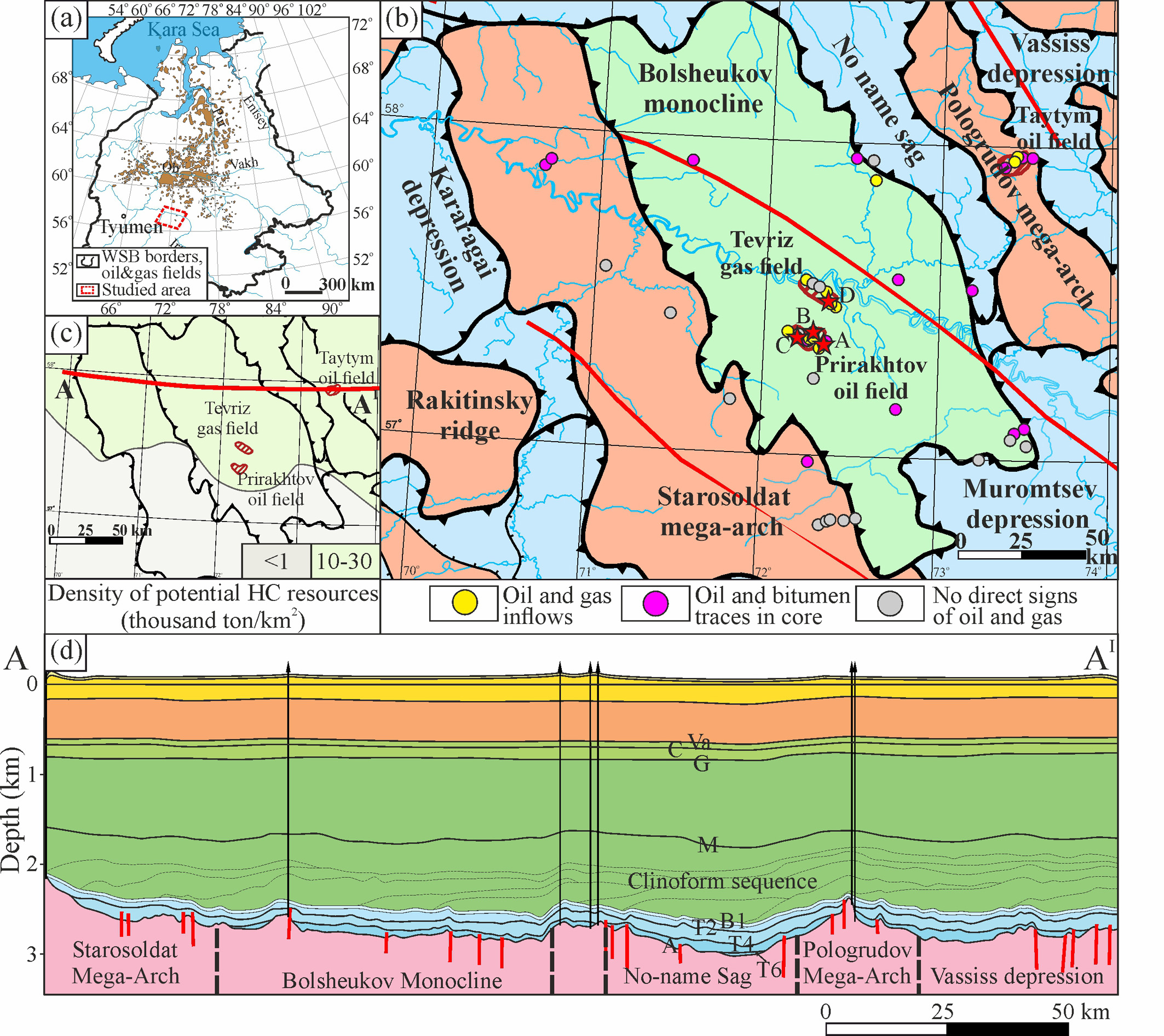
Fig. 1. Location map showing the area of study within the West Siberian Petroleum Basin (a); Map showing main tectonic elements of the area of study (Tectonic Map…, 1998) (b); Map showing the estimated density of hydrocarbon resources (Oil and gas forecast map…, 2017) (c); Geological cross-section showing the structural framework of the area of study, line A-A1, intersecting the main geological structures (based on seismic profile with indicating reference reflection horizons) (d). Red stars indicate wells where core and fluids were studied. Seismic reflections: Va – top of the Gankin Formation, C – top of the Berezov Formation, G – base of the Kuznetsov Formation, М – top of the Koshay bed of the Alym Formation and its stratigraphic analogues, B1 – base of the Bazhenov Formation, Т2 – top of the Yu2 sandy layer of the Tyumen Formation, Т4 – top of the Yu4 sandy layer of the Tyumen Formation, Т6 – top of the Yu6 sandy layer of the Tyumen Formation, А – top of the pre-Jurassic complex.
Active HC exploration in the Prirakhtov and East-Ulugul areas took place during the 1970s and 1980s. These efforts were predominantly focused on preparation and drilling into the tops of the anticline structures, where the most promising reservoir rocks of the Tyumen and Vasyugan Formations were either absent or significantly reduced in thickness. Nonetheless, the HC presence in the wide stratigraphic range of the reservoir rocks of the north Omsk region is well-established (from the Prirakhtov oil field in the west to the Yagyl-Yakh oil field in the east). Hydrocarbon saturation has been confirmed through well testing and by oil films and traces in the core of reservoir intervals of the weathered basement deposits (M layer), Tyumen Formation (Yu2-Yu4 layers), Vasyugan Formation (Yu1 layer), Bazhenov Formation (Yu0 layer), and Achimov Formation (B16-20 layer).
Within the area of our study, direct signs (inflows, oil films, oil shows in the core samples) of HC were discovered in many wells (Fig. 1b). However, due to low drilling success and low amounts of the geological reserves of the discovered fields the territory was recognized as having low HC accumulation potential. Additionally, it was proposed that low current temperatures and shallow depths of source rocks likely indicate that they have not reached the oil window and have not generated significant amounts of HC (Kontorovich, Moiseev, 2000; Elisheva, 2008).
Moreover, the topic of hydrocarbon origin and the potential HC resources within the studied area remains poorly studied to this day. This primarily arises from the absence of comprehensive geochemical studies of source rocks OM in the drilled wells. Therefore, the main aim of this research is to provide the detailed lithological and geochemical characterization of source rocks using the core samples from the wells of the Prirakhtov oil field.
The study area is located in the southern peripheral part of the West Siberian Petroleum Basin (Fig. 1a). It is predominantly represented by three major tectonic elements: the Starosoldat Mega-Arch, the Bolsheukov Monocline, and the Pologrudov Mega-Arch (Fig. 1b). The wells examined (core studies) are situated within the boundaries of the local Prirakhtov Uplift (Fig. 1b) within the Bolsheukov Monocline. The absolute elevation of the basement across the entire study area does not exceed –2900 m. Based on the reprocessing of 2D seismic data and well logging data, the stratigraphic sequence is limited by the Middle Tyumen SubFormation (Yu5-Yu6 layers) in the most deeply submerged areas, resting upon the heterogenous Pre-Jurassic complex (Fig. 1d, Fig. 2).
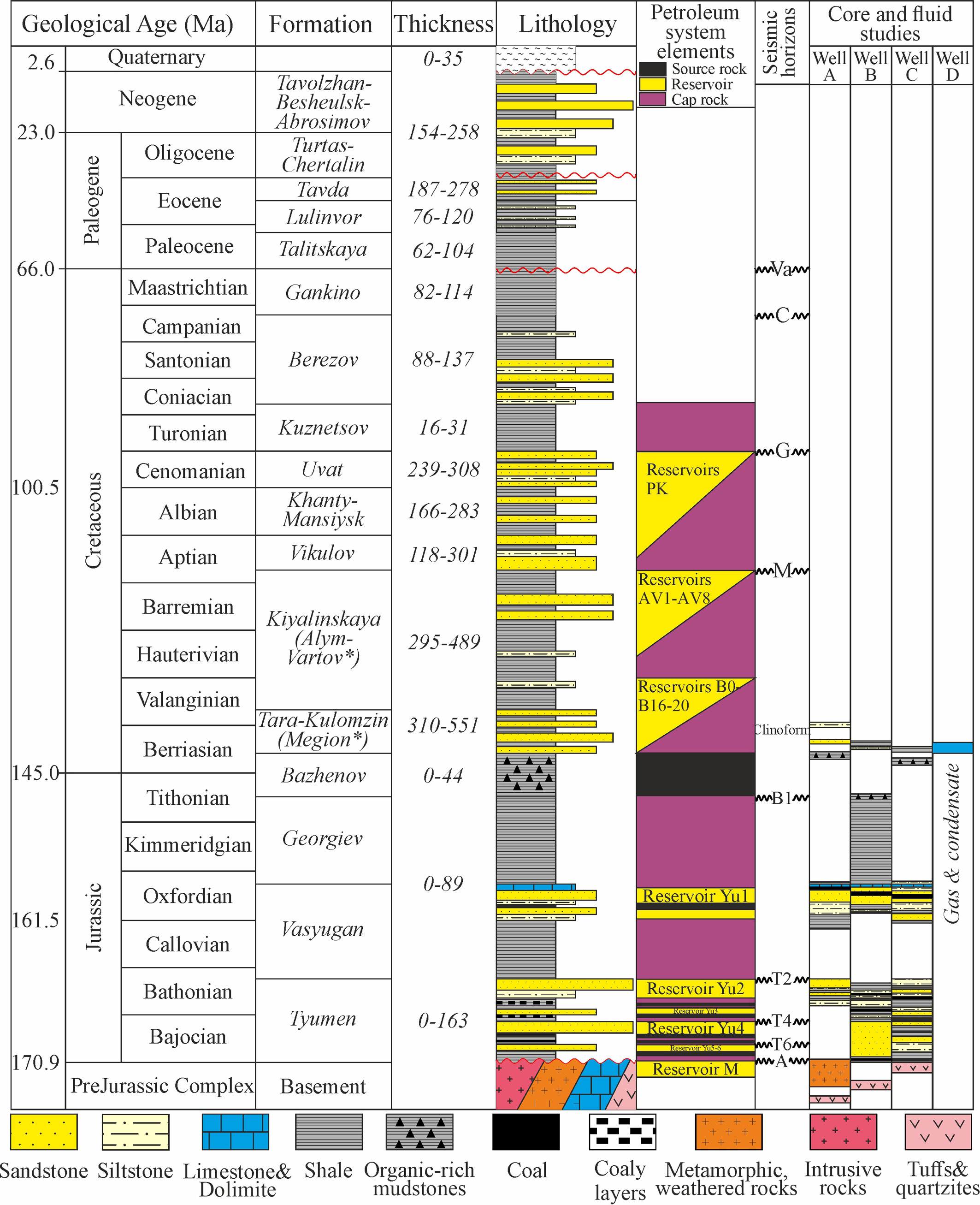
Fig. 2. Generalized stratigraphic column of the study area (based on 51 wells) with designation of core and fluid study. * – Formations, which are stratigraphic analogues, may have different names depending on the area of their distribution according to (Decision of the 6th Stratigraphic Meeting…, 2003)
The Pre-Jurassic complex is made up of Paleozoic metamorphosed deposits, including carbonate rocks (mainly Devonian, less often Carboniferous ages), terrigenous deposits, and felsic intrusions (e.g., within the Aksenov Uplift). These were formed and stabilized during the Hercynian orogeny (Babushkin et al., 2009; Zyleva et al., 2017). The Triassic period is characterized by active volcanism and the accumulation of mafic and intermediate volcanic rocks, as well as tuffaceous sandstones, shales, and siltstones (Babushkin et al., 2009; Zyleva et al., 2017).
During the Late Triassic and Early Jurassic periods, the basement underwent weathering processes. This resulted in the development of a weathering crust (M layer) (Babushkin et al., 2009; Zyleva et al., 2017), which exhibited favorable filtration and reservoir properties in certain areas. In the Middle Jurassic, the accumulation of continental sediments from the Tyumen Formation, characterized by interbedded sandstones (Yu2-Yu6 layers), mudstones, siltstones, and coals, occurred unevenly across the region. Within the Starosoldat Mega-Arch, sediments of the Tyumen Formation are mostly absent as this area did not keep pace with the overall subsidence of the territory during that period. In some areas of the Bolsheukov Monocline and the No-name Depression, the thickness of the Tyumen Formation can reach several hundred meters (Babushkin et al., 2009; Zyleva et al., 2017).
The sediments of the Vasyugan Formation are characterized by interbedded sandstones (Yu1 layer), mudstones, and coals. This Formation is associated with the onset of a prolonged marine transgression in the study area, which was intermittently interrupted by periods of marine regression.
The Bazhenov Formation consists of organic-rich siliceous mudstones. Its accumulation is connected to the maximum transgression during the Tithonian-Berriasian period (Alekseev et al., 1976; Zakharov, Saks, 1983). During the Berriasian-Barremian period, the basin experienced gradual infilling with alluvial fans that currently have a clinoform structure appearance. Water depths were lower, however, the rate of sedimentation increased significantly (Vyssotski et al., 2006).
Clayey material accumulated during local transgressions, while detrital material accumulated during regressions. The subsequent development period of the West Siberian Basin is characterized by alternating transgressions and regressions. This is expressed through sub-horizontal accumulation predominantly of mudstones and sandstones during the Late Cretaceous to Paleogene.
In the Eocene, the transgression reached its maximum. At the Eocene-Oligocene boundary, a phase of significant regression and overall uplift of the territory led to a transition from marine to continental sedimentation (Shatski et al., 1996; Vyssotski et al., 2006). The deposits are represented by the interbedding of sandstones, mudstones, siltstones, and coal lenses.
The main source of hydrocarbons within the study area is considered to be the marine deposits of the Bazhenov Formation which accumulated during the Tithonian-Berriasian period. The thickness of the Formation varies from 0 to 35 m, according to well log data and seismic surveys. In West Siberia, the Radom and Togur Formations are typically considered petroleum source rocks for the Tyumen Formation (Kontorovich et al., 1997; Lobova, 2008; Luneva, 2019). But these Formations have not been penetrated by wells in the study area. Even within the deepest parts, corresponding seismic reflections are not observed in the existing profiles (density of seismic survey data is about 0.3 km/km²).
As noted by researchers (Kontorovich, Moiseev, 2000; Skorobogatov et al., 2017), HC fluids in the tested reservoirs exhibit significant variations in chemical, phase, and group composition. For instance, commercial and non-commercial inflows of paraffinic oil (with over 85% paraffinic HC) were observed in the Yu4 reservoir of the Taytym field, the Yu2 and M reservoirs of the Yagyl-Yakh field, and the Yu1 reservoir of the Baklyan area in the north Omsk region. These oils are also rich in wax (up to 30 wt.%), poor in resin fraction (< 8 wt. %) and sulfur (< 0.3 wt.%). Conversely, oil inflows of mixed group composition (nearly equal amounts of saturates, naphthenic, and aromatic fractions are present) were recorded in the Yu2 reservoirs of the Prirakhtov field, the Yu1 reservoir of the Taytym area, the Yu1 reservoir of the Natalinsk area, and the Yu0 reservoir of the Baklyan field. These oils are characterized by low wax content (< 3%), higher resin content (> 15%), high sulfur content (>1 wt.%, up to 4.4 wt.%). In the Tevriz field, the main fluid is gas (CH4 > 95%), alongside gas condensate. The diversity in group and chemical compositions of oils across various reservoirs suggests the existence of multiple hydrocarbon sources within the study area, which were not previously characterized.
In the framework of the petroleum exploration conducted in the studied area in 2012, the core from the three exploratory wells was analyzed. The wells were drilled to depths of 2518–2570 m within the Prirakhtov local uplift. The core samples are from the Cretaceous and Jurassic sequence, as well as from the Pre-Jurassic complex. They are represented by the Megion, Bazhenov, Georgiev, Vasyugan, and the Tyumen Formations. Additionally, rocks from the Pre-Jurassic Complex (PJC) were also examined. A total of 737 core samples of different sizes were collected with a sampling rate of at least 3 samples per meter. In the intervals presumed to contain source rocks, the sampling rate was increased to 5–10 samples per meter. Additionally, gas and condensate samples were collected from a producing well at the Tevriz gas condensate field.
Lithological studies included macro-description of the core samples in the core storage facility and further examination in the laboratory. Elemental X-ray fluorescence (XRF) analysis was performed using a portable Vanta Olympus C spectrometer (Axon Technology Olympus, USA) with the fundamental parameters’ method for 544 samples. The microstructure of the source rocks was investigated using scanning electron microscopy (SEM) on a Quattro S device (Thermo Scientific, Germany). The elemental composition was analyzed using an energy X-ray spectroscopy microprobe integrated into the Bruker XFlash 6-60 SEM. The elemental composition of the samples was analyzed pointwise using an energy-dispersive X-ray spectrometer (EDX) integrated into a Bruker XFlash 6–60 SEM. The obtained results are presented in relative terms (% by mass, with error not exceeding ± 2%, and normalized to 100%).
For the determination of maceral composition and vitrinite reflectance, 22 samples of coals and carbonaceous shales, as well as 4 siliceous mudstones from the Bazhenov Formation, were prepared and analyzed. Maceral composition was assessed using a QDI302 Craic microspectrophotometer (CRAIC Technologies, USA) in conjunction with a Leica DM 2500 P microscope (Leica, Germany) under reflected and ultraviolet light (ISO 7404-3, 2009). The maceral nomenclature conforms to ICCP recommendations (The new inertinite classification…, 2001; Pickel et al., 2017).
Total organic carbon (TOC) content and its quality were studied using the HAWK Resource Workstation (Wildcat Technology, USA) by the Rock-Eval method (Espitalié et al., 1977). The pyrolysis was performed in an inert atmosphere to determine free hydrocarbons (S0, S1, mg HC/g rock), as well as the amount of hydrocarbons generated during thermal cracking (S2, mg HC/g rock) and CO2 released during the thermal cracking stage (S3 peak, mg CO/g rock) and oxidation stage (S4 peak, mg CO2/g rock). Additionally, the amount of CO2 produced during the oxidation stage from mineral components of the rock was measured (S5 peak). The temperature corresponding to the maximum hydrocarbon yield during thermal cracking (S2) is denoted as Tmax (°C). Based on the measured parameters, the total organic carbon content in the rock (TOC, wt.%), hydrogen index (HI, mg HC/g TOC), oxygen index (OI, mg CO2/g TOC), productivity index (PI), as well as the amount of generative organic carbon (GOC) and non-pyrolyzable residual organic carbon (NGOC) were calculated. From these, the coefficient KGOC was determined, reflecting the degree of kerogen conversion as a fraction of pyrolyzable organic matter (GOC/TOC; Spasennykh et al., 2021). In the text, the results of pyrolytic studies of extracted samples are designated as “ex”.
Kinetic studies of the thermal decomposition of OM were carried out using the HAWK Resource Workstation for 30 representative samples of the source rocks at three heating rates (3, 10, and 30 °C/min). The Kinetics 2015 software (GeoIsoChem Corporation, USA) was utilized to determine the discrete distribution of activation energies (Ea, kcal/mol) with a fixed frequency factor A = 1∙1014 s−1.
Investigations of the isotopic analyses of carbon, sulfur and nitrogen for rocks, rock extracts, and gas (condensate) samples were performed using a DELTA V Plus mass spectrometer (Thermo, Germany) equipped with a Flash HT elemental analyzer (Thermo, Germany). For all extracts, the removal of elemental sulfur was carried out by boiling with elemental copper.
The group SARA analysis of the obtained extracts was carried out, resulting in the separation of four fractions: saturates, aromatics, resins, and asphaltenes. Asphaltenes were preliminarily precipitated using an excess of hexane. The remaining maltene fraction was separated by column liquid adsorption chromatography on silica gel. Fractions of different polarity were eluted sequentially by changing the solvent composition: hexane, toluene, and a mixture of toluene and methanol in a 1:1 ratio. The completeness of elution for each fraction was monitored under UV light.
The Pre-Jurassic Complex in the studied wells within the Prirakhtov licencse area is represented by quartz porphyries (wells A, B, C, marked in Fig. 1). In well A, a weathering crust above the quartz porphyries was examined, characterized by metamorphosed serpentinites, locally silicified and carbonated, which are intensely fractured in various directions (Fig. 2). The fractures are observed both as open and sealed by quartz material. In the characterized core section of the Pre-Jurassic Complex, the TOC values are extremely low, below 1 wt. %. These values are due to traces of residual oil saturation indicated by relatively elevated S0+S1 peaks.
The geological section of the 3 wells studied in the intervals of the Tyumen Formation (J2b-J2bt) varies significantly in both thickness and deposits, characterized by the core samples, indicating a high degree of heterogeneity in the sedimentary facies distribution (Fig. 2). Wells A and B are primarily composed of sandstones and siltstones (layers Yu2-4), often rich in coalified detrital fragments with interlayers of shales and coals. Well C is predominantly represented by carbonaceous shales with interlayers of pure coal and rare thin layers of siltstones and sandstones. According to pyrolytic studies, the fine-grained rocks of the Tyumen Formation, namely carbonaceous shales and coals, possess significant generative potential and may serve as source rocks for oil and gas (Fig. 3). These rocks often go undetected on the well logs due to weak differentiation of the logging curves within the section. In well C, the highest number of coals and carbonaceous shales of varying quality is present, with a total thickness of about 11 m (16% of the total thickness of the Tyumen Formation). In wells A and B, the thickness of the source rock intervals is less, but constitutes 6% and 11% of the Tyumen Formation thickness, respectively. In addition to gas-generating potential, coals and carbonaceous shales exhibit considerable oil-generating potential, as indicated by high hydrogen index values ranging from 250 to 367 mg HC/g TOC (after extraction, reaching up to 600 mg HC/g TOC before extraction), as well as a high proportion of extractable OM (EOM) based on pyrolytic studies, before and after extraction (S0+S1+∆S2 – oil component) of up to 150 mg HC/g TOC.
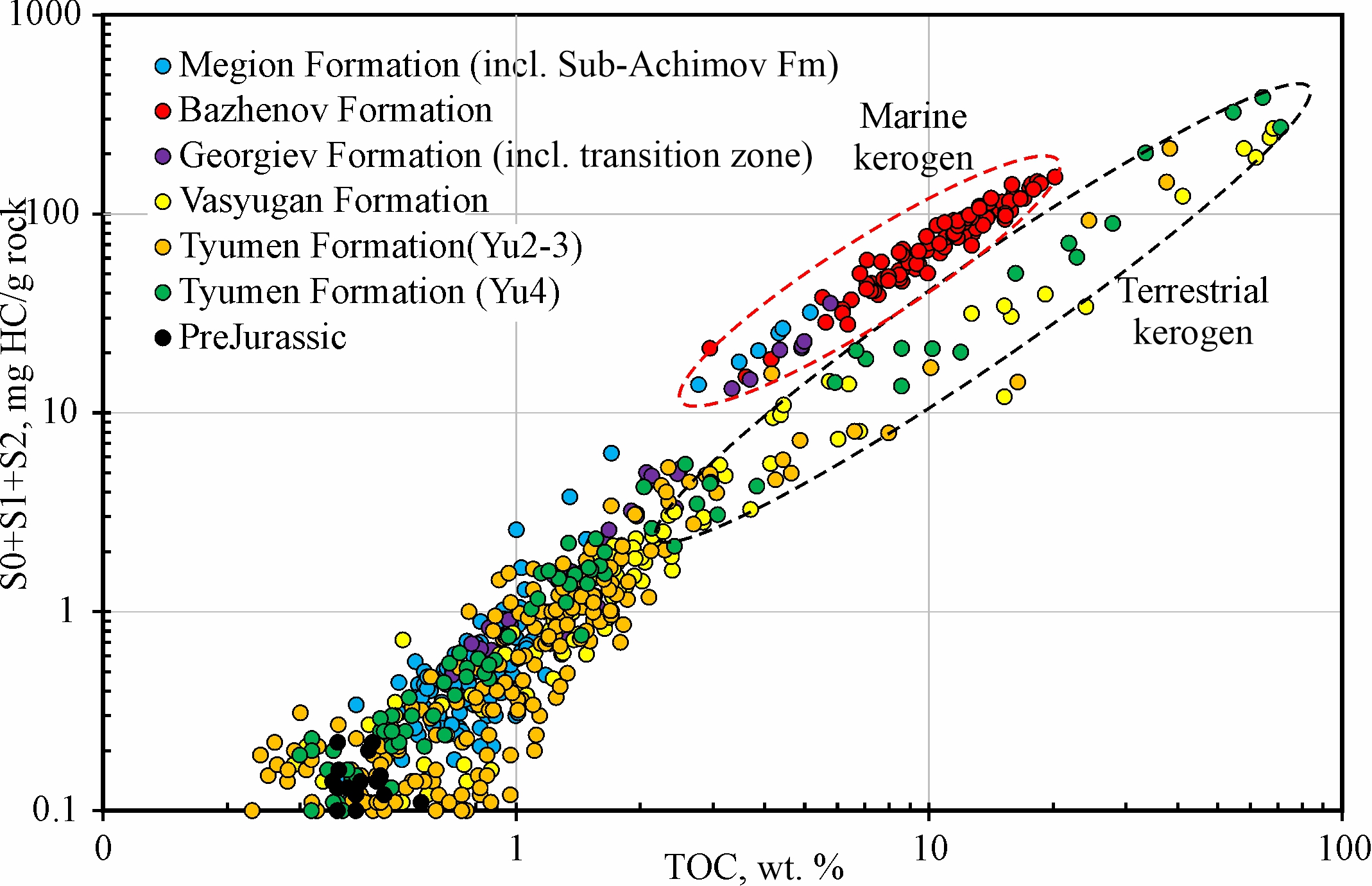
Fig. 3. Characteristics of the rock’s generation potential in the studied wells
The Vasyugan Formation (J2k-J3o) in its lower part is predominantly represented by shales. In terms of lithological and pyrolytic characteristics, the formation is relatively homogeneous. The entire thickness of the studied deposits consists of shales with rare admixtures of sandy and silty material. The average TOCex content is 2%, and the average HIex is 100 mg HC/g TOC. Layers more enriched in organic matter are present, with HIex values increasing up to 214 mg HC/g TOC in these intervals. These deposits are potential gas source rocks; however, the degree of catagenetic transformation according to several parameters is at the beginning of oil window (including Tmax = 431 °C), thus significant contribution to gas potential in the area is questionable. The upper part of the Vasyugan Formation consists of sandstones, siltstones with interlayers of shales, coals, and carbonaceous shales. At the top of the Formation shaly limestone is represented. The coal and carbonaceous shales in the Vasyugan Formation are characterized by TOCex values of up to 61 wt.% and HIex values of up to 280 mg HC/g TOC. In the coals of the Vasyugan Formation, the proportion of extractable fluid is, on average, lower than that for the coals of the Tyumen Formation, reaching up to 130 mg HC/g TOC.
The Georgiev Formation (J3o-J3tt) within the study area is thin and is represented by shales, sometimes silty. A transition zone (about 3 m) has been identified at the top of the Georgiev Formation (the base of the Bazhenov Formation) with good to excellent generative properties with TOCex reaching up to 6 wt.%, and HIex of up to 585 mg HC/g TOC. Besides the transition zone, the Georgiev Formation has low TOC content (TOCex < 2 wt.%) and low generative potential (HIex < 100 mg HC/g TOC).
The Bazhenov Formation (J3tt-K1b) is represented by organic-rich siliceous mudstones with rare interlayers of limestones, as well as inclusions and lenses of pyrite. The core studied characterizes the upper part of the Bazhenov Formation from wells A and C (totaling 13 m), as well as the lower part of the Bazhenov Formation from well B (1 m). According to pyrolytic data after extraction, these rocks exhibit excellent generative potential with an average TOCex content of 10 wt.%, average hydrogen index values (HIex) of 590 mg HC/g TOC, and notably low Tmax values ranging from 410 to 429 °C (average value – 417 °C). Further up the section, the Sub-Achimov Formation was studied (with 1 m of shales characterized in core), and its parameters are summarized in Table 1.
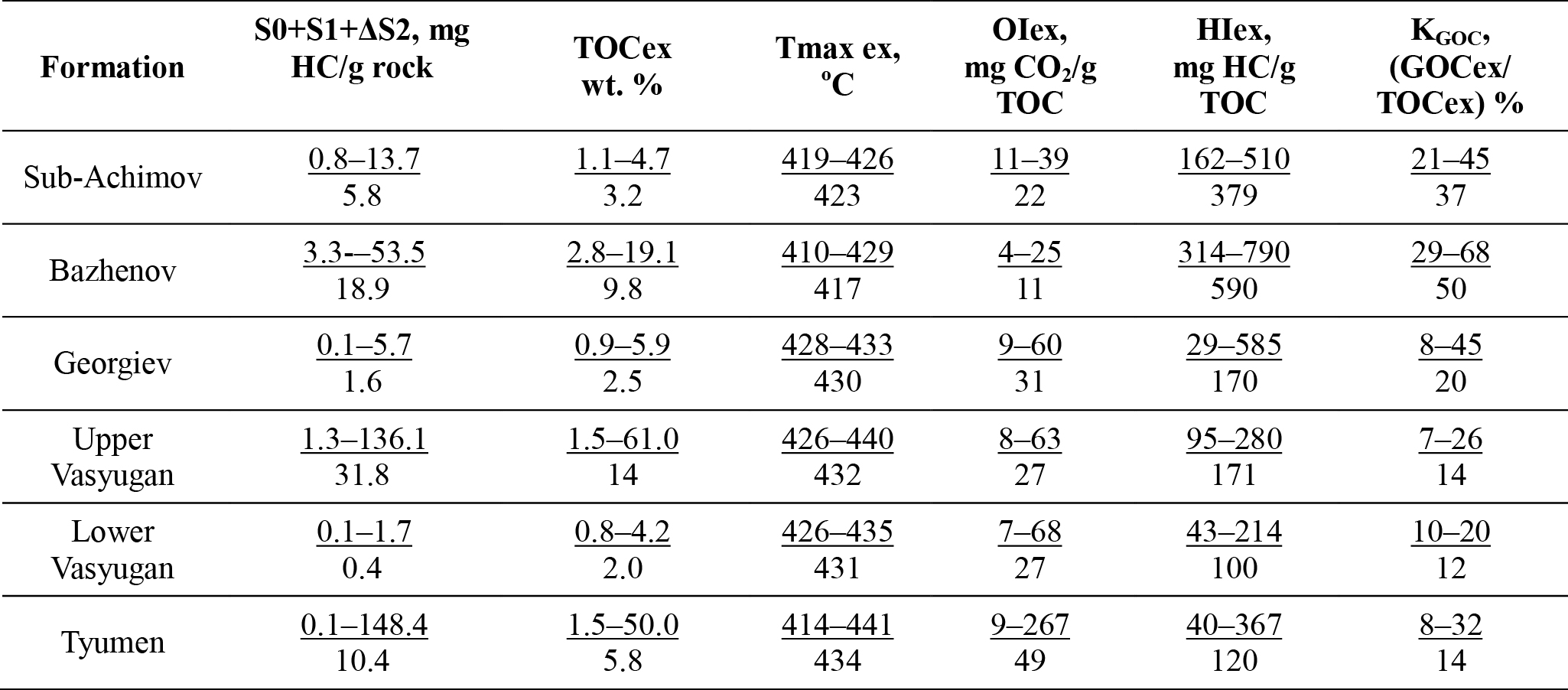
Table 1. Average geochemical parameters of potential source rocks in the studied wells (results presented after extraction). Note: in the numerator – the minimum and maximum values, in the denominator – the mean value of the parameter.
The wide variations in pyrolytic parameters of the Bazhenov Formation allow the studied samples to be tentatively divided into two groups: the first group is characterized by high TOC (> 10%), elevated HI, and low Tmax values; the second group exhibits relatively low TOC (< 10%), lower HI values, and even lower Tmax values. This classification is further supported by the group composition of the extractable OM, which accounts for no less than 8% of the total generation potential of the rock prior to extraction (Fig. 4a). A clear trend can be observed: as KGOC decreases, the proportion of extractable fluid to initial generation potential increases sharply, and its group composition also changes – specifically, there is an increase in the proportion of light hydrocarbons and a decrease in the content of resins and asphaltenes within the total extractable fluid (Fig. 4b).
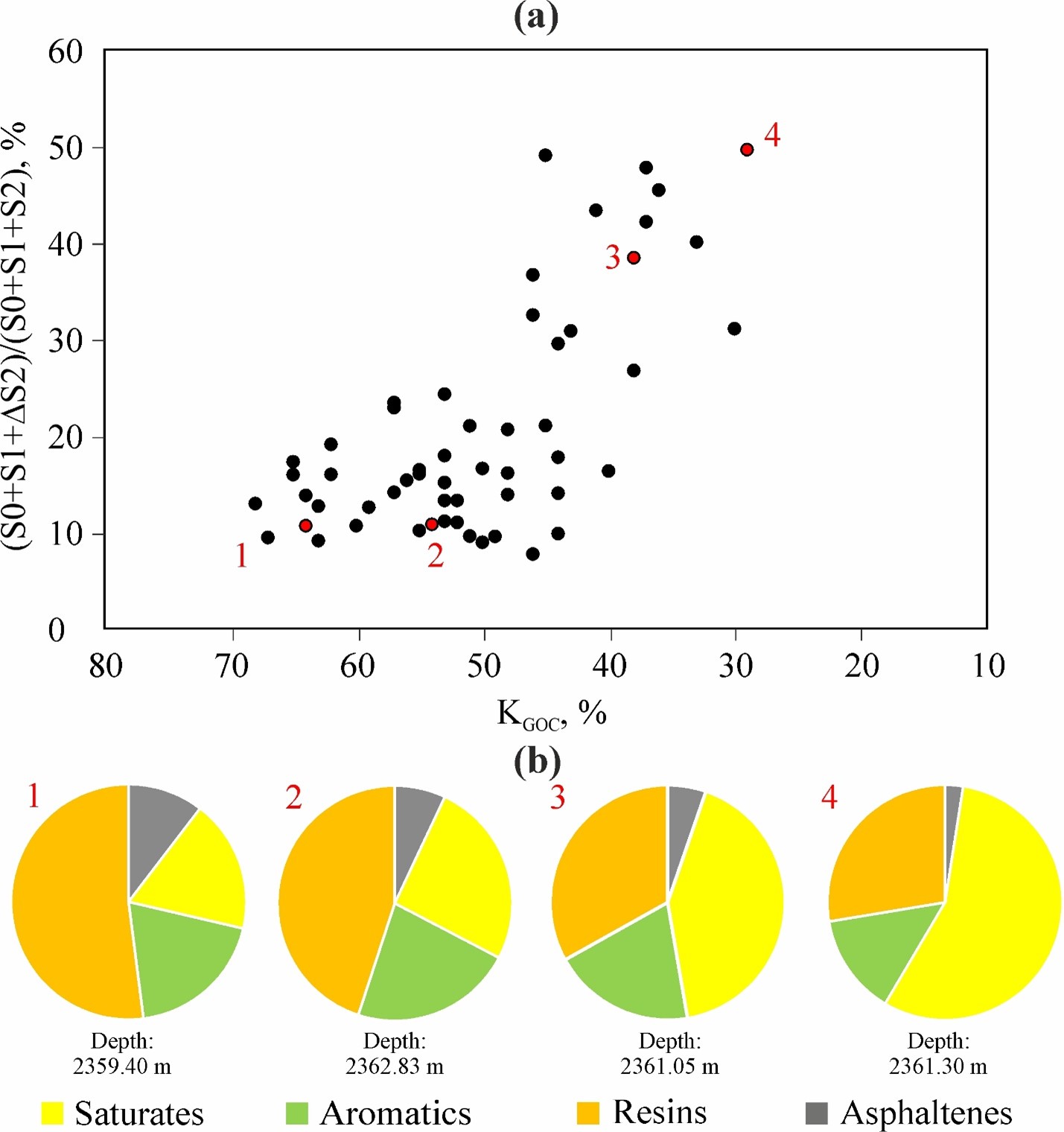
Fig. 4. The relationship between the amount of extractable OM and the total generation potential (before extraction) with KGOC, and its connection to the group composition of hydrocarbons extracted from this sample, using Well С as an example
The identified source rocks of the Tyumen, Vasyugan, and Bazhenov Formations were analyzed using scanning electron microscopy (SEM) for microstructural characterization and elemental analysis of the OM (EDX). The results of the XRF analyses are also presented in Fig. 5 for well C.
The source rocks of the Tyumen Formation and Vasyugan Formation are mainly presented by coals with rare inclusions of clayey varieties (Fig. 5b, c), with occasional clusters of pyrite in the form of framboids, as well as shales containing coal matter. In the coals of layers Yu2-3 of the Tyumen Formation, pores in the rock are noted, which are unevenly distributed throughout the sample (Fig. 5b). According to EDX results, the OM contains a significant amount of nitrogen (up to 4 wt.%) and sulfur (up to 1.5 wt.%), distinguishing them sharply from the coals of layers Yu1 and Yu4 (Fig. 5c). The coals of layers Yu1 and Yu4 are predominantly fractured, with fewer pores, and are devoid of sulfur and nitrogen in the elemental composition of OM.
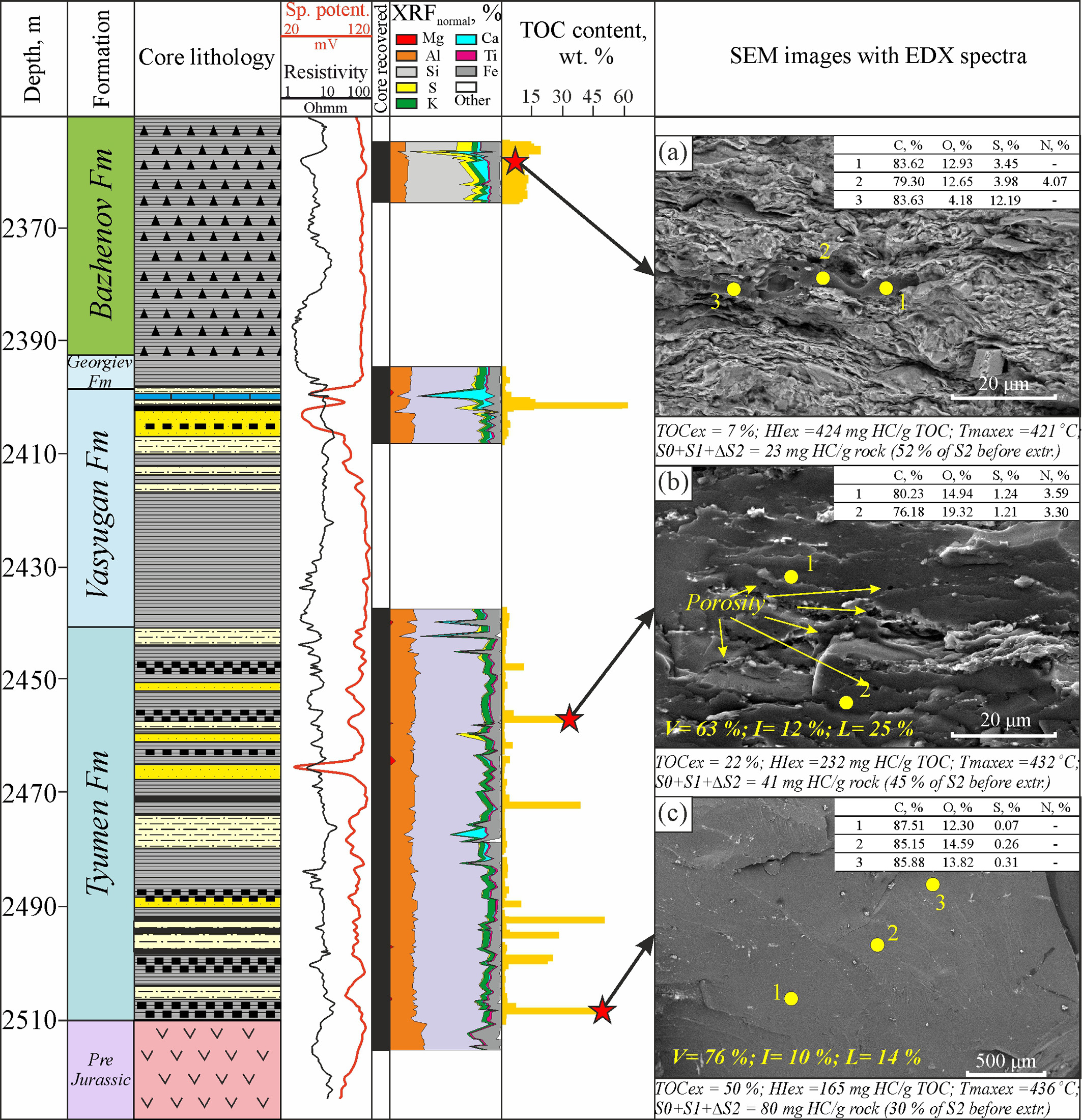
Fig. 5. Geological section of well C with XRF results of the core and SEM images of the source rocks with EDX spectra: the Bazhenov Formation (a), the Tyumen Formation Yu2-3 (b), and the Tyumen Formation Yu4 (c). The legend is given in Fig. 2.
The deposits of the Bazhenov Formation are represented by organic-rich clay-siliceous mudstones with occasional carbonatization areas. These rocks exhibit layered distribution of OM, frequently containing framboidal pyrite inclusions. Based on 80 XRF measurements, total sulfur content in the rocks ranges from 2 to 11 wt.% of the rock.
SEM studies reveal significant heterogeneity of the organic matter in terms of both elemental composition and porosity. Areas with elevated contents of heteroatoms such as sulfur and nitrogen are identified within the kerogen (Fig. 5a). EDX analyses of elemental composition were conducted on dozens of samples from the Bazhenov Formation. Measurements were filtered to exclude all cases where pyrite was visually identified within OM, as well as those containing any iron traces (dispersed pyrite within the organic matter). Based on 64 filtered EDX point measurements (comprising only C, O, N, S elements), the organic sulfur content varies between 1.5 and 12% of the OM mass. According to literature data, EDX results are comparable to classical analytical methods like CHNS (Zuber et al., 2021); however, it is important to note that the microprobe does not detect hydrogen due to physical limitations. The distribution pattern resembles a bimodal distribution, with the most frequently occurring values falling within the ranges of 1.5–3 wt.% and 6–7 wt.% of organic matter across samples from various depths. The porosity distribution within the Bazhenov Formation OM is also heterogeneous, ranging from completely non-porous areas to organic matter with bound porosity, indicating varying degrees of kerogen conversion (Karamov et al., 2023).
The studied samples of coals and carbonaceous shales belong to the Yu1 layer of the Vasyugan Formation, and the Yu2-3 and Yu4 layers of the Tyumen Formation (Fig. 6e-6j). The Yu1 layer samples from all wells are characterized by a heterogeneous maceral composition (Table 2). In addition to inertinite and vitrinite, which constitute most of the OM, the samples show a high content of macerals from the liptinite group. The liptinite group is predominantly represented by resinite and sporinite (remnants of resin, spores, and pollen), while cutinite and suberinite represent to a lesser extent (remnants of cuticle and cork tissues of plants). The overall maceral composition indicates deposition in coastal-marine (lower delta plain) and continental conditions (upper delta plain and wet forest swamp environments).
The samples from the Yu2-3 and Yu4 layers of the Tyumen Formation also exhibit a diverse maceral composition of OM (Table 2), and, in general, higher average liptinite content – 28 vol. %, predominantly represented by cutinite, sporinite, and resinite (Fig. 6g-6j). The organic macerals fluoresce to varying degrees, indicating ongoing hydrocarbon generation processes. Coals and carbonaceous shales formed in coastal-marine and continental conditions (for the Yu4 layer, the areas of the upper delta plain are more characteristic, as evidenced by the increased content of macerals from the inertinite group). The sedimentation regime is stagnant, with a high-water level in the peat accumulation basin, which sometimes decreased.
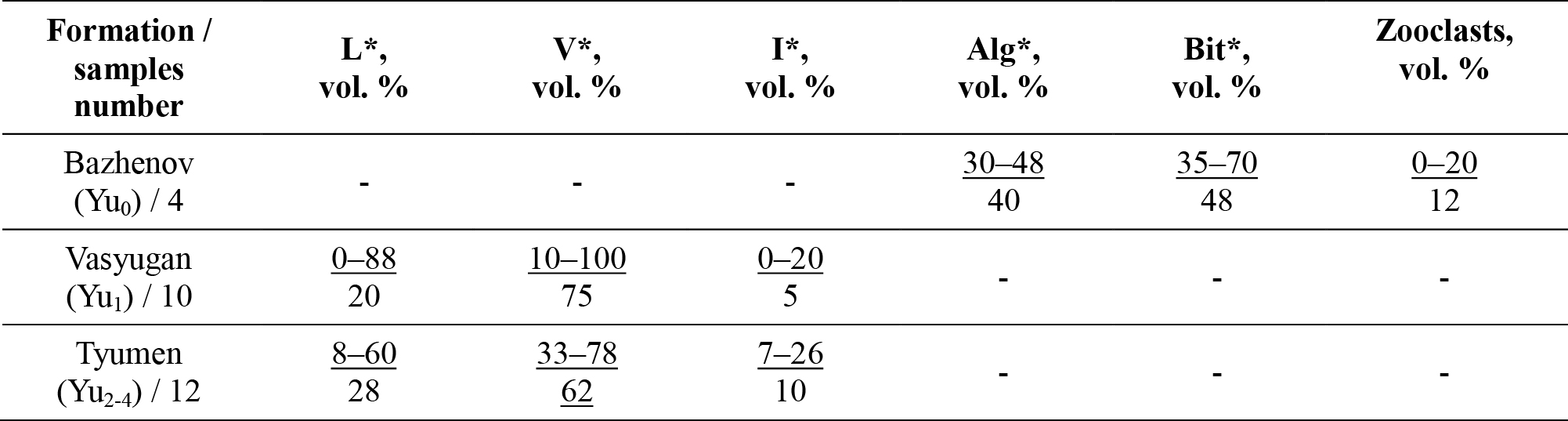
Table 2. Maceral composition of the studied source rocks. Note: in the numerator – the minimum and maximum values, in the denominator – the mean value of the parameter. * – legend is presented on the Fig. 6.
Petrological studies of the Bazhenov Formation (Fig. 6a-6d) revealed that the main organic macerals are bituminite (avg. 48 vol. %), alginite (avg. 40 vol. %), and zooclasts – onychites (avg. 12 vol. %). Alginite appears in reflected light as small, separate brownish lenses (telalginites), and exhibits a bright greenish-yellow fluorescence under ultraviolet light (Fig. 6h). Bituminite appears in reflected light in gray and brown colors. All samples from the Bazhenov Formation contained bitumen (petrographic term), which is represented by dark brown elongated fragments surrounding the bituminite and found within it, displaying a yellowish fluorescence under ultraviolet light (Fig. 6j). This suggests ongoing hydrocarbon generation. The zooclasts in the rocks are predominantly represented by onychites and fossil cephalopods hooks, which appear gray and brownish in reflected light.
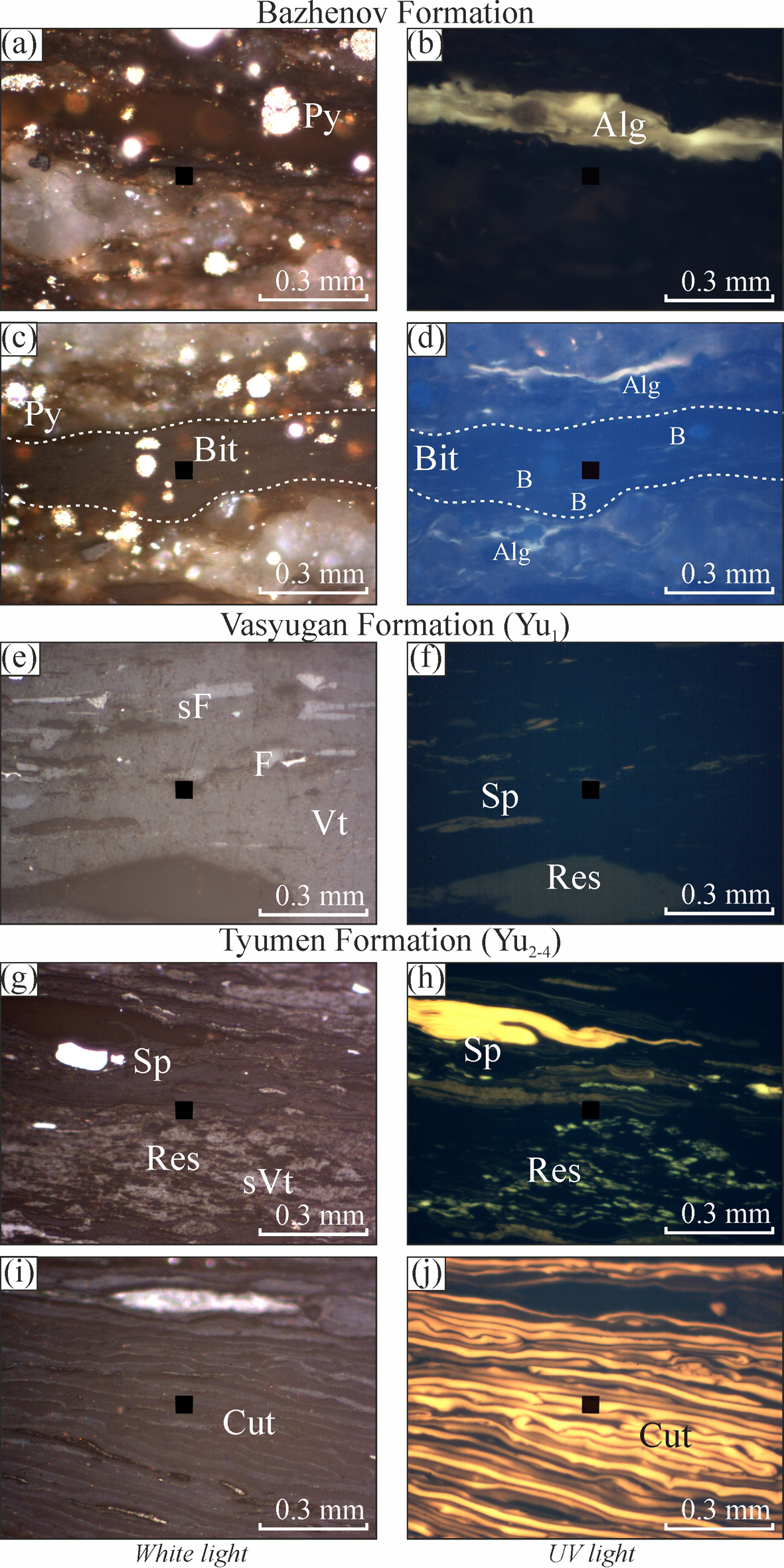
Fig. 6. Optical photomicrographs illustrating typical maceral composition of the Bazhenov, Vasyugan and the Tyumen Formations. In immersive oil, magnification of 50x for all photomicrographs. (a, c, e, g, i) Samples under reflected white light; (b, d, f, h, j) same samples under UV blue light showing the intense luminescence of different macerals. Alg, alginate; Bit, bituminite; B, bitumen (relative petrographic term); Sp, sporinite; Res, resinite; Cut, cutinite, Vt, vitrinite; F, fusinite; sF, semifusinite; Py, pyrite.
Measurements of the vitrinite reflectance (Rv), necessary for assessing the thermal evolution of the basin, showed a considerable range of values due to the widespread presence of liptinite in the samples. The results indicate that the Rv is in the range of 0.50–0.60 % (Fig. 7), corresponding to the beginning of the oil window. However, the high content of liptinite and EOM may underestimate the actual Rv values of vitrinite (Carr, 2000; Wilkin, George, 2002; Chen et al., 2012; Wang et al., 2022). There are no indications of higher plant remnants in the studied samples of the Bazhenov Formation that would allow for the measurement of vitrinite reflectance. Therefore, the maturity assessment of the Bazhenov Formation rocks was carried out by converting the reflectance values of bituminite (RB, %) into the equivalent of RVeqv, % (Marunova et al., 2023). The results are presented in Fig. 7.
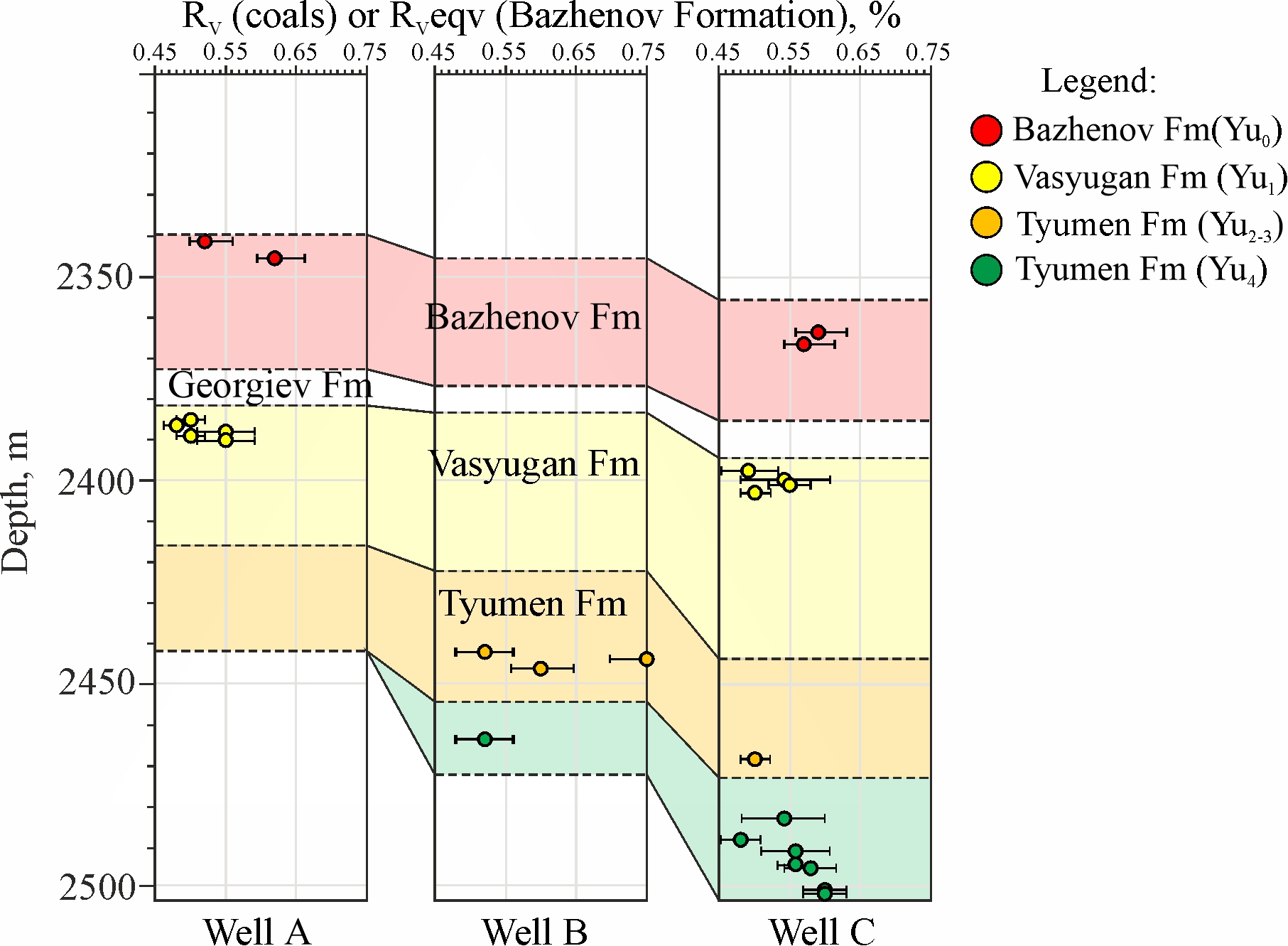
Fig. 7. Results of vitrinite reflectance measurements RV for three studied wells, for Bazhenov Formation RVeqv, % is recalculated from RB, %
To characterize the conversion processes of OM in source rocks, bulk kinetic studies of OM thermal decomposition were conducted on samples from the Bazhenov, Vasyugan, and Tyumen Formations (Fig. 8). The samples were analyzed after extraction with chloroform (the Bazhenov Formation) and a mixture of chloroform and methanol-toluene (coals and carbonaceous shales) to remove most of the soluble OM.
Coals and carbonaceous shales from the Vasyugan and Tyumen Formations display a broader kinetic spectrum due to the diverse maceral composition of the terrestrial OM. These spectra are asymmetric, with activation energy maxima ranging from 53 to 54 kcal/ mol (Fig. 8c, d).
The kinetic spectra of the Bazhenov Formation OM, with a fixed frequency factor А=1∙1014 s−1, exhibit an asymmetric spectrum of activation energies, peaking at 52 kcal/mol (Fig. 8a, b). The kinetic spectra obtained for the Bazhenov samples show a maximum activation energy that is 1–2 kcal/ mol lower than those from the central part of Western Siberia (Leushina et al., 2021b, Spasennykh et al., 2024).
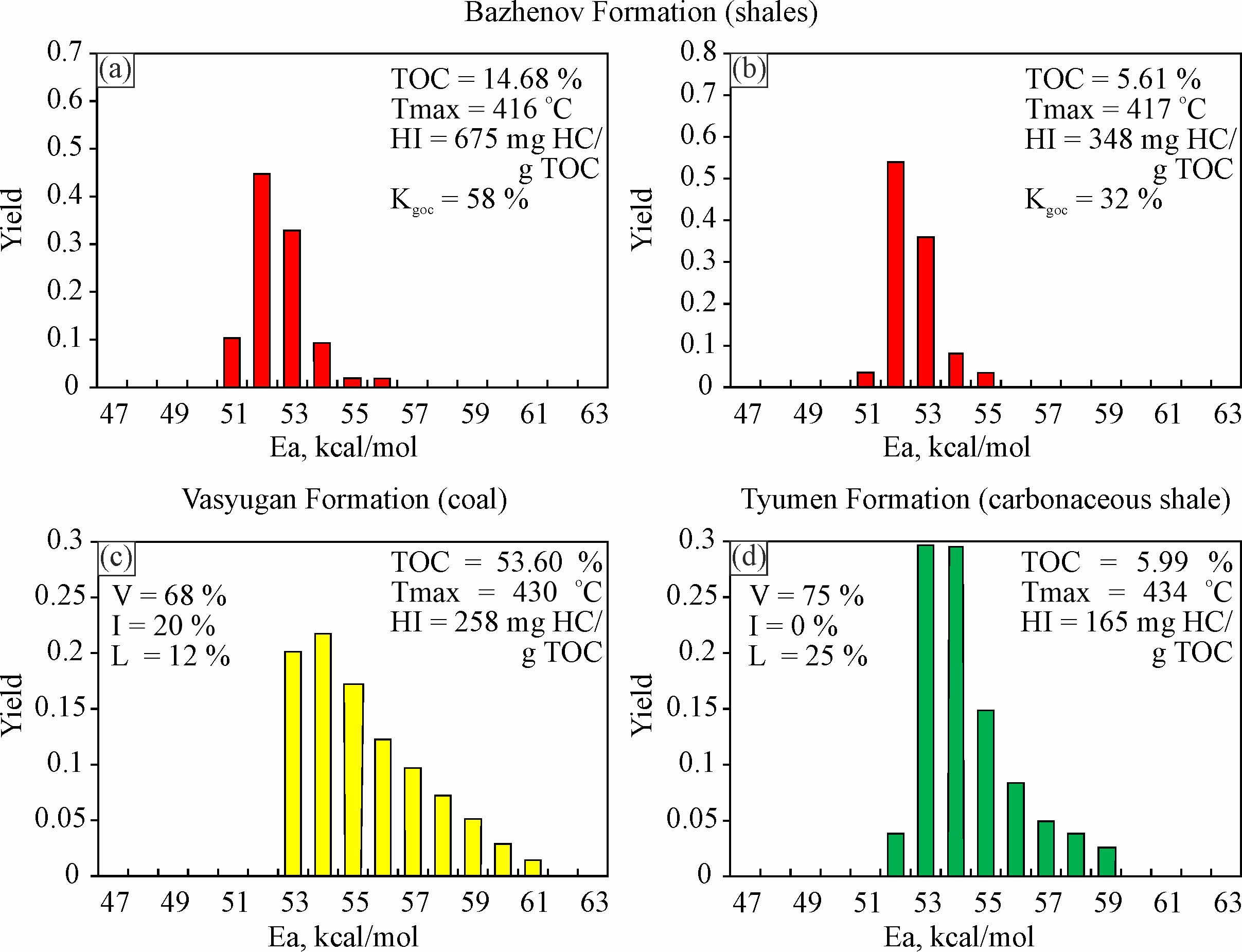
Fig. 8. Activation energy distribution of OM thermal decomposition for the Bazhenov (a, b) and the Vasyugan and Tyumen Formations (c, d). Frequency factor A is fixed to А = 1∙1014 s−1.
In addition to kinetic studies, kerogen artificial maturation experiments were conducted on 10 samples from the Bazhenov Formation. These experiments (Karamov et al., 2023) allow for the clarification of maturation trends based on the HI-Tmax relationship and the assessment of the initial generation potential of OM; however, these curves should be used with caution when applying them to geological conditions in a sedimentary basin (Philp, Mansuy, 1997; Romero-Sarmiento et al., 2016). The selected samples were heated in the pyrolytic cell of the HAWK pyrolyzer in a helium flow, ranging from 350 to 460 °C with a 10 °C increment, and a heating duration of 30 minutes at each stage. After each heating phase, pyrolytic parameter measurements and single-component kinetic studies were performed on the sample “aged” to a specific degree.
Based on the experimental results, the trends of thermal transformation of OM in the samples studied were divided into two groups: Group #1 includes 3 samples, and Group #2 includes 7 samples. Figure 9a displays the trends of generation potential realization for the two groups of samples in HI-Tmax coordinates, along with data for one of the typical samples from the Bazhenov Formation in the central part of Western Siberia, which were investigated previously. The trend line for group #1 samples lies below that for group #2 samples, demonstrating a decrease in HI at lower experimental temperatures and lower Tmax values. For the group #1 sample, the hydrogen index (HI) decreases to values less than 100 mg HC/g TOC at the heating stage of 400–410 °C, with Tmax reaching 431 °C. For the Group #2 sample, HI drops below 100 mg HC/g TOC at the heating stage of 420–430 °C, while Tmax reaches 450 °C.
Thus, based on the results of these experiments, the oil window (TR = 10–90%) for group #1 samples is in the Tmax range of <417 °C to 432 °C. For group #2 samples, the oil window falls within Tmax = < 416–450 °C, which is generally higher than for group #1 but lower than for samples from the central part of Western Siberia (Topchiy et al., 2019; Spasennykh et al., 2021), as well as samples previously investigated (Tmax ranging from 425–435 °C to 465–470 °C), which are well consistent with the natural evolution of type II kerogen, identified based on statistical data. Nevertheless, both sample groups fall outside the maturation pathways defined for the Bazhenov Formation in the central part of Western Siberia (Fig. 11) according to the experiments results and wide pyrolytic database of samples of different maturity, where OM is predominantly represented by type II kerogen (Maglevannaia et al., 2019; Spasennykh et al., 2021).
The identified patterns indicate significant differences in the composition of OM at the studied object compared to the Bazhenov Formation in the central part of the Western Siberia and suggest that hydrocarbon generation on the southern periphery of Western Siberia will occur at lower temperatures.
Rock extracts and gas sample from the production well of the Tevriz gas and condensate field were collected and analyzed. The Prirakhtov and Taytym oil fields are conserved, thus it is impossible to acquire fresh formation fluid samples from the reservoir rocks.
The fractional composition of the gas reveals (Tevriz gas and condensate field) that it consists of methane (CH4) at 98 wt. %, ethane (C2H6) at 1.5 wt.%, and propane (C3H8) at 0.5 wt.%.
To assess the genesis of reservoir fluid and establish the correlation between source rock – extract – gas/ oil, isotopic studies were conducted on the OM of the source rocks and their extracts, as well as for gas sample. Additionally, rock extracts from reservoir intervals Yu1, Yu2-3 and Yu4 were investigated (Table 3).
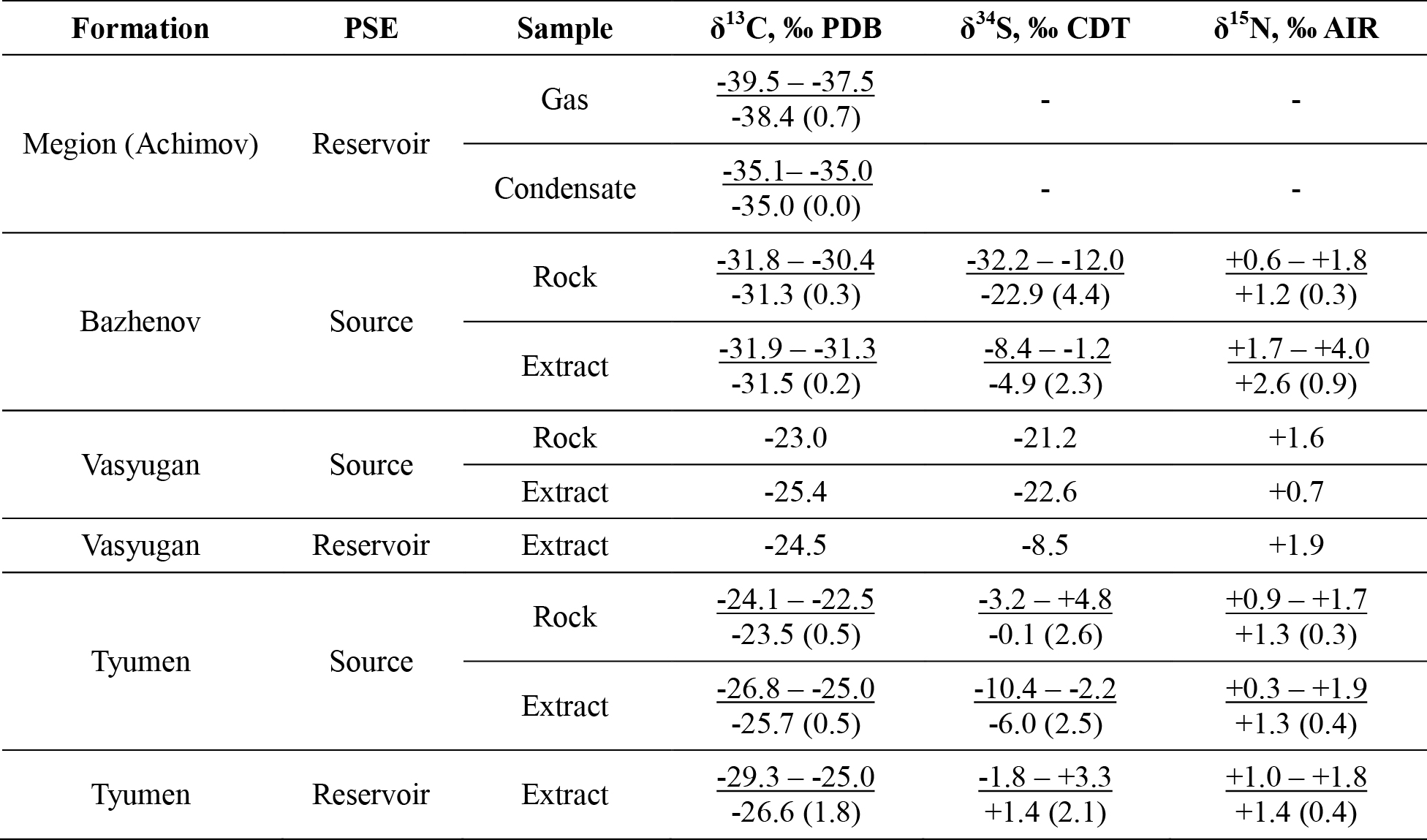
Table 3. Isotopic composition of source rocks, rock extracts, gas. Note: in the numerator – the minimum and maximum values, in the denominator – the mean value of the parameter, in parentheses – the standard deviation (SD).
The isotopic composition of carbon in methane of the gas probe (Tevriz gas and condensate field), δ13C(CH4) = –38.4 ‰. The results indicate its link to terrestrial OM and thermogenic origin of the gas (Whiticar, 1999). Previously, δ13C value of methane was obtained for this field at approximately –64 ‰ (Goncharov et al., 2016a), and an alternative viewpoint was proposed regarding the microbial or mixed origin of the gas. While measured δ13C value of the condensate is –35.0 ‰, which is consistent with previously published results (Goncharov et al., 2016a).
For the Bazhenov Formation rocks δ13C values range from –30.4 to –31.8 ‰. The extracts exhibit δ13C values from –31.3 to –31.9 ‰. This data generally confirms the marine origin of the OM and the syngenetic relationship of the selected rock extracts (Kontorovich et al., 1985). The variations in the carbon isotopic composition of the rocks are generally typical for the Bazhenov Formation in other areas of the basin. The δ¹³C values for rocks of the Bazhenov Formation vary within the range of –29 to –33 ‰, with the most commonly occurring values around –31 ‰ (Kontorovich et al., 1997, 2019; Bulatov et al., 2021; Yurchenko et al., 2021). For extracts from the Bazhenov Formation and oils sourced from it, the δ¹³C values range from –29 to –34 ‰ (Kontorovich et al., 1986; Peters et al., 1994; Goncharov et al., 2016b), with the most frequently observed values around –30.5 to –31.5 ‰. The variations in the isotopic composition of carbon, nitrogen, and sulfur in the rocks are typical for the Bazhenov Formation in other regions of the West Siberian Basin (Vyshemirsky, 1993; Bulatov et al., 2021; Leushina et al., 2021a). The obtained values of δ34S for the desulfurized extracts range from –8.4 to –1.2 ‰. The average sulfur content in the rock extracts from the Bazhenov Formation (S = 1.36 wt.%) is similar to the sulfur content in the oil from the Prirakhtov oil field (S = 1.2 wt.%).
For the coals and carbonaceous shales of the Vasyugan and Tyumen Formations, δ13C varies from –22.5 to –24.1 ‰, the rock extracts show δ13C values from –25.1 to –26.8 ‰, which do not contradict to previous studies (Kontorovich et al., 1986 and literature inside). The significant difference between δ13C values for the Bazhenov and the Vasyugan and Tyumen Formation rock extracts speaks in favor of the different genesis (Kontorovich et al., 1986). This distinction enables a correlation of reservoir fluids with the two source rocks identified. However, one rock extract sample taken from a low-thickness sandstone in the Yu3 layer showed a δ13C value of –29.3 ‰. It is presumed that in this part of the section, the reservoir may contain a mixture of HC from both the Bazhenov Formation and the coals.
The conducted comprehensive lithological and geochemical studies have shown that the oil potential of the deposits of the Tyumen and Vasyugan Formations is partly related to the carbonaceous matter of the identified source rocks. At the same time, the terrigenous matter of Jurassic deposits contributes to the hydrocarbon potential of other regions of Western Siberia, as demonstrated in various studies and collectively referred to as the Togur type of oils (Kontorovich, Stasova, 1977; Goncharov et al., 2003; Oblasov, 2010; Kalacheva et al., 2023).
The coals contain a significant amount of liptinite (over 20% on average), which is associated with the oil generation potential (Tissot, Welte, 1978; Hunt, 1991). Some of the samples exhibit modern HIex values greater than 300 mg HC/g TOC and show a clear oil-generating potential (Scott, 1992; Norgate et al., 1997). Coals and carbonaceous shales with contemporary HIex values ranging from 150 to 300 mg HC/g TOC are also likely to act as source rock for liquid HC, possessing the capability to generate gas and gas condensate (Pepper, 1991; Pepper, Corvi, 1995).
Another significant factor is the quantity of extracted HC yield, which exceeds 30 mg HC/g TOC in all coal samples from the Tyumen and Vasyugan Formations. This indicates not only their generative potential but also that they have reached the expulsion threshold (Snowdon, Powell, 1982; Snowdon, 1991). Conversely, based on the OSI index (S1/ TOC), the coal samples have values greater than 10 mg of HC/g TOC, suggesting that they generate liquid hydrocarbons but have not yet reached the expulsion threshold (Killops et al., 1998). This observation is generally consistent with findings regarding the generation and migration of HC from the coals and carbonaceous shales suggested by (Petersen, 2005).
In the coal samples from the Yu2-3 layer, scanning electron microscopy has revealed a significant amount of porosity in the kerogen. In the samples from the Yu1 and Yu4 horizons, the number of pores in the OM is smaller. The presence of porosity in OM, according to several studies, may be related to the generation of hydrocarbons from it; recent findings indicate that an increase in porosity occurs with an increase in the maturity level of the organic matter (Zhang et al., 2023; Yuan et al., 2024). Also, several studies indicate the potential for early hydrocarbon generation (from RV = 0.35–0.40%) from various coal macerals, all of which are presented in different proportions in the examined samples (Khorasani, Michelsen, 1991; Wang, 1993; Hasiah, 1997; Li et al., 2022).
The studied samples from the Bazhenov Formation exhibit Tmax values ranging from 410 to 429 °C. According to the classic interpretation of this parameter (Espitalie et al., 1977; Teichmüller, Durand, 1983; Espitalié, 1986; Peters, 1986), these samples are considered immature. Broad variations in geochemical parameters of organic matter (TOC, HI, and to a lesser extent OI) under such conditions reflect sharply changing paleofacies environments across the stratigraphic section, sometimes within 1–2 cm, which influence the kerogen quality (alternating reducing and oxidizing conditions).
However, when considering a set of geochemical and lithological parameters comprehensively, it can be noted that the variations in geochemical parameters of organic matter could represent differing degrees of kerogen transformation across individual intervals of the Bazhenov Formation, which are associated with varying proportions of different kerogen types accumulated under complex environmental conditions. A set of parameters supporting this conclusion will be presented below.
The KGOC coefficient for the studied section of the Bazhenov Formation, reflecting the degree of kerogen transformation as a fraction of pyrolyzable carbon in TOC, varies between 29% and 68% (Table 1). Initial KGOC values for the Bazhenov Formation are reported to be 62–65% (Spasennykh et al., 2021), decreasing to several percent for samples with high catagenetic maturity of organic matter.
In the rocks of the Bazhenov Formation, a high relative proportion of extractable organic matter (S0+S1+ΔS2) was observed, reaching up to 55% of the initial generation potential S2 before extraction. The majority corresponds to ΔS2, represented by high-molecular-weight resinous-asphaltene components. The highest proportion of EOM is found in the intervals with the lowest KGOC values across the section.
Based on measurements of the elemental composition of the rock using XRF and pyrolysis data, statistically significant correlations (according to the Student’s criterion for linear dependencies) were identified between total sulfur content and the hydrogen index (HI) of the rocks and Tmax (Fig. 10a, b). An increase in total sulfur (without distinguishing between pyritic and organic sulfur) and a decrease in Tmax (Fig. 10a) in intervals with lower HI values contradict the interpretation of more oxiс conditions in these intervals, as elevated sulfur content indicates reducing sedimentation environments. The observed negative correlation between Tmax and total sulfur content in the rock suggests an increase in organic sulfur content in kerogen with increasing total sulfur. Atypically low Tmax values during pyrolysis of organic matter indicate the presence of organic sulfur in kerogen (Espitalié, 1986; Yang; Horsfield, 2020).
Variations in the degree of transformation of individual intervals are also confirmed by pyrolytic analysis results for corresponding sections of the Bazhenov Formation (see diamonds and triangles in Fig. 11). For instance, in well A, located in the top of the anticline, the section of the Bazhenov Formation shows overall less mature pyrolytic parameters compared to the section in well B, located deeper on the flank of the structure. The average Tmax in the respective intervals in well A is 416 °C, with an average HIex = 622 mg HC/g TOC, while in well B, it is 420 °C, with an average HIex = 534 mg HC/g TOC.
Experiments on artificial maturation of samples (Fig. 9) illustrate that in laboratory experiments the maturation of samples in an open system occurs earlier than for samples from the central part of Western Siberia. These differences reflect the differences in OM and, in our opinion, may be related to the composition of OM, primarily due to the elevated content of organic sulfur. In this case, the range of Tmax variation in the studied section is 410–429 °C (Fig. 11), which is significantly lower than the values of 425–455 °C determined for rocks of the Bazhenov Formation in the central part of the basin (Kostyreva, Sotnich, 2017; Topchiy et al., 2019; Spasennykh et al., 2021). The change in pyrolysis parameters on the HI-Tmax diagram for samples after heating in an open system occurs similarly to samples from the Monterey Formation (resembling group #1 samples) and Gareb Formation shales (resembling group #2 samples), where OM is represented by type IIS kerogen (Jarvie, Lundell, 2001; Rosenberg, Reznik, 2021).
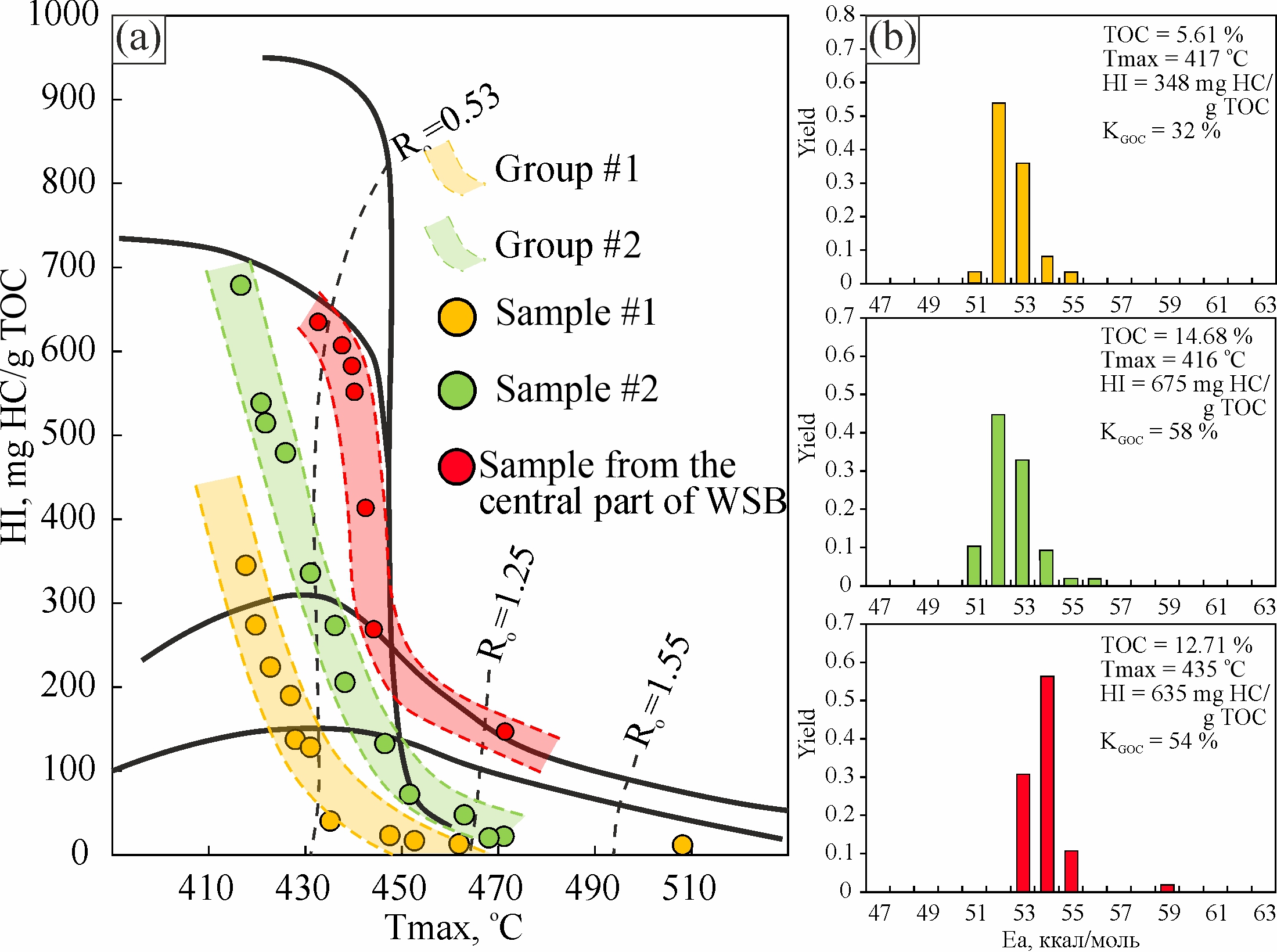
Fig. 9. The results of artificial maturation of the Bazhenov Formation samples of different initial parameters (a) with kinetic spectra of OM destruction of each representative sample (b)
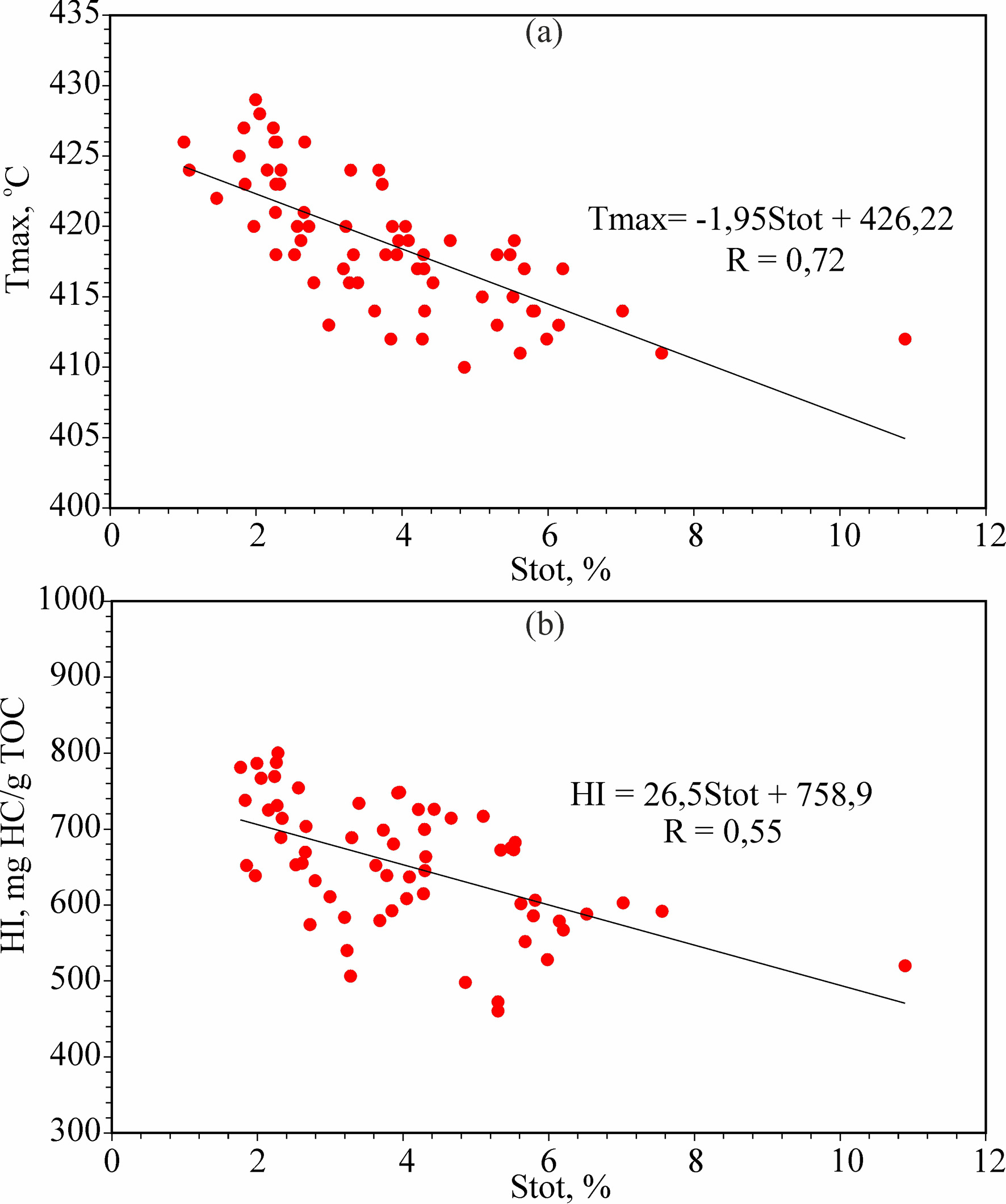
Fig. 10. The relationship between the hydrogen index HI, Tmax, and total sulfur Stot in the rocks of the Bazhenov Formation
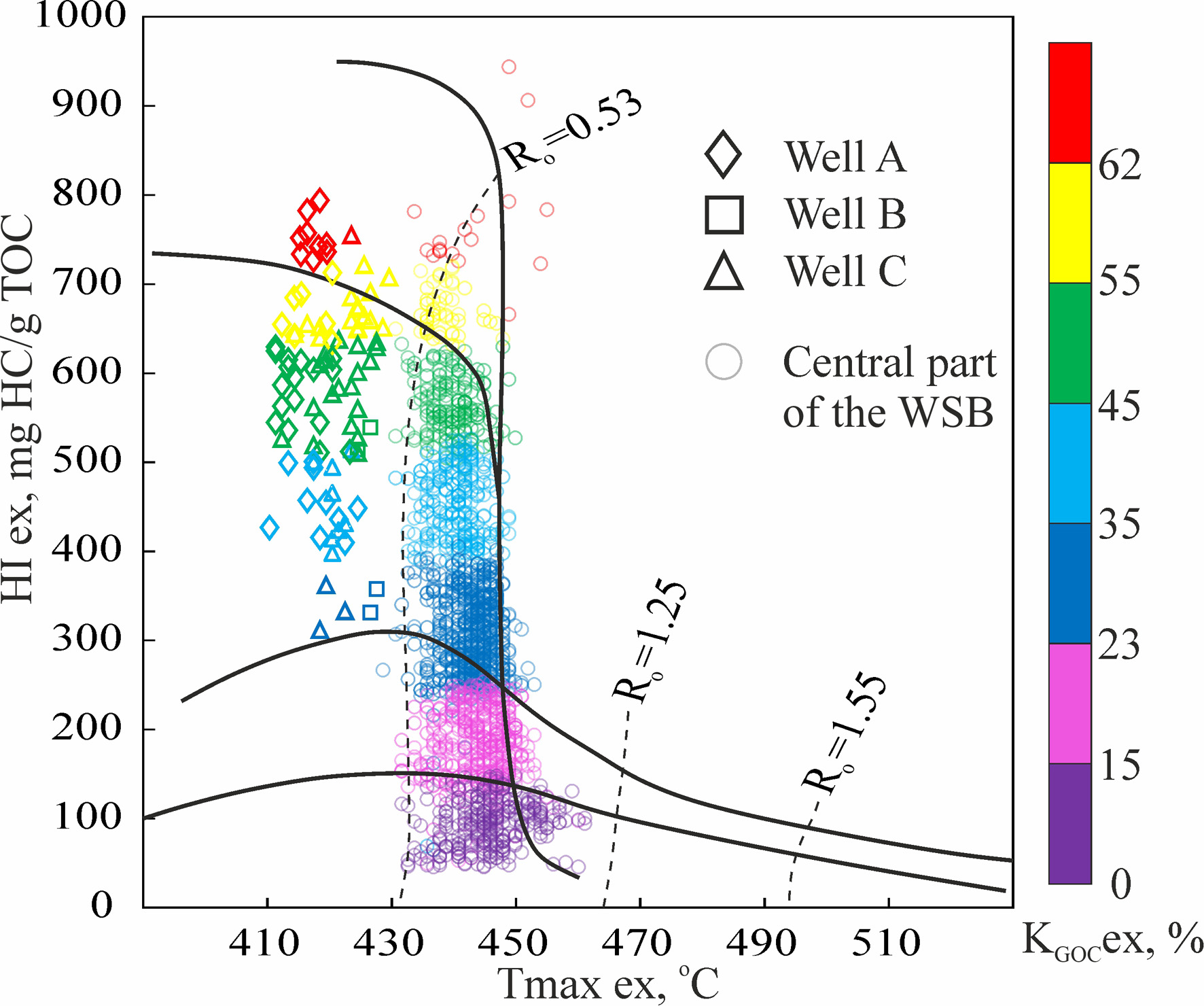
Fig. 11. Modified van Krevelen diagrams (after Espitalie et al., 1977, 1985) for the studied samples (bright colors) and samples from Central Part of WSB (Spasennykh et al., 2021) for the samples of the Bazhenov Formation. Colors correspond to KGOC values.
Thus, we believe that significant variations in pyrolytic characteristics of the studied section may be associated with a higher degree of OM conversion in certain intervals, where sulfur content is elevated.
In (Jarvie, Lundell, 2001) it was noted that earlier hydrocarbon generation in rocks with S/C > 0.04 (type IIS kerogen) is additionally facilitated by elevated oxygen and nitrogen content in the OM of the rocks, which requires further study for the samples of this study.
Therefore, we suggest that the studied section of the Bazhenov Formation is represented by mixed type II/ IIS kerogen. The hypothesis about the existence of type IIS kerogen has also been proposed for other regions of Western Siberia (Oksenoyd et al., 2017). The distribution of interbeds with assumed mixed type II/IIS kerogen across the well sections is uneven and accounts for about 11–12% of the total thickness within the studied 14 m of the Bazhenov Formation in two wells in the upper part of the Formation.
The accumulation of kerogen with elevated organic sulfur content may be linked to iron deficiency during sedimentation, allowing excess sulfur atoms to incorporate into the kerogen structure after pyrite formation during diagenesis (Orr, 1986). In the studied section, a high concentration of these interbeds with mixed type II/IIS kerogen is associated with intervals of high total sulfur content according to XRF, as well as at some distance (up to 50 cm vertically) from this interval, both above and below. In such intervals, all forms of sulfur are present, including pyritic sulfur, elemental sulfur, and organic sulfur. This complex structure with different kerogen types is typical for complicated polyfacies depositional environments. However, the question regarding the initial pyrolysis parameters of the discovered section (HI0, TOC0, etc.), especially in the intervals with the lowest current HIex values, remains debatable and cannot be resolved without studying multiple wells with similar geological sections of the Bazhenov Formation.
The earlier HC generation in the studied section of the Bazhenov Formation, compared to the rocks from the central part of the basin, can also be illustrated by calculating the transformation ratio (TR) in the same geological conditions. For comparison, a typical sample of the Bazhenov Formation (type II kerogen) from the central part of West Siberian Basin (WSB) with similar pyrolytic characteristics has been included in this study (presented in Fig. 9). The recalculation conditions include temperatures ranging from 0 to 200 °C, with the gradual heating rate of the source rock set at 2 °C/million years over a period of 100 million years. As mentioned above, the lower generation temperature for type II/IIS kerogen is likely associated with the increased sulfur content in its molecular structure, the presence of which weakens the molecular bonds.
As can be seen from Fig. 12, for the temperatures at the beginning and middle of the oil window, the difference in the oil window borders is about 10 °C. Thus, when assessing the oil and gas potential without considering the geochemical characteristics of the region, underestimating the maturity of the source rock could lead to values reaching TR = 27% at the temperature of the onset of the oil window for the central part of Western Siberia.
Fig. 12. Transformation ratio modeling for samples of the Bazhenov Formation of the studied section and from the central part of the WSB. The initial pyrolytic characteristics are for the sample #2: TOCex = 14.7 wt.%, HIex = 675 mg HC/g TOC, Tmax = 416 °C, KGOC= 58%. For the central part of the WSB are TOCex = 12.7 wt.%, HIex = 635 mg HC/g TOC, Tmax = 435 °C, KGOC= 54%.
In the study area, within the boundaries of discovered fields and based on the results of testing, two groups of oils with different compositions, as well as gas and gas condensate, have been discovered.
The first group of oils is characterized by high density and viscosity, increased sulfur content (Savg > 1 wt.%) and resin content, and a mixed group composition (aromatic-naphthenic-aliphatic oil). The second group consists of aliphatic oils (saturated fraction > 85 wt.%), which are also viscous and dense, yet practically sulfur-free (Savg < 0.3 wt.%), with an elevated content of high-molecular weight waxes (> 15 wt.%). The third type of fluid in the study area is gas and gas condensate.
For the first group of oils, the presumed source rock is the Bazhenov Formation, from which type II/IIS kerogen has been identified in the research area. Due to the elevated sulfur content and other heteroatomic elements, it exhibits not only an earlier entry into the oil window but also higher density, viscosity, and sulfur content of the generated hydrocarbon fluid (Orr, 1986; Lewan et al., 2006; French et al., 2020). Similar oils have been derived from the Yu2 layer of the Tyumen Formation in the Prirakhtov field (Savg = 1.2%), the Yu1 layer of the Vasyugan Formation in the Taytym oil field (Savg = 1.1%) and in the Natalinsk area (Savg = 0.9%), as well as the Yu0 layer of the Bazhenov Formation in the Baklyansk field (Savg = 4.4%).
For the second group of oils, the presumed source rock in the study area is terrigenous OM, including carbonaceous shales and coals from the Vasyugan and Tyumen formations. Oils derived from terrestrial OM are low in sulfur, have an elevated content of high-molecular weight waxes, and predominantly contain a saturated fraction (Hedberg, 1968; Hunt, 1991). Similar oils have been detected during the testing of the Yu4 layer of the Tyumen Formation at the Taytym field (waxes – 27.9%), from the Yu2 layer of the Tyumen Formation and M layer of the weathering crust in the Yagyl-Yakh field (waxes – 15.9%), and from the Yu1 layer of the Vasyugan Formation in the Baklyansk field (waxes – 18%). In the study by (Peters et al., 1994), the oils from the Taytym and Yagyl-Yakh fields of the mentioned horizons were also classified as oils generated from terrestrial organic matter. However, the carbon isotopic composition of these oils (δ13C) is reported to be –34.55 ‰ and –33.3 ‰. According to the data (Vyshemirsky, 1993), the carbon isotopic composition of oil from the Yu4 horizon of the Taytym field is δ13C = –34.8 ‰. No oil-source rocks with a comparably light isotopic composition were found in the core samples studied. Nevertheless, rocks enriched in light 12C carbon have been described in the Tomsk region in the Ponomaryovskaya-2 well, where rocks of the Togur Formation at depths of approximately 3050 meters locally exhibited similar carbon isotopic compositions (δ13C = –33.1 to –33.7 ‰ in one interval and –32.4 ‰ in another). Similar values were observed in the Kolpasheskaya-10 well, where δ13C for the rocks reached up to –33.8 ‰ (Kontorovich et al., 1995; Kostyreva et al., 2014). Additionally, δ13C values for extracts from the Togur Formation from the wells of Archinskaya and Kulginskaya areas range from –35.2 to –36.5 ‰ (Goncharov et al., 2016c).
It was previously believed that the source of gas in the study area was the Bazhenov Formation (Kontorovich, Moiseev, 2000; Elisheva, 2008). However, the isotopic composition of carbon in methane δ¹³C (–38.4 ‰), taken from the producing well of the Tevriz gas condensate field, is much heavier than that of the gas generated from the Bazhenov Formation rocks, which has δ¹³C values ranging from –45 to –55 ‰ (Goncharov et al., 2023). It can be confidently stated that the source of gas in the field is the terrigenous OM of the Jurassic oil and gas source rocks; however, the main prospects are indeed connected to their ability to generate liquid hydrocarbons.
For the initial assessment of HC generation volumes associated with mixed type II/IIS kerogen within the Bazhenov Formation, as well as coals and carbonaceous shales within the Vasyugan and Tyumen Formations, a volumetric estimation method was used (Magoon, Dow, 1994):
Vgen = S∙h∙ρ∙TOC∙(HI0 – HI),
S –area of the petroleum kitchen, km²; h – average thickness, m; ρ – density, kg/m³; TOC – average content of organic carbon in the rock, wt.%; HI0 – initial value of hydrogen index, g HC/kg TOC; HI – average value of hydrogen index from core samples after extraction, g HC/kg TOC.
For the Bazhenov Formation, the area of distribution of mixed type II/IIS kerogen was delineated based on well log data due to the lack of core samples and studies on the source rocks from other drilled wells (Fig. 13c). The examined wells, along with several other wells from the Prirakhtov and Tevriz fields, as well as Prirakhtovskaya-2 and Yanvarskaya-1 wells within the study area, exhibit similar logging measurements: gamma ray (GR) readings in the range of 20–35 mRh/h without significant variations, low resistivities up to 20–25 Om·m, and stable neutron log readings (Fig. 13a). Wells located outside the focus area (around Prirakhtov and Tevriz fields) show a more differentiated GR curve with a peak of about 100 mRh/h in the middle of the layer, resistivities ranging from 50–70 Om·m, as well as a more complex curve of neutron porosity (Fig. 13b).
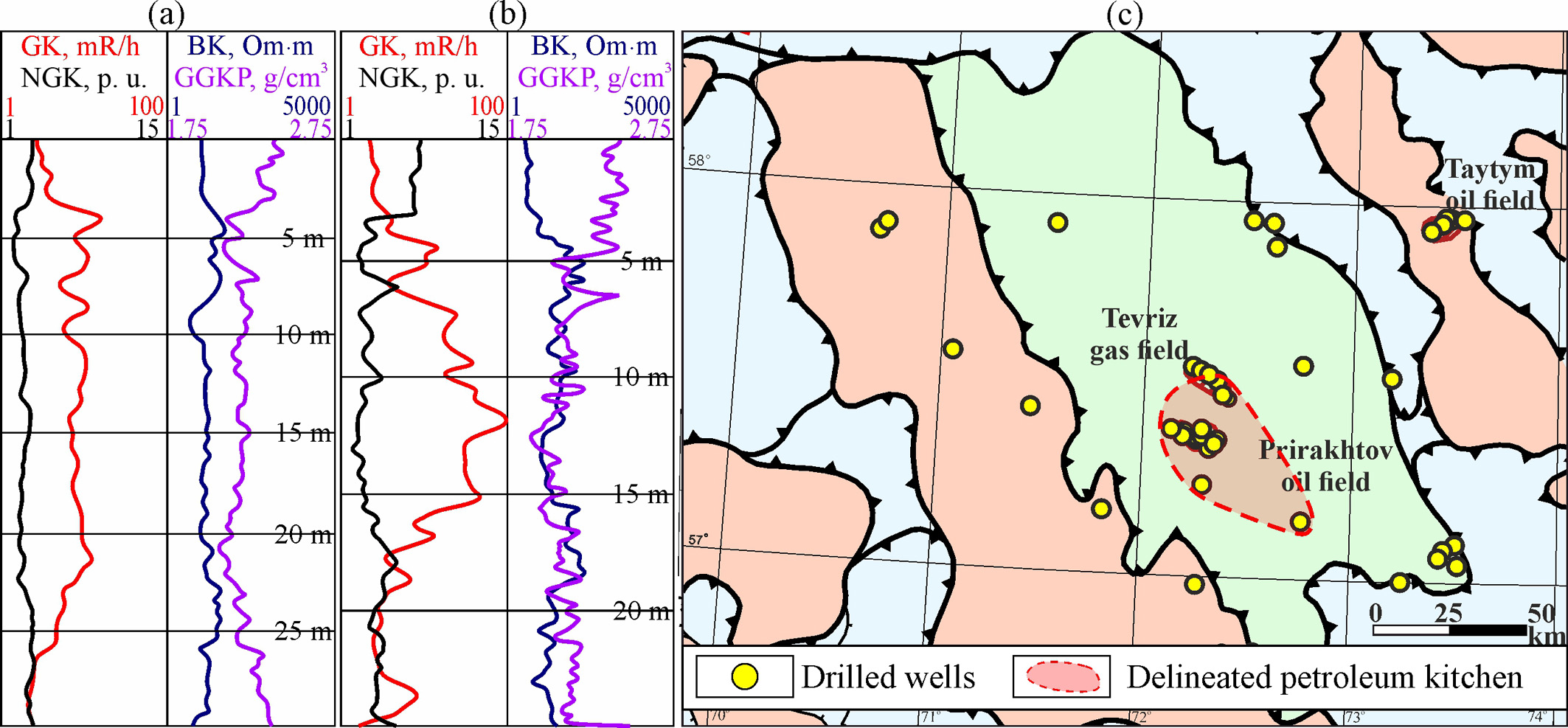
Fig. 13. Typical logging characteristics of the Bazhenov Formation inside petroleum kitchen (a) and outside of petroleum kitchen (b) and map illustrating the delineated (based on well logs) petroleum kitchen within the Bazhenov Formation (c)
For a conservative estimation of the generation volumes, the boundary of the petroleum kitchen was drawn based on the outer wells with logging characteristics of the Bazhenov Formation similar to those of the three wells studied in this work. The mapped area of the early generation petroleum kitchen is approximately 1373 km². This area was also utilized to estimate the generation volumes of the Vasyugan and Tyumen formations for convenience of comparison.
The calculated parameters of h, TOC0, HI0, and volumes of generated hydrocarbons are presented in Table 4. Current average parameters for the source rocks are presented in Table 1, while initial values of TOC0 and HI0 were calculated based on (Jarvie, 2012, 2014), considering the kerogen type.
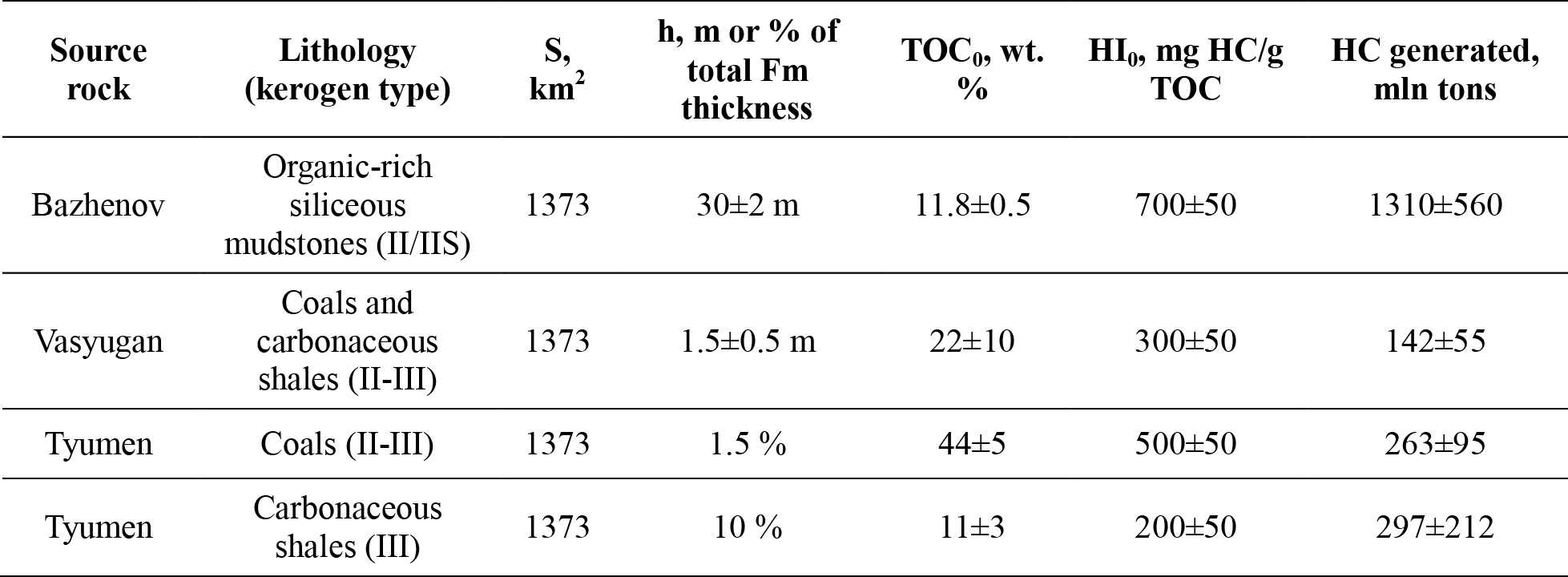
Table 4. Initial source rock parameters of the area of study and their generation estimation
The average thickness of the Bazhenov Formation was assessed based on well log data. The Bazhenov Formation has a consistent thickness of ~30 m in the studied area. The Vasyugan coals are also well represented within the delineated petroleum kitchen. They are clearly distinguished based on logging data and have an average thickness of ~1.5 m. Tyumen carbonaceous shales and coals exhibit significant variability in thickness, as does the Tyumen Formation in general. However, according to the core descriptions from earlier drilled wells in the Prirakhtov and Tevriz fields, coals and carbonaceous shales are found in each of them. In the well C, the total thickness of carbonaceous shales and coals of varying quality reaches about 16% of the total thickness of the Tyumen Formation (up to 11 m), while in wells A and B, the thickness of source rocks is ~6–11% of the total thickness of the Tyumen Formation. Also, ~1.5% of thickness is represented by coals, which possess exceptionally high generation characteristics due to the high content of liptinite. Wells within the identified petroleum kitchen are characterized by present-day temperatures against the Bazhenov Formation ranging from 80 to 91 °C, which is consistent with the current kinetic spectra obtained in this study, where the onset of generation for various samples begins at approximately ~95 °C. A more accurate assessment of generation volumes, paleotemperatures of the oil window, as well as the timing and duration of the identified source rock interval, will be possible through basin modeling, planned for the next paper.
To re-assess the oil and gas potential in the southern part of the West Siberian Petroleum Basin, a comprehensive lithological and geochemical study of OM in the Jurassic-Cretaceous complex was conducted. The study aimed to characterize the source rock generation potential. In the studied area near the Prirakhtov oil field (Omsk region), two groups of source rocks were identified. They are organic-rich siliceous mudstones of the Bazhenov Formation and coals and carbonaceous shales of the Vasyugan and Tyumen Formations.
Based on a set of parameters, the OM of the Bazhenov Formation in the studied area significantly differs from that of the Bazhenov Formation in the central part of the West Siberian Petroleum Basin. First of all, it is noted that a reduction in the generative potential by 1.5–2 times occurs at lower pyrolytic Tmax values (415–425 °C) compared to rocks in the central part of Western Siberia (435–445 °C), presumably due to the mixed composition of type II/IIS kerogen. This is supported by the following data:
• The activation energies for thermal destruction of kerogen in the studied area are 1–2 kcal/mol lower compared to type II kerogen in the central part of Western Siberia;
• The maturity trend lines based on artificial maturation experiments on the Van Krevelen diagram are shifted toward lower Tmax values compared to rocks from the central part;
• Hydrocarbon generation calculations performed using kinetic data for the studied samples indicate a 10-degree shift in the oil window compared to rocks from the central part of Western Siberia.
The coals and carbonaceous shales of the Vasyugan and Tyumen Formations are characterized by an anomalously high content of liptinite macerals (up to 88 vol.%). The presence of liptinite ensures an increased generation potential of the rocks and hydrocarbon generation at temperatures corresponding to the catagenesis stage MC1. It was also shown that the hydrocarbons generated from carbonaceous material significantly differ from the hydrocarbons of the Bazhenov Formation in terms of isotopic composition.
The results obtained indicate the presence of a local petroleum kitchen in the southern peripheral part of Western Siberia associated with type II/IIS kerogen of the Bazhenov Formation, as well as with the coals and carbonaceous shales of the Vasyugan and Tyumen Formations. The area of the early generation petroleum kitchen, based on the geological and geophysical data available to the authors, is at least 1300 km².
A preliminary estimate of the generated volumes of HC in the identified petroleum kitchen (limited by existing well data) amounts to Vgen = 2.01 ± 0.92 billion tons of hydrocarbons (the generation density of oil and gas source rocks is approximately 1.5 million tons of hydrocarbons per km²), including:
• The Bazhenov Formation: Vgen = 1.31 ± 0.56 billion tons of HC,
• The Vasyugan Formation: Vgen = 0.15 ± 0.06 billion tons of HC,
• The Tyumen Formation: Vgen = 0.56 ± 0.31 billion tons of HC.
To provide a comprehensive assessment of the hydrocarbon potential of the research area, 3D basin modeling needs to be conducted, considering the results obtained.
This work was supported by the Ministry of Science and Higher Education of the Russian Federation under agreement No. 075-10-2022-011 within the framework of the development program for a world-class Research Center.
The authors express their gratitude to Lyudmila Torshina for conducting the isotopic studies.
The authors declare no conflict of interest.
1. Abdel-Fattah M.I., Reda M., Fathy M., Saadawi D.A., Alshehri F., Ahmed M.S. (2024). Oil-source correlation and Paleozoic source rock analysis in the Siwa Basin, Western Desert: Insights from well-logs, Rock-Eval pyrolysis, and biomarker data. Energy Geoscience, 5(3), 100298. https://doi.org/10.1016/j.engeos.2024.100298
2. Alekseev E.Y., Bochkarev V.S., Braduchan Y. V., Volkov A.M., Gorsky A.T., Zyryanov L.N., Kulakhmetov N.K., Kulikov P.K., Lebedev I. V., Nesterov I.I., Podsosova L.L., Prozorovich G.E., Rudkevich M.Y., Rostovtsev N.N., Rudkevich M.Y., Rylkov A. V., Sidorenkov A.I., Smirnov V.G., Sobolovsky V. V., Sokolovsky A.P., Stavitsky B.P., Sterlin D.Y., Storozhev A.D., Tikhomirov Yu. P. Ushatinsky I.N., Fedortsov V.K., Shpilman V.I., Shpilman A.K., Yasovich G.S. (1976). Atlas and Explanatory Memorandum to Atlas of Litholological-Paleogeographical Maps of Jurassic and Cretaceous periods of the West-Siberian plain in scale 1:500 000. Trudy ZapSibNIGNI, 93, 85 p. (In Russ.)
3. Babushkin L.A., Voronov V.N., Zyleva L.I., Kozlov E.P., Korkunov K.V., Provtorova N.A., Sokolova A.V., Sokolovsky A.P., Cherepanov Yu.P. (2009). State Geological Map of the Russian Federation. Scale 1:1,000,000 (third generation). West Siberian Series. Sheet O-42 – Tobolsk. Explanatory Note. St. Petersburg: Cartographic Factory VSEGEI (Ministry of Natural Resources of Russia, Rosnedra, FGUP “VSEGEI”, LLC “Geotex”), 300 p. (In Russ.)
4. Badejo S.A., Fraser A.J., Neumaier M., Muxworthy A.R., Perkins J.R. (2021). 3D petroleum systems modelling as an exploration tool in mature basins: A study from the Central North Sea UK. Marine and Petroleum Geology, 133, 105271. https://doi.org/10.1016/j.marpetgeo.2021.105271
5. Bulatov, T., Kozlova, E., Leushina, E., Panchenko, I., Pronina, N., Voropaev, A., Morozov, N. and Spasennykh, M. (2021). Alginite-Rich Layers in the Bazhenov Deposits of Western Siberia. Geosciences, 11(6), p. 252. https://doi.org/10.3390/geosciences11060252
6. Carr A.D. (2000). Supression and retardation of vitrinite reflectance, part 1. Formation and significance for hydrocarbon generation. Journal of Petroleum Geology, 23(3), pp. 313–343. https://doi.org/10.1111/j.1747-5457.2000.tb01022.x
7. Chen Y., Caro L.D., Mastalerz M., Schimmelmann,A., Blandón A. (2012). Mapping the chemistry of resinite, funginite and associated vitrinite in coal with micro-FTIR. Journal of Microscopy, 249(1), pp. 69–81. https://doi.org/10.1111/j.1365-2818.2012.03685.x
8. Chen, Z., Wang, L., Yang, G., Zhang, B., Ying, D., Yuan, B., Pei, S. and Li, W. (2020). Geological structures and potential petroleum exploration areas in the southwestern Sichuan fold-thrust belt, SW China. Petroleum Exploration and Development, 47(4), pp. 699–713. https://doi.org/10.1016/S1876-3804(20)60086-6
9. Decision of the 6th Interdepartmental Stratigraphic Meeting on the consideration and adoption of updated stratigraphic schemes of Mesozoic deposits of Western Siberia (2004). Ed: Yu. E. Baturin, V. S. Bochkarev, Yu. V. Braduchan, F. G. Gurari, O. S. Dzyuba, V. I. Ilyina, Yu. N. Karogodin, V. I. Krasnov, N. Kh. Kulakhmetov, S. V. Meledina, N. K. Mogucheva, G. P. Myasnikova, A. A. Nezhdanov, B. L. Nikitenko, V. M. Podobina, L. V. Rovnina, V. V. Sapyanik, A. V. Shpilman, B. N. Shurygin, Novosibirsk: Novosibirsk: SBRAS, 148 p. (In Russ.)
10. Dehao F., Chenglin L., Wenli J., Xuan G., Pei L., Bin L., Yongjun L., Wei, Z. (2020). Oil and gas resource assessment of basins with low levels of exploration on the periphery of the Junggar Basin and identification of exploration targets. China Petroleum Exploration, 25(6), pp. 26–38. https://doi.org/10.3969/j.issn.1672-7703.2020.06.003
11. Elisheva O. V. (2008). Geology and oil and gas potential of the CallovianOxfordian deposits of the Omsk Irtysh region. Novosibirsk: Trofimuk Institute of Petroleum Geology and Geophysics of Siberian Branch Russian Academy of Sciences (IPGG SB RAS), 160 p. (In Russ.)
12. Espitalié J. (1986). Use of Tmax as a maturation index for different types of organic matter. Comparison with vitrinite reflectance, thermal modelling in sedimentary basins. Editions Technip Paris, pp. 475–496.
13. Espitalie J., Madec M., Tissot B., Mennig J.J., Leplat P. (1977). Source Rock Characterization Method for Petroleum Exploration. Offshore Technology Conference, pp. 439–448. https://doi.org/10.4043/2935-MS
14. French K.L., Birdwell J.E., Lewan M.D. (2020). Trends in thermal maturity indicators for the organic sulfur-rich Eagle Ford Shale. Marine and Petroleum Geology, 118(3). https://doi.org/10.1016/j.marpetgeo.2020.104459
15. Goffey G., Attree M., Curtis P., Goodfellow F., Lynch J., Mackertich D., Orife T., Tyrrell, W. (2018). New exploration discoveries in a mature basin: offshore Denmark. Geological Society, London, Petroleum Geology Conference Series, 8(1), pp. 287–306. https://doi.org/10.1144/PGC8.1
16. Goncharov I.V., Nosova S.V., Samoylenko V.V. (2003). Genetic types of oils in the Tomsk region. 5th International Conference. Tomsk: Institute of Atmospheric Optics SB RAS, pp. 10–13. (In Russ.)
17. Goncharov I.V., Veklich M.A., Milkov A.V., Samoylenko V.V., Oblasov N.V., Fadeeva S.V., Zherdeva A.V. (2016a). Isotopic composition of carbon and hydrogen fluids from the Tevriz gas-condensate field. XXI Symposium on Isotope Geochemistry, pp. 184–187. (In Russ.)
18. Goncharov I.V., Samoylenko V.V., Veklich M.A., Bakhtina E.S., Zherdeva A.V. (2016b). Isotopic composition of carbon extracts from rocks of the Bazhenov Formation at different catagenesis levels. XXI Symposium on Isotope Geochemistry, pp. 187–190. (In Russ.)
19. Goncharov I.V., Fadeeva S.V., Samoylenko V.V., Oblasov N.V., Veklich M.A. (2016c). Anomalous isotopic composition of carbon extracts from Lower Jurassic deposits of the Kulgin and Archinsky fields in the Tomsk region. XXI Symposium on Isotope Geochemistry, pp. 191–194. (In Russ.)
20. Goncharov I.V., Veklich M.A., Oblasov N.V., Samoilenko V.V., Fadeeva S.V., Kashapov R.S., Zherdeva A.V., Smirnova N.A. (2023). Nature of Hydrocarbon Fluids at the Fields in the North of Western Siberia: the Geochemical Aspect. Geochemistry International, 68(2), pp. 115–138. (In Russ.) https://doi.org/10.31857/S0016752523020048
21. Gurari F.G. (1996). West Siberian hydrocarbon province - the discovery of the century. Novosibirsk: SNIIGGiMS, 144 p. (In Russ.)
22. Hasiah A.W. (1997). Evidence of early generation of liquid hydrocarbon from suberinite as visible under the microscope. Organic Geochemistry, 27(7–8), pp. 591–596. https://doi.org/10.1016/S0146-6380(97)00085-5
23. Hedberg H.D. (1968). Significance of High-Wax Oils with Respect to Genesis of Petroleum. AAPG Bulletin, 52(5), pp. 736–750. https://doi.org/10.1306/5D25C45B-16C1-11D78645000102C1865D
24. Hunt J.M. (1991). Generation of gas and oil from coal and other terrestrial organic matter. Organic Geochemistry, 17(6), pp. 673–680. https://doi.org/10.1016/0146-6380(91)90011-8
25. Methods for the Petrographic Analysis of Coals—Part 3: Method of Determining Maceral Group Composition ISO 7404-3. (2009). Switzerland.
26. Jarvie D.M. (2012). Shale Resource Systems for Oil and Gas. Part 1— Shale-gas Resource Systems. In Shale Reservoirs—Giant Resources for the 21st Century. American Association of Petroleum Geologists, pp. 69–87. https://doi.org/10.1306/13321446M973489
27. Jarvie D.M. (2014). Components and processes affecting producibility and commerciality of shale resource systems. Geologica Acta, 12, pp. 307–325. https://doi.org/10.1344/GEOLOGICAACTA2014.12.4.3
28. Jarvie D.M., Lundell L.L. (2001). Kerogen Type and Thermal Transformation of Organic Matter in the Miocene Monterey Formation. In C.M. Isaacs and J. Rullkötter (eds). The Monterey Formation: From Rocks to Molecules. Columbia University Press, New York, pp. 269–295.
29. Kalacheva, D.Y., Sannikova, I.A. and Morozov, N. V. (2023). Contribution of the Lower-Middle Jurassic source rocks in petroleum potential of the Jurassic-Cretaceous series within the central part of West Siberia. Georesursy = Georesources, 25(4), pp. 29–41. (In Russ.) https://doi.org/10.18599/grs.2023.4.2
30. Karamov T., Leushina E., Kozlova E., Spasennykh M. (2023). Broad Ion Beam–Scanning Electron Microscopy Characterization of Organic Porosity Evolution During Thermal Treatment of Bazhenov Shale Sample. SPE Reservoir Evaluation & Engineering, 26(01), pp. 64–74. https://doi.org/10.2118/210599-PA
31. Khorasani G.K., Michelsen J.K. (1991). Geological and laboratory evidence for early generation of large amounts of liquid hydrocarbons from suberinite and subereous components. Organic Geochemistry, 17(6), pp. 849–863. https://doi.org/10.1016/0146-6380(91)90025-F
32. Killops S.D., Funnell R.H., Suggate R.P., Sykes R., Peters K.E., Walters C., Woolhouse A.D., Weston R.J., Boudou J.-P. (1998). Predicting generation and expulsion of paraffinic oil from vitrinite-rich coals. Organic Geochemistry, 29(1–3), pp. 1–21. https://doi.org/10.1016/S0146-6380(98)00087-4
33. Kontorovich, A.E., Bogorodskaya, L.I., Borisova, L.S., Burshtein, L.M., Ismagilov, Z.R., Efimova, O.S., Kostyreva, E.A., Lemina, N.M., Ryzhkova, S. V., Sozinov, S.A., Fomin, A.N. and Livshits, V.R. (2019). Geochemistry and catagenetic transformation of kerogen from the bazhenov horizon. Geochemistry International, 64(6), pp. 585–593. https://doi.org/10.31857/S0016-7525646585-593
34. Kontorovich A.E., Bogorodskaya L.I., Golyshev S.I. (1985). Distribution of Stable Carbon Isotopes in Sediments of Various Genetic Origins. Russian Geology and Geophysics, 7, pp. 3–11. (In Russ.)
35. Kontorovich A.E., Ilyina V.I., Moskvins V.I., Andrusovich V.E., Borisova L.S., Danilova V.P., Kazansky Y.P., Melenevsky V.N., Solotchyna E.P., Shurygin B.N. (1995). Reference section and oil-generating potential of Lower Jurassic deposits of the Nyuril sedimentary subbasin. Russian Geology and Geophysics, 36(6), pp. 110–126. (In Russ.)
36. Kontorovich A.E., Moiseev S.A. (2000). Development of the Geological Exploration Program for 2001–2005 with a Quantitative and Qualitative Assessment of the Oil and Gas Potential of Paleozoic and Mesozoic Deposits in the Omsk Region. Novosibirsk, 257 p. (In Russ.)
37. Kontorovich A.E., Moskvin V.I., Bostrikov O.I., Danilova V.P., Fomin A.N., Fomichev A.S., Kostyreva E.A., Melenevsky V.N. (1997). Main oil source formations of the West Siberian Basin. Petroleum Geoscience, 3(4), pp. 343–358. https://doi.org/10.1144/petgeo.3.4.343
38. Kontorovich A.E., Stasova O.F. (1977). Geochemistry of Jurassic and Paleozoic oils in the southeastern regions of the West Siberian Plate, Problems of geology and hydrocarbon potential of pre-Jurassic deposits of the West Siberian Plate. Trudy SNIIGGiMS, 255, pp. 46–62. (In Russ.)
39. Kontorovich A.E., Verhovskaya N.A., Timoshina I.D., Fomichev A.S. (1986). Isotopic Composition of Carbon in Dispersed Organic Matter and Bitumoids and Some Controversial Issues of Oil Formation Theory. Russian Geology and Geophysics, 5, pp. 3–13. (In Russ.)
40. Kostyreva E.A., Moskvin V.I., Yan P.A. (2014). Geochemistry of organic matter and oil-generating potential of the Lower Jurassic Togur Suite (southeastern West Siberia). Petroleum Geology. Theory and Practice, 9(1), pp. 1–25. (In Russ.)
41. Kostyreva E.A., Sotnich I.S. (2017). Geochemistry of organic matter of the Bazhenov Formation in the north of the Khantei Anteclise. Russian Geology and Geophysics, 58(3–4), pp. 434–442. https://doi.org/10.1016/j.rgg.2016.09.019
42. Leushina E., Bulatov T., Kozlova E., Panchenko I., Voropaev A., Karamov T., Yermakov Y., Bogdanovich N., Spasennykh M. (2021a). Upper Jurassic–Lower Cretaceous Source Rocks in the North of Western Siberia: Comprehensive Geochemical Characterization and Reconstruction of Paleo-Sedimentation Conditions. Geosciences, 11(8), p. 320. https://doi.org/10.3390/geosciences11080320
43. Leushina E., Mikhaylova P., Kozlova E., Polyakov V., Morozov N., Spasennykh M. (2021b). The effect of organic matter maturity on kinetics and product distribution during kerogen thermal decomposition: the Bazhenov Formation case study. Journal of Petroleum Science and Engineering, 204, 108751. https://doi.org/10.1016/j.petrol.2021.108751
44. Lewan M.D., Kotarba M.J., Curtis J.B., Wiecław D., Kosakowski P. (2006). Oil-generation kinetics for organic facies with Type-II and -IIS kerogen in the Menilite Shales of the Polish Carpathians. Geochimica et Cosmochimica Acta, 70(13), pp. 3351–3368. https://doi.org/10.1016/j.gca.2006.04.024
45. Li S., Shao L., Liu J., Qin L., Kang S., Eriksson K.A., Chen X., Yu Z., Liu J. (2022). Oil generation model of the liptinite-rich coals: Palaeogene in the Xihu Sag, East China Sea Shelf Basin. Journal of Petroleum Science and Engineering, 209, 109844. https://doi.org/10.1016/j.petrol.2021.109844
46. Lin H.-M., Liu H., Wang X.-D., Qiu X.-W., Ju Y.-T., Meng J., Li L. (2022). Basin-filling processes and hydrocarbon source rock prediction of lowexploration degree areas in rift lacustrine basins: a case from the Wenchang Formation in low-exploration degree areas, northern Zhu I Depression, Pearl River Mouth Basin, E China. Journal of Palaeogeography, 11(2), pp. 286–313. https://doi.org/10.1016/j.jop.2022.03.002
47. Lister C.J., Atkinson E.A., Dewing K.E., King H.M., Kung L.E., Hadlari T. (2022). High Arctic basins petroleum potential, northern Canada. Geological Survey of Canada, Open File, 8897, 88 p. https://doi.org/10.4095/330203
48. Lobova G.A. (2008). Togur Oils Generation Centers in Central Part of Yugorskiy Arch (the Western Siberia). Uchenye Zapiski Kazanskogo Universiteta. Seriya Estestvennye Nauki, 150, pp. 169–182. (In Russ.)
49. Luneva T.E. (2019). Geothermal conditions and maturation of the generation potential of the oil source Togur Formation (north-west of the Tomsk region). Neftegazovaya Geologiya. Teoriya I Praktika, 14(2), pp. 1–23. (In Russ.) https://doi.org/10.17353/2070-5379/11_2019
50. Maglevannaia P.S., Kozlova E.V., Spasennykh M.Y. (2019). Analysis of Geochemical Trends for the Bazhenov Oil Shale Formation Based on Pyrolysis Data. 29th International Meeting on Organic Geochemistry. European Association of Geoscientists & Engineers, pp. 1–2. https://doi.org/10.3997/2214-4609.201902830
51. Magoon L.B., Dow W.G. (1994). The Petroleum System—From Source to Trap. AAPG Memoir. American Association of Petroleum Geologists, 655 p. https://doi.org/10.1306/M60585
52. Marunova D.A., Pronina N. V., Kalmykov A.G., Ivanova D.A., Savostin G.G., Vaitechovich A.P., Kalmykov G.A. (2023). The Evolution of Bioclasts during Catagenesis in Rocks of the Bazhenov Formation in the Territory of the Frolov Oil and Gas Region. Moscow University Geology Bulletin, 78(6), pp. 796–804. (In Russ.) https://doi.org/10.3103/S014587522306011X
53. Muammar R., Minarwan M. (2024). Changing Paradigm and Leveraging Information from Proven Plays: Discoveries in New Play and Overlooked Exploration Potential in the West Natuna Basin. EAGE/AAPG Workshop on New Discoveries in Mature Basins. European Association of Geoscientists & Engineers, pp. 1–4. https://doi.org/10.3997/2214-4609.202471010
54. Norgate C.M., Boreham C.J., Kamp P.J.J., Newman J. (1997). Relationships between hydrocarbon generation, coal type and rank for Middle Eocene coals, Buller Coalfield, New Zealand. Journal of Petroleum Geology, 20(4), pp. 427–458. https://doi.org/10.1111/j.1747-5457.1997.tb00925.x
55. Oblasov N.V. (2010). Geochemistry of carbonaceous organic matter and its role in the formation of oil and gas fields in the Tomsk region, 157 p. (In Russ.)
56. Oil and gas forecast map: O-43 (Tara). (2017). State geological map of the Russian Federation. Third generation. Oil and gas forecast map. West Siberian series, scale: 1:1000000, series: West Siberian, compiled by: LLC Geotex,. Federal State Budgetary Institution ‘VSEGEI’, 1 p. (In Russ.)
57. Oksenoyd E.E., Volkov V.A., Oleinik E.V., Myasnikova G.P. (2017). Kerogen types of bazhenov formation based on pyrolysis data and their comparison with oil parameters. Oil and Gas Studies, (5), pp. 34–43. (In Russ.) https://doi.org/10.31660/0445-0108-2017-5-34-43
58. Orr W.L. (1986). Kerogen/asphaltene/sulfur relationships in sulfurrich Monterey oils. Organic Geochemistry, pp. 499–516. https://doi.org/10.1016/0146-6380(86)90049-5
59. Pepper A.S. (1991). Estimating the petroleum expulsion behaviour of source rocks: a novel quantitative approach. Geological Society, London, Special Publications, 59(1), pp. 9–31. https://doi.org/10.1144/GSL.SP.1991.059.01.02
60. Pepper A.S., Corvi P.J. (1995). Simple kinetic models of petroleum formation. Part III: Modelling an open system. Marine and Petroleum Geology, 12(4), pp. 417–452. https://doi.org/10.1016/0264-8172(95)96904-5
61. Peters, K.E. (1986). Guidelines for evaluating petroleum source rock using programmed pyrolysis. AAPG Bulletin, 73(3), pp. 318–329.
62. Peters, K.E., Kontorovich, A.E., Huizinga, B.J., Moldowan, J.M. and Lee, C.Y. (1994). Multiple Oil Families in the West Siberian Basin. AAPG Bulletin, 78(6), pp. 893–909. https://doi.org/10.1306/A25FE3DD-171B-11D7-8645000102C1865D
63. Petersen H.I. (2005). Oil generation from coal source rocks: the influence of depositional conditions and stratigraphic age. Geological Survey of Denmark and Greenland Bulletin, 7, pp. 9–12. https://doi.org/10.34194/geusb.v7.4822
64. Philp R.P., Mansuy L. (1997). Petroleum Geochemistry: Concepts, Applications, and Results. Energy & Fuels, 11(4), pp.749–760. https://doi.org/10.1021/ef960174v
65. Pickel W., Kus J., Flores D., Kalaitzidis S., Christanis K., Cardott B.J., Misz-Kennan M., Rodrigues S., Hentschel A., Hamor-Vido M., Crosdale P., Wagner N. (2017). Classification of liptinite – ICCP System 1994. International Journal of Coal Geology, 169, pp. 40–61. https://doi.org/10.1016/j.coal.2016.11.004
66. Prishchepa O., Borovikov I., Grokhotov E. (2021). Oil and gas content of the understudied part in the northwest of the Timan-Pechora oil and gas province according to the results of basin modeling. Journal of Mining Institute, 247, pp. 66–81. https://doi.org/10.31897/PMI.2021.1.8
67. Romero-Sarmiento M.-F., Euzen T., Rohais S., Jiang C., Littke R. (2016). Artificial thermal maturation of source rocks at different thermal maturity levels: Application to the Triassic Montney and Doig formations in the Western Canada Sedimentary Basin. Organic Geochemistry, 97, pp. 148–162. https://doi.org/10.1016/j.orggeochem.2016.05.002
68. Rosenberg Y.O., Reznik I.J. (2021). Evaluating transformation of marine kerogens from Rock-Eval measurements: A. Derivation of a scaled thermal maturation path from laboratory maturation data. Organic Geochemistry, 162, 104305. https://doi.org/10.1016/j.orggeochem.2021.104305
69. Scott J. (1992). Accurate recognition of source rock character in the Jurassic of the North West Shelf, Western Australia. The APPEA Journal, 32(1), pp. 279–289. https://doi.org/10.1071/AJ91023
70. Shatski S.B., Dargevich V.A., Generalov P.P., Kulkova I.A., Martynov V.A., Nikitin V.N., Podobina V.M. (1996). Region XXII, Western Siberia. In “Late Eocene–Early Oligocene geological and biotical events on the territory of the former Soviet Union, Part I, The regional geology of the Upper Eocene and Lower Oligocene”. GEOS, Moscow, pp. 225–235. (In Russ.)
71. Skorobogatov V.A., Davydova Y.S., Kananykhina O.G. (2017). Oilbearing capacity of Western-Siberian megaprovince. Vesti Gazovoy Nauki, 3(31), pp. 13–28. (In Russ.)
72. Snowdon L.R. (1991). Oil from Type III organic matter: resinite revisited. Organic Geochemistry, 17(6), pp. 743–747. https://doi.org/10.1016/0146-6380(91)90018-F
73. Snowdon L.R., Powell T.G. (1982). Immature Oil and CondensateModification of Hydrocarbon Generation Model for Terrestrial Organic Matter. AAPG Bulletin, 66(6), pp. 775–788. https://doi.org/10.1306/03B5A313-16D1-11D7-8645000102C1865D
74. Soromotin А.М., Solodovnikov А.Y. (2019). The ecological condition of Uvat group of license areas. Neftyanoe khozyaystvo = Oil Industry, (2), pp. 100–104. https://doi.org/10.24887/0028-2448-2019-2-100-104
75. Spasennykh M., Shirokova V., Ilmenskii A., Kozlova E., Bulatov T., Goncharova A., Leushina E. (2024). Kinetics of Organic Matter thermal transformation in source rocks: Overview of Methods and Experimental results. Georesursy=Georesources, 26(4), 3–19. https://doi.org/10.18599/grs.2024.4.2
76. Spasennykh M., Maglevannaia P., Kozlova E., Bulatov T., Leushina E., Morozov N. (2021). Geochemical Trends Reflecting Hydrocarbon Generation, Migration and Accumulation in Unconventional Reservoirs Based on Pyrolysis Data (on the Example of the Bazhenov Formation). Geosciences, 11(8), p. 307. https://doi.org/10.3390/geosciences11080307
77. Tectonic Map of the Central Parts of the West Siberian Basin in scale 1:2000000 (1998). Ed.: V.I. Shpilman, N.I. Zmanovsky, L.L. Podsosova. Tyumen: Research and analytical centre for the rational use of the subsoil, 1 p. (In Russ.)
78. Teichmuller M., Durand B. (1983). Fluorescence microscopical rank studies on liptinites and vitrinites in peat, coals, and comparison with results of Rock-Eval pyrolysis. Int. J. Coal. Geol., 2(3), pp. 197–230.
79. The new inertinite classification (ICCP System 1994). (2001). Fuel, 80(4), pp. 459–471. https://doi.org/10.1016/S0016-2361(00)00102-2
80. Tissot B.P., Welte D.H. (1978). Petroleum Formation and Occurrence. Berlin, Heidelberg: Springer Berlin Heidelberg, 720 p. https://doi.org/10.1007/978-3-642-96446-6
81. Topchiy M.S., Pronina N.V., Kalmykov A.G., Kalmykov G.A., Fomina M.M., Karpyov Yu.A., Kozlova E.V., Fadeyeva N.P. (2019). Distribution of organic matter in Bazhenov high-carbon formation. Moscow University Bulletin. Series 4. Geology, (2), pp. 46–56. (In Russ.) https://doi.org/10.33623/0579-9406-2019-2-46-56
82. Vyshemirsky V.S. (1993). Isotopic Composition of Nitrogen in Oils of Western Siberia. Russian Geology and Geophysics, 34(4), pp. 45–49. (In Russ.)
83. Vyssotski A.V., Vyssotski V.N., Nezhdanov A.A. (2006). Evolution of the West Siberian Basin. Marine and Petroleum Geology, 23(1), pp. 93–126. https://doi.org/10.1016/j.marpetgeo.2005.03.002
84. Wang T.G. (1993). Biomarker assemblages of resin-genetic immature source rocks and their geological significance. Sci. China (Ser B), 36(6), pp. 740–750.
85. Wang Y., Chen J., Pang X., Zhang T., Zhu X., Liu K. (2022). Hydrocarbon generation and expulsion of tertiary coaly source rocks and hydrocarbon accumulation in the Xihu Sag of the East China Sea Shelf Basin, China. Journal of Asian Earth Sciences, 229, 105170. https://doi.org/10.1016/j.jseaes.2022.105170
86. Whiticar, M.J. (1999). Carbon and hydrogen isotope systematics of bacterial formation and oxidation of methane. Chemical Geology, 161(1–3), pp. 291–314. https://doi.org/10.1016/S0009-2541(99)00092-3.
87. Wilkins R.W.T., George S.C. (2002). Coal as a source rock for oil: a review. International Journal of Coal Geology, 50(1–4), pp. 317–361. https://doi.org/10.1016/S0166-5162(02)00134-9
88. Yang S., Horsfield B. (2020). Critical review of the uncertainty of Tmax in revealing the thermal maturity of organic matter in sedimentary rocks. International Journal of Coal Geology, 225(103500). https://doi.org/10.1016/j.coal.2020.103500
89. Yuan, Y., Tang, Y., Tong, L., Cao, D., Wei, Y. and Bi, C. (2024). Porosity Characteristics of Coal Seams and the Control Mechanisms of Coal Petrology in the Xishanyao Formation in the Western Part of the Southern Junggar Basin, Minerals, 14(6), p. 543. https://doi.org/10.3390/min14060543
90. Yurchenko, A., Voropaev, A., Kozlova, E., Morozov, N. and Spasennykh, M. (2021). Application of the Data on δ13C and δ18O of Carbonates for the Study of Unconventional Reservoirs on the Example of the Bazhenov Source Rocks, Western Siberia, Russia. Geosciences, 11(7), p. 264. https://doi.org/10.3390/geosciences11070264
91. Zakharov V.A., Saks V. N. (1983). Jurassic and Cretaceous Paleobiogeography and Biostratigraphy of Siberia. Moscow: Nauka, 528, pp. 5–32. (In Russ.)
92. Zhang G., Yang Y., Liu T., Xu Y., Chang X., Qu Y., Shi B., Yang B., Song T. (20241). Hydrocarbon Source Rock Evaluation of the Lucaogou Shale in the Periphery of Bogeda Mountain (SE Junggar Basin, China) and Its Implications for Shale Oil Exploration: Insights from Organic Geochemistry, Petrology, and Kinetics Pyrolysis. Processes, 12(2), p. 356. https://doi.org/10.3390/pr12020356
93. Zhang, J., Lin, W., Li, M., Wang, J., Xiao, X., Li, Y. and Zhang, X. (2023). Evolution Mechanism of Microscopic Pore System in Coal-Bearing Marine–Continental Transitional Shale with Increasing Maturation. Minerals, 13, p. 1482. https://doi.org/https://doi.org/10.3390/min13121482
94. Zhang T., Jiang S., Van der Land C. (2024b). Organic matter enrichment in basin periphery: A case study of Wufeng-Longmaxi shale, Marcellus shale, and Ohio shale. Sedimentary Geology, 468, 106668. https://doi.org/10.1016/j.sedgeo.2024.106668
95. Zuber S., Hashikin N., Yusof M., Fahmi M., Hashim R., Abdul Aziz M. (2021). Effective Atomic Number based on Energy Dispersive X-Ray (EDX) Analysis and Carbon Hydrogen Nitrogen (CHN) Analysis for Phantom Material in Medical Physics Applications. Malaysian Journal of Medicine and Health Sciences, 17, pp. 116–121.
96. Zyleva L.I., Korkunov K.V., Kozirev V.E., Pestova L.E., Kalashnikova O.S., Makarova A.N., Montonen E.V., Novikova L.P. (2017). State Geological Map of the Russian Federation at Scale 1:1,000,000. Third Generation. West Siberian Series. Sheet O-43 – Tara. Explanatory Note. St. Petersburg: Cartographic Factory VSEGEI, 235 p. (In Russ.)
Bogdan Andreyev – PhD student in the “Petroleum Engineering” program, Junior Research Scientist
30/1 Bolshoy Boulevard, Moscow, 121205
Elena V. Kozlova – PhD in Geology and Mineralogy, Leading Research Scientist at the Center for Petroleum Science and Engineering
11 Sikorskogo st., Moscow, 121205
Timur D. Bulatov – PhD, Researcher at the Center for Petroleum Science and Engineering, Skolkovo Institute of Science and Technology
11 Sikorskogo st., Moscow, 121205
Tagir I. Karamov – PhD, Researcher at the Center for Petroleum Science and Engineering
11 Sikorskogo st., Moscow, 121205
Evgenia A. Leushina – PhD in Chemistry, Leading Research Scientist at the Center for Petroleum Science and Engineering
11 Sikorskogo st., Moscow, 121205
Veronika V. Shirokova – PhD student in the “Petroleum Engineering” program, Junior Research Scientist
30/1 Bolshoy Boulevard, Moscow, 121205
Alina E. Bazhanova – PhD student in the “Petroleum Engineering” program, Junior Research Scientist
30/1 Bolshoy Boulevard, Moscow, 121205
Anastasia P. Vaytekhovich – PhD student at the Department of Geology and Geochemistry of Fossil Fuels
1 Leninskie Gory, Moscow
Natalia V. Pronina – PhD in Geology and Mineralogy, Associate Professor at the Department of Geology and Geochemistry of Fossil Fuels
1 Leninskie Gory, Moscow
Valery V. Dudarev – Independent Consultant
81 Mayakovsky St., Omsk, 644010
Valentin V. Kolesov – PhD in Physics and Mathematics, Expert of the State Commission on Mineral Reserves of the Russian Federation, General Director
30/1 Bolshoy Boulevard, Moscow, 121205
Mikhail Yu. Spasennykh – PhD in Chemistry, Professor, Director of the Center for Petroleum Science and Engineering
30/1 Bolshoy Boulevard, Moscow, 121205
Andreyev B., Kozlova E.V., Bulatov T.D., Karamov T.I., Leushina E.A., Shirokova V.V., Bazhanova A.E., Vaitekhovich A.P., Pronina N.V., Dudarev V.V., Kolesov V.V., Spasennykh M.Yu. New Petroleum Kitchen Discovery in the Southern Part of the West Siberian Basin. Georesursy = Georesources. 2025;27(4):192-215. https://doi.org/10.18599/grs.2025.4.13
 Email this article (Login required)
Email the author (Login required)
Email this article (Login required)
Email the author (Login required) Address of the Editorial Office: Ametievskaya magistral st., 18, build. 2, ap. 3, Kazan, Republic of Tatarstan, 420087, Russian Federation
Contacts of the Editorial Office: Phone: +7 927 039-05-30, e-mail: mail@geors.ru
Founder: Daria A. Khristoforova
Publisher: Georesursy LLC







.png)

