


EDITOR-IN-CHIEF’S COLUMN

Letter from the editor-in-chief of the Journal "Georesursy"
RESEARCH ARTICLES

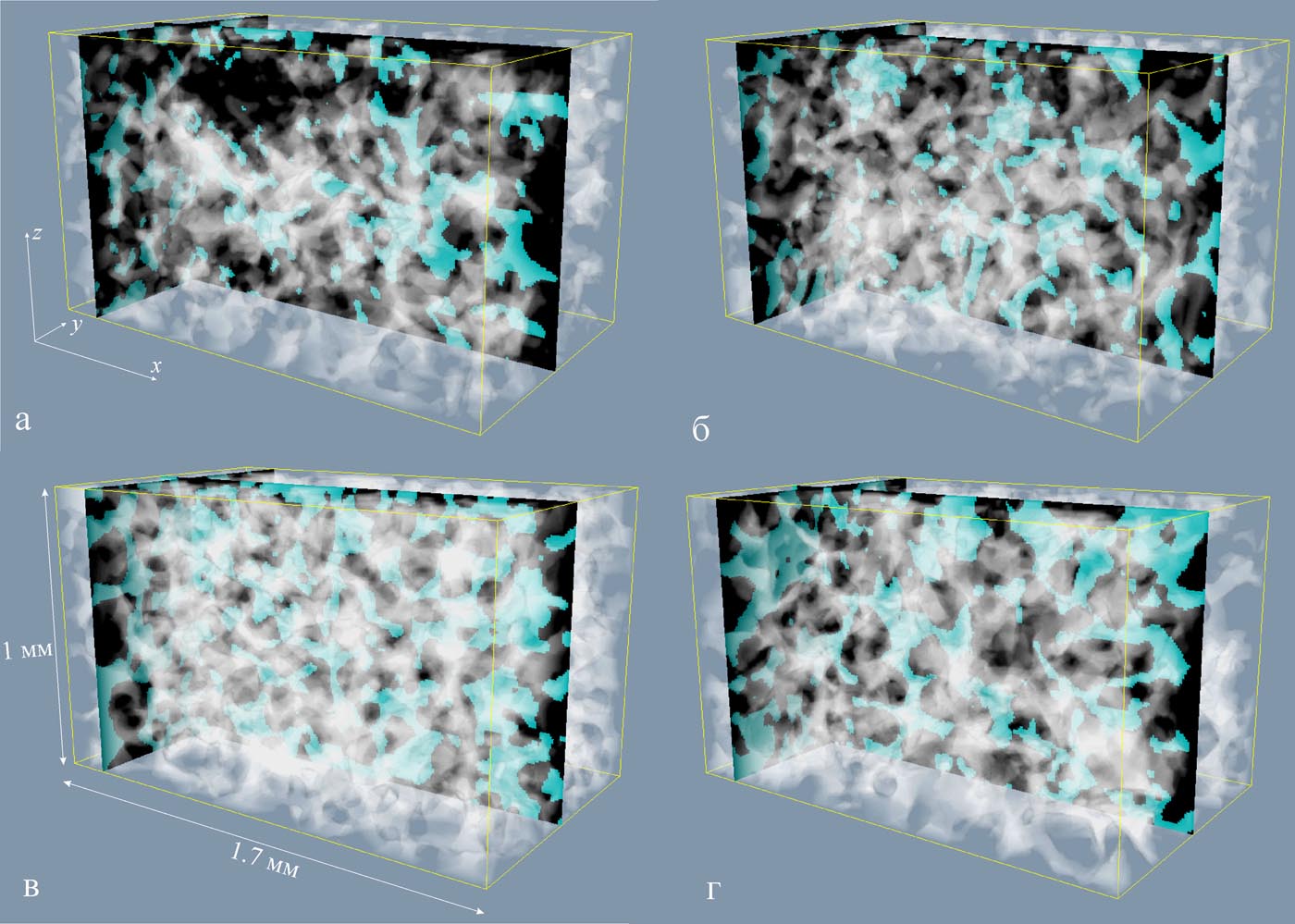
Studies of flow dynamics in complex disordered media are very important in many practical areas, such as materials science, soil science, groundwater engineering, chemical engineering, and especially petroleum and gas engineering. Integral geometry methods are a useful tool for studying complex media. In this work, it is shown that, for a given porous media class, the by-layer mean flow velocity for any sample within the same class can be characterized as a function of Minkowski functionals, allowing to avoid costly natural core flood experiments or numerical simulation for screening purposes. This paper proposes the flow characterization method based on integral geometry. This method allows for obtaining the single-phase fluid flow velocity characterization models across a wide range of porous media classes for a quick estimation of the mean by-layer velocity distribution purely by extracting the geometrical measures from binary sample images. Samples from gas reservoirs are chosen as the relevant porous media examples, with regard to the growing importance of this type of reservoir caused by the global shift towards natural gas as a key energy source. Direct comparison with numerical simulation based on Stokes equation was made with commercial class software. The results demonstrate that the proposed algorithm has a relatively high degree of statistical significance and closely captures mean velocity trends. That provides a useful tool for quick, robust modelling for screening, agile calculations, and upscaling tasks.

Carbonate acidizing is a common technology for increasing the production index of reservoirs. The competition of reactant flow in porous media and reaction rate with matrix is the key issue of the improvement of this process. Many experimental and theoretical research are devoted to the analysis of the process. A variety of approaches leads to the relevant problem of identifying their main groups. The aim of the article is to unify the results of recent experimental and theoretical research of the process and create general ideas about the process. Three main types of experimental installations is analyzed, which consider the different sides of the reaction and filtration of an acid through carbonate cores. Among them the new instrument in the process study is the high-resolution x-ray tomography, analysis of the ability of which is the object of the review. Theoretical studies are also being considered to integrate the research results into the overall basis. It is established that the semi-empirical and twoscale continuum modeling approaches play the fundamental role in the understanding of chemistry and physics of the process. These approaches uncovered the nature of the dominant wormholes formation as the unstable displacement process. The authors highlight the problem of dominant wormhole density per squire unit as the most actual question. It has been established that the results of experimental studies of the critical rate of acid injection do not always correlate with field data and the simplified proxy models are more suitable for the design of acid treatments.

The main characteristics of the Kovyktinskoye gas condensate field (KGCF) and the Chayandinskoye oil and gas condensate field (ChOGCF) were analyzed: formation temperature and pressure, gas composition, total mineralization and ionic composition of formation water. For the KGCF, the formation gas water content in equilibrium with pure and mineralized water was calculated. Temperature profiles of a typical production well at different gas flow rates were determined and compared with the temperature profiles of the ChOGCF wells. A detailed analysis of phase equilibria in the “water + gas + mineral salts + methanol” systems in the wells was carried out. It was shown that for KGCCF wells in the absence of formation water flow, water vapor condensation in the well tubing does not begin immediately, but at some distance from the well bottom, and water vapor condenses into liquid water. Hydrate formation is possible in the top of the tubing closer to the wellhead. Whereas for the ChOGCF well, the water vapor contained in the gas condenses in the tubing into the hydrate phase, bypassing liquid water. When methanol or water-methanol solution (WMS) is injected to the well bottom, the phase transformation pattern changes. In the tubing of the Kovyktinskoye field wells, methanol initially completely evaporates into the gas phase, and WMS condensation begins higher up the wellbore, prevetning the hydrate formation at the wellhead. In the case of the Chayandinskoye field, methanol injected into the well bottom partially evaporates into the gas phase with simultaneous condensation of water vapor. This process forms diluted WMS, which can intensify the hydrate formation process. In the case when the mineralized formation water flows into the well, the condensation of water vapor from the gas begins immediately at the bottom and the concentration of salts in the liquid phase decreases. For the KGCF, the salt concentration is nevertheless sufficient for self-inhibition of the wells, while for the ChOGCF, additional methanol injection is required. The features of the unstable hydrocarbon condensate formation and changes in its composition along the well tubing of were also analized.

Currently, models based on the application of artificial intelligence methods are actively developed and applied in solving a variety of problems, including in the practice of petroleum engineering. Evaluation of the accuracy and reliability of the developed models is usually reduced to defining standard statistical criteria, while the developers do not always use a separate examination sample. This article presents the results of the study, which are reduced to multivariate testing of the neural network model previously developed by the authors to determine the dynamic reservoir pressure in the selection zones of oil wells. The model is characterized by a number of advantageous characteristics, including minimal requirements for the amount of initial data, which determines its relevance and practical demand. However, the closed nature of computational algorithms related to the “black box” category does not allow us to reasonably formulate the conditions and criteria for applying the model, the reliability of the retro- and prospective forecast of the reservoir pressure. Three oil deposits of one field with different geological and physical conditions were selected as the object of study. The availability of a large number of actual reservoir pressure determinations by means of hydrodynamic well testing at the field allowed testing the model under a variety of scenarios, for each of which the forecast error was estimated and analyzed. As a result, high estimates of the model for retro- and prospective reservoir pressure reproduction were confirmed. It was found that forecast errors are reduced to zero in the presence of a large number of actual reservoir pressure determinations. However, to perform the calculation for each well, a single measurement for the entire history is sufficient. It was found that a sharp change in the well flow rate should also be accompanied by an actual determination of reservoir pressure with the entry of the obtained value into the model. In the absence of even a single reservoir pressure measurement for the wells, the model reliably reproduces its value using the kriging procedure used in the algorithms.
This study examines the impact of formation water mineralization – a key determinant of wettability boundary conditions – on oil recovery efficiency in natural terrigenous reservoir rocks exhibiting diverse filtration and storage properties. The investigation focuses on sandstone samples obtained from three hydrocarbon fields (Ashalchinskoye, Vostochno-Birlinskoye, and Zuyevskoye) located in the Republic of Tatarstan and Ulyanovsk region, employing advanced digital rock physics techniques through X-ray microtomography-based reconstruction of porescale models. The research establishes that the incremental oil recovery achieved through rock hydrophilization via controlled water salinity modification demonstrates strong dependence on the sample’s filtration characteristics, with enhanced permeability correlating directly with more pronounced positive effects from wettability alteration. A distinct linear relationship emerges between the magnitude of oil recovery improvement and the permeability coefficient, revealing that reservoirs with superior flow capacity exhibit greater responsiveness to salinity-engineered wettability modification. These findings provide critical quantitative insights for optimizing waterflooding performance in terrigenous reservoirs through strategic manipulation of injection water chemistry, particularly for the studied fields in the Volga-Urals petroleum province, while establishing a fundamental relationship between petrophysical properties and recovery enhancement potential through salinity-controlled wettability alteration.

Based on the results of 3D seismic exploration in the section of the Lower Cretaceous clinoform complex of Western Siberia, elongated bedform (sedimentary waves, ripples, ridge, conturite drifts) oriented along the underwater slope perpendicular to the direction of turbidite channels and lobes have been established. On spectral decomposition and amplitude maps, they resemble Aeolian relief shapes, the ridges can be either straight or sinuous with bifurcation. In seismic sections, conturites are diagnosed by the rugged and discontinuous shape of the recording with a variable amplitude of reflections or represent a “traveling wave”. It was found that in the Lower Cretaceous relatively deep-sea marine basin, high-intensity contour currents were constant, acting with different intensity (flow velocity) in different parts of the marine basin. They eroded and redeposited sedimentary sediments of turbidite genesis, thereby affecting the final morphology of the deep-sea fans of outflow.
Under the influence of bottom currents, both mixed tidalite-conturite-turbidite systems and individual conturite drifts of various lithological composition were formed. The processing of sediments by bottom currents is indicated by characteristic sedimentary structures: double layers, bidirectional and unidirectional crossbedding, horizontal lamination, flaser and lenticular bedding, climbing-ripples cross-bedding, normal and reverse grading, as well as in places the intensive development of bioturbation processing of sediments, which are not typical for turbidite deposits. Sandy conturite drifts can serve as new objects for the extraction of non-structural hydrocarbon traps in the deep-sea marine basin of the West Siberian megabasin.

Tectonic dislocations of the pre-plate PermianTriassic complex and the overlying platform cover of the northern Caspian Sea have been studied. Analysis of seismic survey and deep drilling data has revealed tectonic layering of the pre-plate complex due to the development of gentle thrusts and tectonic plates in its section. Their formation is associated with collision processes that accompanied the closure of the residual basins of the Paleotethys Ocean. In its subsequent development, the young platform periodically experienced horizontal compression, which resulted in the resumption of movements along the buried thrusts, which led to the formation of characteristic dislocations in the cover deposits, confined to their frontal parts. In addition to this type of structure, rootless layered tectonic faults were revealed for the first time in Cretaceous deposits. The source of tangential stresses that caused the tectonic stratification of the platform cover is stress transmitted to the platform from the region of the Alpine collision zone of the Caucasus. The largest of the faults, transforming in the head parts of the plates into inclined ruptures, penetrates into the overlying Cenozoic deposits, tearing the sedimentary cover to its full thickness. The results obtained indicate the important role of horizontal tectonic movements in the formation of the modern structure of this region, which belongs to the Scythian-Turanian young platform. The results of the research provide an opportunity to take a new approach to solving a number of applied problems in prospecting and exploration of hydrocarbon deposits. Considering the development of the tectonic plate in the preplate complex, the search for oil and gas traps in it should be carried out separately for each structural level (plate). Layered detachments are accompanied by zones of cataclastic rocks with increased capacity and filtration parameters. Accordingly, they can serve as paths for lateral migration of hydrocarbons, and within the productive intervals of the section during field development, provide higher fluid flow rates.

The Laptev Sea is an area of active exploration for hydrocarbons; however, estimations of its hydrocarbon potential vary significantly, both in terms of total hydrocarbon quantities and their phase composition. This variability is due to the absence of a unified geological framework and, consequently, the use of different analogous basins in calculations. Based on a comprehensive interpretation of geological and geophysical data, as well as seismic facies analysis, a reliable geological model was created. Paleogeographic conditions for the formation of major sedimentary cover complexes were reconstructed, including the Aptian-Upper Cretaceous, Paleocene-Eocene, Oligocene, and Miocene-Quaternary periods. It was shown that, within the modern shelf of the Laptev Sea, a marine basin existed since the second half of the Cretaceous, the boundaries of which are determined based on outcrop data from adjacent islands and onshore, wells, and seismic patterns. The main factors controlling the formation of the sedimentary cover and the change of paleogeographic conditions along the modern Laptev Sea continental margin were global tectonic events, including the opening of the Makarov-Podvodnikov Basin, rifting, and post-rift subsidence in the Eurasian Basin.

The use of the spontaneous polarization (PS) method in combination with electrical and electromagnetic logging methods to solve the problems of assessing the saturation of reservoirs, determining carbonate, clay and open porosity of rocks (in combination with the method of natural radioactivity) is hampered by the low resolution of standard equipment recording the PS curve, the lack of evaluation of the quality of recording the PS curve and insufficient development methodological support for the geological and geophysical interpretation of the PS method.
A particular problem is the registration of the PS curve in high-resistance carbonate-terrigenous sections of the VolgaUral region. The method of selected PS potentials, proposed by H.G. Doll (Schlumberger company) in 1950 and tested at the Romashkinskoye field in Tatarstan, has not found wide application due to methodological difficulties.
Pilot tests of bi-gradient PS logging equipment (ABGKPS) in the carbonate-terrigenous section of the Volga-Ural region, and subsequent processing of its materials showed the high informative value of ABGK-PS and the prerequisites for its use in conditions where the practical use of standard PS logging is excluded due to its low informative value.
It is shown that the recording of ABGC-PS diagrams makes it possible, within the framework of geological interpretation, to assess the mineralization of reservoir water in the carbonateterrigenous section, which is extremely important for solving the problems of calculating hydrocarbon reserves.
A new algorithm is presented for the complex interpretation of borehole electrometry data and the method of bi-gradient (divergent) logging for estimating calculated parameters (porosity coefficients and oil and gas saturation), which does not require knowledge of the mineralization of reservoir water. The algorithm is implemented in the software “PH-PETROLOG”.
For a detailed division of the carbonate-terrigenous section into lithological differences and an assessment of the nature of reservoir saturation, it is proposed to supplement the complex of radioactive and acoustic logging with the complex ABGKPS + multi-probe lateral logging (for the carbonate part of the section) and ABGK-PS + multi-probe induction logging (for the terrigenous part of the section).

Seismic instrumentation is becoming increasingly diverse. A major milestone has been the emergence of fiber-optic recording systems based on the capability to measure the time-varying strain of an optical fiber cable. The technology is now well developed and available as commercial solutions. The broad class of fiberoptic recorders referred to as DAS (Distributed Acoustic Sensor (Sensing)) includes several operating principles for working with optical fiber, and not all of them can be applied effectively in seismic exploration. In some cases, it is difficult to identify the technical type of the equipment, especially for new developments. In this paper, we demonstrate an example of equipment testing on a physical laboratory bench that could indicate whether the instrument is suitable; however, field tests reveal that the hardware solution is not appropriate for seismic exploration tasks. We emphasize the importance of field validation of equipment prior to deployment and demonstrate the inapplicability of “amplitude” DAS for seismic exploration applications.

Studies were conducted on the morphology of the void space, structural-textural characteristics, composition, and mineral formation conditions of Upper Cretaceous (Turonian– Santonian stages) carbonate-clay-siliceous zeolite-bearing rocks exploited at the Tatarsko-Shatrashanskoye deposit. The deposit is located in the northern part of the Ulyanovsk-Saratov Depression. The objects of study were zeolite-bearing siliceous marls from the first bed (t-1) of the productive sequence. A total of 40 samples represented by calcined and uncalcined coarsegrained fractions (0.5–1 mm) were examined.
The research was performed using X-ray microtomography (micro-CT) and scanning electron microscopy with energydispersive spectroscopy.
The samples are represented by intergrowths of mineral aggregates and detritus, forming medium-, fine-, and very fine-grained, biogenic, scaly, and lepispheric microstructures. The microcomponent composition includes: a paragenesis of authigenic minerals (Opal-CT, the clinoptilolite-Ca – heulandite-Ca isomorphous series, glauconite, clay minerals, volcanic glasses), defined as “camouflaged pyroclastics”; allothigenic minerals (manganoilmenite, zircon); and fossilized remains of calcareous and siliceous biota (foraminifera, coccolithophores, rhabdoliths, diatoms, stomatocysts).
Calcined and uncalcined samples exhibit similarity in all characteristics, except for secondary cracks and a rounded surface in calcined samples. The morphology of the primary void space is represented by rounded and elongated biovoids (>1 µm) and tortuous intergranular pores (<1 µm), of open and closed types. By size, pore types are divided into mesopores (<25 nm) and macropores (>25 nm), with the latter predominating.
The basis for the unique sorption properties of the zeolitebearing rocks exploited at the Tatarsko-Shatrashanskoye deposit, used in various economic sectors, is their mineral composition in combination with macro- and mesoporosity, and the isomorphism within the clinoptilolite-Ca – heulanditeCa series, which enhances bioorganic sorption.
The formation of the zeolite-bearing rocks is the result of the interaction of endogenous and exogenous processes under the conditions of a stable shelf basin with a developed carbonate buffer system.

The aim of this work is to characterize rare earth fluorocarbonates, first discovered in carbonaceous shales of the Ishlya graben, and to develop an acceptable genetic model of their formation.
Riftogenic formations are represented by interbedding of terrigenous rocks (carbonaceous shales, siltstones, siltstones) with a volcano-plutonic association (gabbrodolerites, basic effusives with a small amount of pyroclastic material). All rocks are metamorphosed under epidote-amphibolite facies conditions (T = ~ 390–490 °C, P = ~ 2.5–10 kbar).
Bastnaesite-(Ce), hydroxylbastnaesite-(Ce), parisite-(Ce) and synchysite-(Ce) were found in carbonaceous shales, morphologically represented by single xenomorphic segregations, veinlets of various morphologies, microgranular masses in selvages of carbonate and quartz-carbonate veinlets, aggregates filling voids in pyrite crystals and spherulites composed of long-prismatic, needle-shaped crystals. It is shown that the genesis of rare-earth fluorocarbonates is caused by hydrothermal metamorphism with a change in the chemical composition of the fluid (CaCl2 + NaCl → FeCl2). In this case, the source of CO2 was the oxidation of organic matter in carbonaceous shales, and Ca2+ was the albitization of plagioclase. Based on the analysis of indicator ratios of rare earth elements in fluorocarbonates from different regions of the world, it has been established that the chemistry of the mineral formation environment and the scale of the substance redistribution processes are of great importance during their formation (in the case of their locality, greater diversity in the chemical composition of the resulting rare earth fluorocarbonates should be expected).

The article presents the results of a study of the material composition of psammite sediments located near the Thoroughbred creek on Askold Island (the Great Peter Bay, Sea of Japan). The sediments are stacked (in wt.%) quartz 58, microcline 14, orthoclase 9, albite 10, kaolinite 5 and amphiboles (actinolite, hornblende) 2, which is close to the composition of the bedrock (biotite-hornblende granites and plagiogranites). The bedrock located next to the sediments. The different granulation of the grains (for example, quartz) indicates a mixed genesis of the sands (alluvial-deluvial). And the partial development of these sediments for gold allows them to be classified as technogenic. The material composition of psammite sediments corresponds to arkose sands. The nature of the behavior of rare earth and trace elements in them indicates the weathering of granites in a humid environment with the formation of a small number of new stable minerals in the form of kaolinite. There is also an enrichment of Ti, U, Pb, Zr and Hf in arkose sands, compared with granites. The presence of ilmenite, zircon and metaothenite control the enrichment of the above elements. Arkose sands are characterized as essentially quartz lithogenic rocks formed in the passive margin. The heavy fraction is about 4 wt.% psammite material. It contains hematite, magnetite, ilmenite, titanite, zircon, monazite, xenotime, metaothenite and gold. The main share is accounted for by iron and titanium minerals. Conditioned contents were found only for gold (0.5 g/t), elevated contents ‒ for silver (0.5 g/ t) and titanium oxide (0.9 wt.%). Gold is present only in its native form. The maximum particle size reaches 750 microns. The particles contain impurities of silver, iron, copper and tantalum. The content of gold itself in the particles varies from 82.7 to 100 wt.%. The studied sediments may be of interest to the construction industry (in addition to raw materials for gold), since the sediments contain a lot of silica (more than 80 wt.%) and few harmful impurities.

The article examines the hydrogeochemical history of continental saline, chloride lakes Hilgant and Gorbunka, located in the southeast of Transbaikalia. Brief information is given on the composition of host rocks and the chemical composition of water involved in the salt supply to the lakes. The mineral and chemical compositions, values of the isotopic ratios of carbon and oxygen of carbonates in different layers of lake bottom sediments are described. Indicator minerals are distinguished that characterize different climatic conditions. The main conditions are identified that characterize the content and ratios of the main chemical components and pH during changes in the salinity of lake water. Based on 210Pb measurements, the current rate of sediment accumulation in the lakes is calculated. Thermodynamic calculations analyzing water evaporation and under-ice water concentration are discussed. The possibility of forming authigenic minerals is considered. Ultimately, the geochemical evolution of the lakes is interpreted in relation to regional climate changes in the recent past.

The article presents the results of geochemical studies of organic matter and hydrocarbon gases in bottom sediments of the northeastern sector of the Barents Sea. The areas with thermally mature hydrocarbon compounds discharging into the upper part of the sedimentary section are identified. This is evidenced by biomarker indicators of organic matter maturity that are not characteristic of syngenetic hydrocarbon compounds of sediments, as well as by the molecular composition of hydrocarbon pore gases and the isotopic composition of methane carbon. Based on the areal distribution of the detected thermally mature hydrocarbon compounds in bottom sediments, a model of fluid discharge in the sedimentary cover is proposed, taking into account the peculiarities of the geological structure of the region. According to the obtained model, the greatest prospects for oil and gas accumulation within the northern and northeastern sectors of the Barents Sea are associated with the flanks of the North Barents Super Depression.

An analysis of the transformation of the production structure and current recoverable oil and gas reserves in the Khanty-Mansi Autonomous Okrug – Yugra and the Yamalo-Nenets Autonomous Okrug over the tenyear period of the Oil and Combustible Gas Reserves and Resources Classification (Russia, 2013) was conducted. The initial data were based on the State balance of mineral reserves of the Russian Federation as of January 1, 2025. The article provides a detailed examination of reserve dynamics by categories A, B1, B2, C1, and C2, broken down by the main stratigraphic complexes, separately for giant fields and the remaining reserves. It was established that the main oil and gas complexes (the Neocomian in the Khanty-Mansi Autonomous Okrug – Yugra and the Cenomanian in the Yamalo-Nenets Autonomous Okrug) have entered a phase of irreversible depletion: the decline in production is not offset by an increase in production drilling. An increase in the highest category A reserves was identified, while annual production declined, indicating the accumulation of “non-production” reserves due to high water cut and low flow rates. The development of hard-to-recover reserves in the Achimov formation and Middle-Lower Jurassic deposits does not compensate for the loss in volumes. It is proposed to improve the classification by dividing category A into subcategories Ap (operating) and Ap (non-production) to more accurately account for the status of wells.

ISSN 1608-5078 (Online)







.png)
